

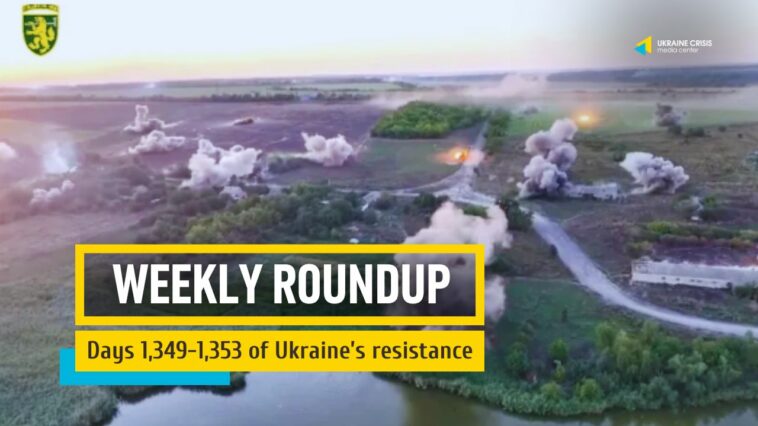
This week, fierce fighting continued to rage in Pokrovsk. Ukraine conducted a series of efficient strikes deep inside Russia.
Russian forces took 21 months to advance into Pokrovsk, the Institute for the Study of War said. The battle for the city continues. Ukraine’s defense intelligence conducted a successful landing operation in Pokrovsk, and Ukrainian assault units made gains in the Dobropillya direction. Yet the situation for Ukrainian troops is extremely difficult there. They appear at risk of being encircled or face the prospect of retreating from the city.
Russia dropped more than 5,300 glide bombs on Ukraine in October, the highest number in one month this year. It has started using Chinese-made turbojet engines to power glide bombs, the Financial Times said. The efficacy of Russian drone strikes increased throughout October.
The Ukrainian military carried out an attack on Russia’s Saratov oil refinery overnight on Monday, the General Staff of the Armed Forces of Ukraine said. Ukraine also struck an oil terminal of the Tuapse refinery on November 1. Ukraine’s defense forces hit parts of Russian supply lines in the occupied region of Luhansk, the Ukrainian General Staff said early in the week. Ukrainian drones targeted a power substation in Vladimir and a thermal power plant in Oryol.
Hollywood actress Angelina Jolie visited Kherson. Ukraine has registered more than 190,000 Russia’s war crimes since the invasion, the prosecutor general said.
Russia prioritizes infiltration tactics to pass through Ukrainian defenses.
Russian forces are increasingly using infiltration tactics to overcome Ukrainian defenses in the cities. Russia resorted to classic methods of enveloping built-up areas when it conducted offensive operations toward Bakhmut and Avdiyivka. It created a threat of encirclement and used bloody frontal assaults. The Russian command has started practicing infiltration missions, Ilya Abishev said in an article for the BBC on Thursday.
Russian forces have been changing the tactics used by assault groups and camouflage technics to overcome the “kill zone” with the fewest possible losses. Russia turned to small maneuverable vehicles, including motorcycles, quadricycles, buggies, mopeds and scooters, to transport troops. It also started using jamming equipment and home-made drones.
Russian forces now seek to move undetected closer to Ukrainian positions and conduct a sudden assault, aiming to take control of them.
In built-up areas, Russian assault troops can penetrate Ukrainian orders of battle, disguising themselves as civilians or Ukrainian service members.
In the Dobropillya direction, north of Pokrovsk, Russian assault groups advanced almost 15 kilometers before being pushed back by Ukrainian troops that deployed reserves. A Russian bridgehead there was destroyed.
Russian forces have exploited weak spots in Ukrainian defenses inside Pokrovsk and Kupyansk, creating a difficult situation for Ukrainian troops there, Abishev said.