

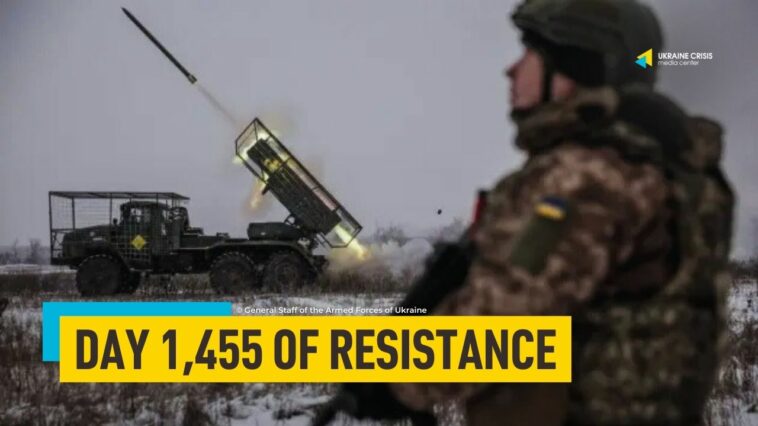
Russia launches 29 missiles and 396 drones at Ukraine overnight. Ukraine makes its fastest battlefield gains in two and a half years, leveraging a block on Russia’s access to Starlink, AFP says. China’s Russian oil imports are to hit a new record in February as India cuts back, according to Reuters.
Russia launches 29 missiles, 396 drones at Ukraine overnight
Russia carried out a major drone and missile strike at Ukraine overnight on Tuesday that affected 12 regions, including ones of Odesa, Dnipro, Kropyvnytskyi and Ivano-Frankivsk. “It was a combined strike, specially calculated to cause as much damage as possible to our energy sector,” Ukrainian President Volodymyr Zelenskyi said in a post to X on Tuesday morning.
Ukraine’s Air Force said Russia had launched 29 missiles and 396 drones toward Ukraine overnight, including four Iskander-M ballistic missiles, 20 Kh-101 cruise missiles from strategic bombers, four Iskander-K cruise missiles and a Kh-59/69 air-to-surface guided missile. The unmanned aerial systems included Shahed, Gerbera and Italmas attack drones and drones of other types. Around 250 of the drones were the Shaheds.
Ukraine’s air defenses shot down or otherwise neutralized 25 missiles and 367 drones, including all 20 Kh-101 air-launched cruise missiles, all four Iskander-K ground-launched cruise missiles, the Kh-59/69 air-to-surface guided missile and 367 drones. Four ballistic missiles and 18 drones hit target in 13 locations, and debris from missiles and drones fell in eight sites, the Air Force added.
Ukraine makes fastest battlefield gains in two and a half years, leveraging block on Russia’s access to Starlink, AFP says
Ukraine recaptured 201 sq km from Russia between Wednesday and Sunday last week, taking advantage of a Starlink shutdown for Russian forces, according to an Agence France-Presse (AFP) analysis of data from the Institute for the Study of War (ISW) published on Monday.
The recaptured area (78 sq miles) is almost equivalent to the Russian gains for the entire month of December and is the most land retaken by Kyiv’s forces in such a short period since a June 2023 counteroffensive.
The recaptured land is concentrated mainly to the east of the city of Zaporizhzhia, in an area where Russian troops have made significant progress since mid-2025. “These Ukrainian counterattacks are likely leveraging the recent block on Russian forces’ access to Starlink, which Russian milbloggers have claimed is causing communications and command and control issues on the battlefield,” said the ISW think tank, as cited by The Guardian.
On February 2, Ukrainian Defense Minister Mykhailo Fedorov announced mandatory Starlink terminal verification in Ukraine, with unregistered terminals disconnected to counter Russian use.
Ukraine earlier reported on Russia’s practice of mounting Starlink systems on its attack drones, which allow the weapons to bypass electronic defenses that jam the signals. Russia has made unauthorized use of Starlink internet connections, bypassing the sanctions.
Fedorov said Ukraine worked with Elon Musk’s SpaceX company, which owns Starlink, to take initial steps to counter Russian drones. Starlink internet terminals used by Russian troops in Ukraine were deactivated, he said a few days later.
Adviser on defense technology to Ukraine’s Defense Minister, Serhiy Beskrestnov who goes by the call sign “Flash” said Russian forces are facing “a catastrophe” after their Starlinks operating in Ukraine were cut off. “[Russian] assault operations have been halted in many areas,” Beskrestnov said on February 5.
The registration of Ukrainian Starlink terminals continues, Fedorov reassured.
A Ukrainian cyberwarfare division said on February 12 that it created a fake Starlink registration service to trick Russian soldiers into giving up sensitive data. The 256th Cyber Assault Division said it partnered with open-source intelligence groups to promote a network of Telegram channels and bots that offered to help the Kremlin’s troops register Starlink terminals on a Ukrainian whitelist. But the channels were a ruse, and had instead been run by Ukrainian forces, who were sent location and terminal data from the soldiers, the 256th said.
China’s Russian oil imports to hit new record in February as India cuts back, according to Reuters
China’s Russian oil imports are set to climb for a third straight month to a new record high in February as independent refiners snapped up deeply discounted cargoes after India slashed purchases, according to traders and ship-tracking data, cited by Reuters on Monday. The paragraphs below are quoted from the article.
Russian crude shipments are estimated to amount to 2.07 million barrels per day for February deliveries into China, surpassing January’s estimated rate of 1.7 million bpd, an early assessment by Vortexa Analytics shows.
Kpler’s provisional data showed February imports at 2.083 million bpd, up from 1.718 million bpd in January.
China has since November replaced India as Moscow’s top client for seaborne shipments as Western sanctions over the war in Ukraine and pressure to clinch a trade deal with the U.S. forced New Delhi to scale back Russian oil imports to a two-year low in December.
India’s Russian crude imports are estimated to fall further to 1.159 million bpd in February, Kpler data showed.
That has depressed Russian oil prices to a discount of $9 to $11 a barrel below benchmark ICE Brent for January/February deliveries to China, the lowest in years for Urals, a grade loaded from European ports that has typically landed in India due to shorter voyages versus China.
Russian oil shipments to China, its largest buyer, dropped by 7.1 per cent in 2025, compared to the previous year, reaching 100.72 million tons. Beijing spent USD 49.8 billion on oil purchases, a 20 per cent decrease from 2024 levels, Russian media said.
Earlier this month, India asked state-owned refiners to consider buying more U.S. and Venezuelan crude after a trade deal the Trump administration said included a pledge to stop importing Russian barrels, according to Bloomberg News.
Russia offered bigger discounts on its oil to Indian refineries in January 2026, attempting to encourage the country to continue oil purchases.
In early February, U.S. President Donald Trump has announced a trade deal with Indian Prime Minister Narendra Modi to slash U.S. tariffs on the nation’s goods to 18 per cent from 50 per cent.
In a post on Truth Social, Trump said India would reduce trade barriers to zero and stop buying Russian oil. “He agreed to stop buying Russian oil, and to buy much more oil from the United States and, potentially, Venezuela,” Trump wrote on Truth Social.