

In February, Ukraine retook more land than Russia captured, Ukraine’s chief commander says. Russia is preparing to target Ukraine’s water supply system in a new wave of attacks, Zelenskyi says. Seventy per cent of Ukrainians do not believe the current talks will lead to lasting peace, a poll finds.
In February, Ukraine retook more land than Russia captured, Ukraine’s chief commander says
In February 2026, Ukraine regained control of more land than Russia captured in the same month, Commander-in-Chief of the Armed Forces of Ukraine, General Oleksandr Syrskyi said in a post to social media Monday. He described the proportion of gains as happening for the first time since Ukraine’s Kursk operation.
“We are conducting active actions in the Oleksandrivka and Hulyaipole directions that yield results. Contrary to numerous reports by the Russian leadership, we are strengthening control of Kupyansk and cutting the number of the enemy’s sabotage ‘cattle’ in the city,” Syrskyi said.
Ukrainian troops continue to hold back Russian advances near the Pokrovsk-Myrnohrad agglomeration, he added.
Russia preparing to target Ukraine’s water supply system in new wave of attacks, Zelenskyi says
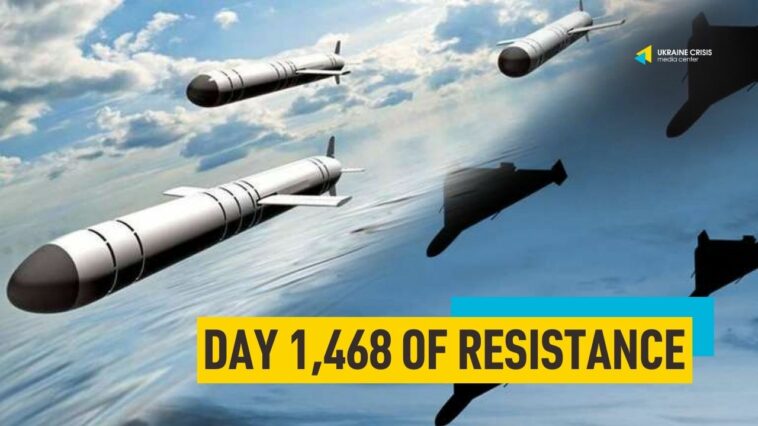
Russia is preparing another wave of major aerial attacks against Ukraine that will target the country’s water supply system to deprive Ukrainians of water, President Volodymyr Zelenskyi told reporters on Monday, as cited by The New Voice of Ukraine (NV).
“Russia is preparing another wave [of major aerial attacks]. It will strike critical infrastructure, logistics [routes] and the water supply system,” Zelenskyi said.
He emphasized that Ukraine’s water supply is Russia’s primary target.
“Local communities should brace for the challenge. On our end, we need to be getting more air defense missiles,” he said.
Russia’s “energy terror” that it staged this winter did not break Ukraine, Zelenskyi added.
In the three months of winter, Russia carried out 14 major missile and drone attacks on Ukraine and launched more than 700 missiles of various types at the country, Ukraine’s Air Force said in a post to social media on Monday.
“[Russia’s] occupying forces once again tried to put Ukrainians in a blackout and destroy the country’s critical infrastructure by using an unprecedented number of missiles and drones,” the Air Force said.
Between December and January, Russia carried out seven major aerial attacks on Ukraine, using missiles and drones of different types. In February, it doubled the intensity of the strikes and launched seven more aerial attacks against the country, the message reads.
Seventy per cent of Ukrainians do not believe current talks will lead to lasting peace, poll finds
A vast majority of Ukrainians (70 per cent) do not believe that the current talks between Ukraine and Russia mediated by the U.S. will lead to lasting peace, a survey conducted by the Kyiv International Institute of Sociology between February 12 and February 24 found.
At the same time, 25 per cent do believe that the negotiations will bring lasting peace. The remaining 5 per cent are undecided. The opinions have not changed since mid-January 2026 when the pollster asked the same question.
In a prior poll it also asked Ukrainians through an open question why they don’t believe that the talks will be successful. Most of the answers showed that Ukrainians are distrustful of Russia’s intentions to make peace.
“The Ukrainians continue to be critical of current peace negotiations and the majority do not have optimistic expectations of them. The practical realities in Ukraine, including the Russian pressure on the battlefield despite their massive losses, Russian terror against civilians and attempts to freeze and leave them without electricity in the cold winter, the uncompromising genocidal statements of the Russian leadership and more — leave little reason for Ukrainians to believe in Russia’s intention to end the war in the near future. In particular, Ukrainians understand that if Russia is ready to end the war, it’s only on the terms that would equal to the actual surrender of Ukraine (and they will not accept anything else). At the same time, Ukrainians remain open to difficult compromises and are ready to discuss them — but not at the price of capitulation,” executive director of the Kyiv International Institute of Sociology, Anton Hrushetskyi is quoted as saying in a press statement accompanying the survey results.
The omnibus survey was conducted through computer-assisted telephone interviews (CATI), using a random sample of cell phone numbers. The total sample of the poll consists of 2,004 Ukrainians ages 18 and older who live in government-controlled Ukrainian territory.
The margin of error at the 95 percent confidence level with a design effect of 1.3 would not exceed 4.1 percentage points. On top of that, in times of war, the figure adds a systematic deviation, the pollster said.