

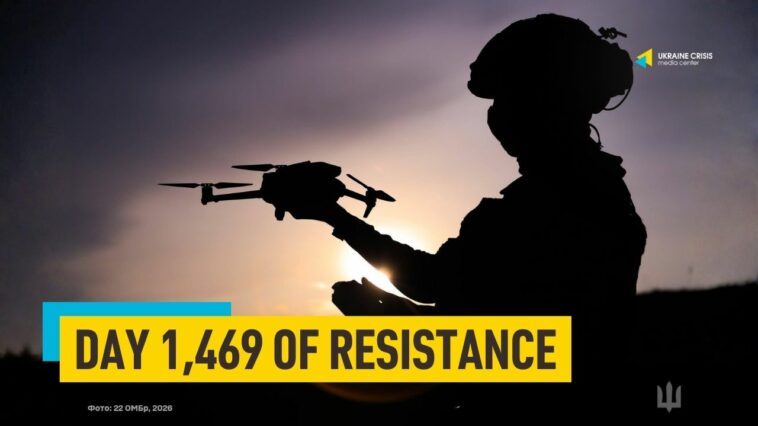
Putin’s winter offensive failed as Ukraine regains 460 square kilometers of land this year, Zelenskyi says. Zelenskyi offers help to stop Iranian drones in the Middle East if leaders there convince Putin to a ceasefire, Bloomberg News says. Interceptor drones account for more than 70 per cent of interceptions of Shahed drones that occurred in Kyiv and on its outskirts in February, Syrskyi says.
Putin’s winter offensive failed as Ukraine regains 460 square kilometers of land this year, Zelenskyi says
Ukraine has regained control of 460 square kilometers of land since the beginning of the year, Ukrainian President Volodymyr Zelenskyi told Italian newspaper Corriere della Sera in an interview published on Tuesday.
The journalist asked Zelenskyi: “You recently said that Ukrainian troops had regained 300 square kilometers of territory in a few weeks. What’s your view of the battlefield situation?”
Ukraine has recaptured 460 square kilometers of land since the beginning of the year, Zelenskyi answered.
“Putin failed in his winter offensive,” he said. “The Russians will try to carry out spring offensives, but I think they will lose once again and many soldiers will die for nothing.”
In February 2026, Ukraine regained control of more land than Russia captured in the same month, Commander-in-Chief of the Armed Forces of Ukraine, General Oleksandr Syrskyi said in a post to social media Monday. He described the proportion of gains as happening for the first time since Ukraine’s Kursk operation. Ukrainian troops were “conducting active actions in the Oleksandrivka and Hulyaipole directions that yield results,” he also said.
On February 22, Ukraine’s Air Assault Forces said their main tasks were to halt Russia’s further advance in the regions of Dnipro and Zaporizhzhia, destroy the enemy’s group of forces and push them out of the region of Dnipro.
Ukraine has regained control of 400 square kilometers of land and eight towns and villages in the Oleksandrivka direction in the country’s south since late January, Syrskyi said in a post to social media on February 23.
Zelenskyi offers help to stop Iranian drones in Middle East if leaders there convince Putin to a ceasefire, Bloomberg News says
Volodymyr Zelenskiy offered to send his best experts in shooting down Iranian drones to the Middle East if leaders there convince Vladimir Putin to agree to a month-long truce in Russia’s war on Ukraine, Bloomberg News said Monday. The paragraphs below are quoted from the article.
Four years of Russia’s full-scale invasion has allowed Kyiv to develop unique expertise in intercepting drones, many of them Iranian-made Shaheds currently being deployed against countries such as the United Arab Emirates, Qatar and Saudi Arabia, the Ukrainian president said on Monday.
“I would suggest the following: leaders of the Middle East have great relations with Russians,” Zelenskiy told Bloomberg News by phone from Kyiv. “They can ask Russians to implement a month-long ceasefire.”
Once a truce was in place “we will send our best operators of drone interceptors to the Middle East countries,” he said. The ceasefire could also be called for two months or two weeks “so we can help the Middle East countries to protect civilians.”
The Russian president held a series of phone calls with leaders of Gulf states affected by Iranian attacks on Monday, including Bahrain, the UAE and Qatar. Kremlin spokesman Dmitry Peskov told reporters that Moscow was also “in constant contact with the Iranian leadership.”
Interceptor drones account for more than 70 per cent of interceptions of Shahed drones that occurred in Kyiv and on its outskirts in February, Syrskyi says
Interceptor drones account for more than 70 per cent of interceptions of the Shahed drones that occurred in Kyiv and on its outskirts in February, Commander-in-Chief of the Armed Forces of Ukraine, General Oleksandr Syrskyi said in a post to social media on Tuesday.
The message sums up a meeting where he said he heard reports of the so-called “small air-defenses.” He oversees the development of the projects that aim to strengthen counter-drone protection and counter Russian unmanned aerial systems.
Those gathered at the meeting analyzed the interceptions of the Shaheds on all three layers of air defenses. They also heard reports of progress in protection of regional cities, additional equipment for military helicopters are other anti-drone measures.
Ukraine’s small air defenses demonstrated in February the same efficiency as before despite worsening weather conditions and the shortage of interceptors. Interceptor drones made around 6,300 sorties and destroyed more than 1,500 Russian drones of various types last month, Syrskyi said.
He also said Ukraine is searching for solutions to address Russia’s new tactics of using the Shaheds at critically low altitudes. “We are working with the manufacturers of interceptor drones to increase their efficiency. We continue to form and train the crews to pilot these drones. We are staffing air defense divisions of the unmanned systems forces,” Syrskyi said.
“Much work has been done in this area in a year, but we have to put in more efforts and move quicker. The protection of peaceful Ukrainian cities and towns, our energy system and other critical infrastructure sites in the rear is at stake,” he continued, adding that “as a result of the meeting” he gave tasks to respective military branches, including new ones.