
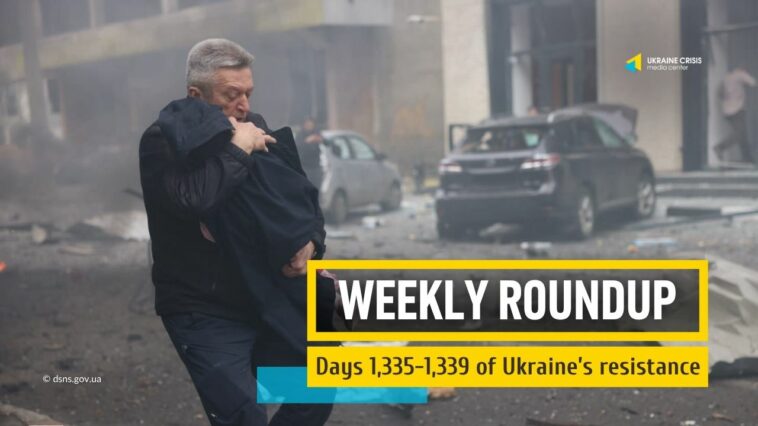
This week, Russia continued to pummel Ukraine’s energy infrastructure. Diplomatic efforts to bring Russia to the negotiating table have stalled, leading U.S. President Donald Trump to impose fresh sanctions on Russia for the first time in his second term. The measures announced on Wednesday target oil companies Rosneft and Lukoil.
Russia’s overnight attacks on Monday that included the use of three ballistic missiles and 60 drones, damaged Ukraine’s railways and port infrastructure. The northern city of Chernihiv experienced a complete blackout on Tuesday following Russian attacks on the region’s energy infrastructure. A Russian drone strike on Kharkiv on Wednesday hit a kindergarten, killing one person and injuring ten others, including a five-year-old girl. Russia launched 405 drones and 28 missiles at Ukraine overnight into Wednesday, targeting the country’s energy facilities. The attacks killed six people. Emergency power cuts were imposed in a number of regions following the attack.
The Kremlin signals to Trump that his demands to end the war are incompatible with Russia’s war aims, the Institute for the Study of War said in a report on Tuesday. It has observed no indications that the Kremlin remains willing to accept anything less than Ukrainian capitulation to all of its original war demands.
A Russian drone strike on the city of Kramatorsk on Thursday killed two journalists.
EU to issue final decision on using Russian frozen assets to fund Ukraine loan in December.
The EU leaders are expected to issue a final decision on using Russian frozen assets to fund a loan for Ukraine at the next European Council meeting in December, Polish Prime Minister Donald Tusk told reporters after Thursday’s European Council summit in Brussels.
Belgium hosts most of the Russian central bank funds immobilized in the EU, fearing the plan to use them could trigger Moscow to take legal action. Efforts were underway to reach a compromise and reassure Belgium that it will not be left alone with the bill if the scheme collapses. “We are trying to convince our Belgian friends that we are ready to build a mechanism of shared, pan-European responsibility,” Tusk said, as cited by Polish media, adding that “the debate is still ongoing.” Hungarian Prime Minister Viktor Orbán was against the decision, as is always the case with decisions on Ukraine, Tusk added.
It is “too early” to say Belgium and Luxembourg are fully persuaded, he said, but there has been “clear progress.” Tusk noted that a final decision on the loan is expected at the next European Council meeting in December. “That must be the final deadline for the decision — yes or no. Ukraine will not win this war or defend itself against Russia without financial support, and there aren’t really many alternative sources,” Tusk said.
According to media reports, EU leaders have swerved a decision on using Russia’s frozen assets to fund Ukraine’s defense and will discuss it again at another EU summit in December. Belgium was still expressing criticism of the proposal but leaving the door open to it, if it received guarantees that the risk would be shared by all member states.


