
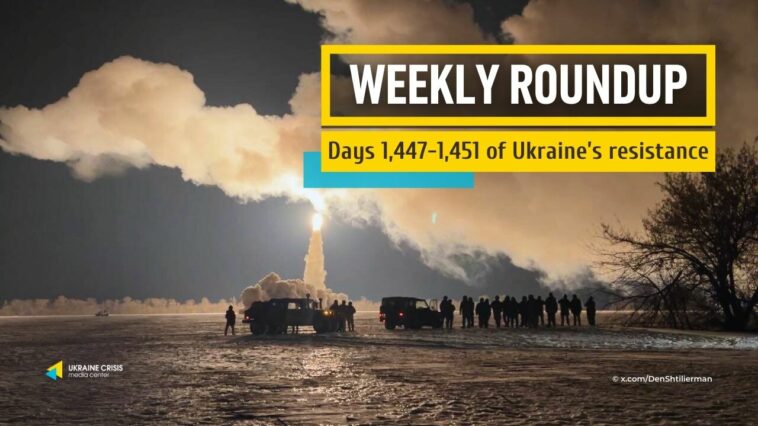
This week, battles continued to rage along the front lines. Russia continued to pummel Ukrainian cities and towns deep in the rear with missiles and drones. The situation with power and heating supply in Kyiv started to improve, but another Russian drone and missile attack damaged a combined heat and power plant in the capital and knocked out heat to hundreds of buildings.
Russia launched 11 Iskander-M ballistic missiles and 149 drones at Ukraine in a series of strikes between Sunday evening and Monday morning, killing four people across the country, including a mother and her 10-year-old child. A Russian drone strike on the city of Bohodukhiv in Kharkiv region on Wednesday killed a father, his three small children and injured their pregnant mother.
Kyiv will get 9 additional megawatts of electricity, Denys Shmyhal, First Vice Prime Minister — Energy Minister told a meeting of the Energy Emergency Headquarters on Sunday. Heating has been restored to the Troyeshchyna neighborhood in Kyiv, officials said Monday. Russia’s major drone and missile attacks overnight on Thursday knocked out heating to hundreds of apartment buildings in Odesa, Dnipro and Kyiv.
Russia could be plotting a war in the Baltic Sea area or one against a single neighbor, the Munich Security Report states. The EU is hatching an unprecedented plan to get Ukraine into the EU in 2027, Politico said.
The International Olympic Committee has disqualified Ukrainian skeleton racer Vladyslav Heraskevych over his “helmet of remembrance”.
Zelenskyi not to accept peace deal on belittling terms, he tells The Atlantic.
Ukrainian President Volodymyr Zelenskyi told The Atlantic he would rather take no peace deal at all than force his people to accept a bad one. Even after four years of intense warfare, he says he is prepared to fight on if that’s what it takes to secure a dignified and lasting peace, an article published by The Atlantic on Thursday said.
Zelenskyi kept repeating in the interview that he will not accept a deal on belittling terms. “We are in a hurry to end the war,” he said. But that’s not the same, he emphasized, as rushing to cut a deal, no matter the terms.
But again, he told The Atlantic’s Simon Shuster, it had to be the right deal. “I don’t think we should put a bad deal up for a referendum,” he said. The idea of holding elections during the war, he said, came from the Russians, “because they want to get rid of me.”


