
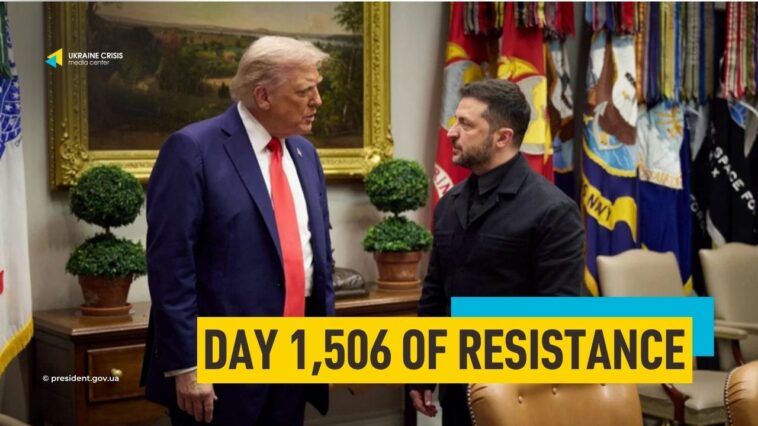
The U.S. is ignoring evidence that Russia is helping Iran because it trusts Putin, says Zelenskyi. The Trump administration is expected to keep waiving Russian oil sanctions, Semafor said. The Kremlin says Russia has the right to defend itself from “piracy” after a report of a warship escort near the UK.
U.S. ignoring evidence Russia is helping Iran because it trusts Putin, says Zelenskyi
The US has ignored compelling evidence that Russia has been helping Iran to target US bases in the Middle East because it “trusts” Vladimir Putin, according to the Ukrainian president, Volodymyr Zelenskyy.
Speaking in an interview with Alastair Campbell on The Rest is Politics podcast, Zelenskyy said he had tried to draw the White House’s attention to the close collaboration between Moscow and Tehran. The Guardian offers a rundown of the conversation. The paragraphs below are quoted from the article.
He said Russian military satellites had photographed critical energy infrastructure objects in the Gulf states and in Israel, as well as the locations of US army bases across the region. The Kremlin passed details and images to the Iranian regime, he said, to facilitate its attacks.
“I said this publicly. Did we hear a reaction from the US to Russia that they have to stop it?” Zelenskyy asked rhetorically. He added: “The problem is they trust Putin. And it’s a pity.”
Zelenskyy said Donald Trump’s team had failed to “really understand the details of what Russia wants”.
Asked why this was, he said that Trump’s two negotiators – Steve Witkoff and Jared Kushner – had “spent too much time” with Putin and his senior officials. The pair travelled to Moscow five times last year and have yet to visit Kyiv.
Zelenskyy said he had a greater understanding of the Russian leader’s psychology and actual war aims than the White House. Ukraine’s president said Putin would not stop if he got the Donbas, and would next try to seize the regional capitals of Dnipro and Kharkiv.
Zelenskyi said on Monday that Ukraine was “working very concretely right now” with the U.S. on the documents that are part of a peace deal.
The U.S. negotiation team may arrive to Kyiv shortly after Orthodox Easter, which is celebrated on April 12, President Volodymyr Zelenskyi’s chief of staff, Kyrylo Budanov told Bloomberg last week.
Speaking in Budapest on Wednesday, U.S. Vice-President JD Vance appeared to imply that the resolution to the Russian invasion of Ukraine hinged on Kyiv making territorial concessions. “We’re talking about haggling at this point over a few square kilometres of territory in one direction or another,” he said.
Trump administration expected to keep waiving Russian oil sanctions, Semafor says
The Trump administration will likely extend its waiver of sanctions on Russian oil this week, former Treasury and State Department officials said — teeing up a similar move on Iranian oil, according to a Semafor report published on Thursday. The paragraphs below are quoted from the article.
The Treasury Department last month greenlit the sale of previously sanctioned Russian and Iranian oil already on the water through April 11 and April 19, respectively.
Nearly a month later, experts say there’s little proof the moves have done much to bring down costs beyond temporarily soothing investors.
A wider universe of buyers for Russian and Iranian oil has allowed the countries to charge more, with Russia at times making an extra $150 million a day.
Meanwhile, most of the Iranian oil was already in transit to China.
Half a dozen former sanctions officials told Semafor recently that they’re still anticipating a Trump administration extension of the Russian oil waiver this week, which would pave the way for an extension of the Iranian oil waiver later this month.
Both waiver extensions would serve as the latest sign sanctions have changed shape during President Donald Trump’s second term, morphing from a first resort for economic pressure into an occasional tool for leverage in markets.
“It’s hard for me to see a world where the Trump administration cracks down on Russian oil again, at least between now and the midterm elections,” said Chokepoints author Edward Fishman, who worked on sanctions at the Obama-era State and Treasury departments.
Kremlin says Russia has right to defend itself from “piracy” after report of warship escort near UK
The Kremlin said on Thursday that Russia had the right to defend itself from what it called piracy after a British newspaper reported that a Russian navy frigate had escorted oil tankers sanctioned by Britain through the English Channel, Reuters said.
Ship tracking data analysed by Reuters showed the two vessels sanctioned by the British government mentioned in the Daily Telegraph report – Russian‑flagged Universal and the Cameroon‑flagged Enigma – crossed through UK waters between Wednesday and Thursday.
Kremlin spokesman Dmitry Peskov, asked about the media report, said that Moscow had seen repeated cases of what he described as piracy in international waters and that Russia would act to ensure the safety of its own shipping.
“Over the past few months, we have witnessed repeated incidents of piracy in international waters. These incidents of piracy have, among other things, harmed the economic interests of the Russian Federation,” Peskov told reporters.
British Prime Minister Keir Starmer said last month that he had authorised the military to board and detain Russian ships in British waters to disrupt a network of vessels that his government says enables Moscow to export oil despite Western sanctions over Ukraine.
Russia has warned it will respond to any attempts by the British authorities to board Putin’s shadow fleet ships.

