
A Russian drone strike on Sumy damages civilian sites, injures 23, including 10 children. India’s March crude imports slide on the Iran war as Russian volumes hit record high, according to Reuters. Russia’s is the Tehran regime’s key ally, Ukraine’s UN Ambassador says.
Russian drone strike on Sumy damages civilian sites, injures 23, including 10 children
A Russian drone strike on the city of Sumy overnight on Tuesday injured 23 people, including 10 children, head of the regional military administration, Oleh Hryhorov said on social media. Five children were taken to hospital. Most of the adults injured in the attack are seniors, Hryhorov said.
Several strikes hit a residential neighborhood, shattering windows in apartment buildings and setting cars on fire. A medical facility and a sports center were damaged, the authorities said.
Russia launched two Iskander-M ballistic missiles and 143 attack drones at Ukraine overnight on Monday. The drones included ones of the Shahed, Gerbera and Italmas types as well as other unmanned aerial systems, of which around 80 were the Shaheds, the Ukrainian Air Force said Tuesday.
Ukraine’s military said it had shot down or otherwise neutralized a missile and 116 drones of the Shahed, Gerbera, Italmas and other types in the north, south and east of the country. Twenty-two drones hit target in 17 locations and the falling debris fell in seven other places, it added.
India’s March crude imports slide on Iran war, Russian volumes hit record high, according to Reuters
India’s crude oil imports fell 13% in March from pre-war levels in February, with half coming from Russia, after the U.S.-Israeli conflict with Iran halted Middle Eastern shipments via the Strait of Hormuz, shipping data showed, Reuters said Tuesday. The paragraphs below are quoted from the article.
The world’s third-largest oil importer and consumer imported 4.5 million barrels per day (bpd) of crude in March, the data obtained from industry sources showed. Imports from Russia nearly doubled from February to 2.25 million bpd in March while shipments from the Middle East slumped 61% to 1.18 million bpd.
Traffic at the Strait of Hormuz, which typically handles roughly one-fifth of the world’s oil supply, has come to a standstill after Iran and the United States blocked vessels from passing.
To replace Middle East oil, Indian refiners snapped up Russian oil floating at sea after New Delhi was the first to get a waiver from the United States to buy the sanctioned supply.
India’s Russian oil imports are expected to remain robust after the Trump administration on Friday renewed a waiver allowing countries to buy sanctioned Russian oil at sea for about a month.
Russia continued to be the top oil supplier to India in March, while Saudi Arabia replaced Iraq to emerge as the second-biggest supplier. Angola was at No. 3 as Indian refiners raised imports from Africa to replace Middle East supply, followed by United Arab Emirates and Iraq, the data showed.
The U.S. Treasury Department’s waiver lets countries purchase Russian oil and petroleum products loaded on vessels as of Friday through May 16.
India is set to import the most oil from Venezuela in almost six years, helping the world’s third-largest crude importer replace Middle East grades disrupted by the Iran war, Bloomberg News said on April 7.
Indian refiners have bought about 60 million barrels of Russian oil for delivery in April, according to people familiar with the matter, easing supply concerns as the Middle East war chokes flows, it said in March.
Russia’s revenues from crude oil and refined products rose in March, rebounding from February when they fell to their lowest level since the start of the Ukraine conflict in 2022, as prices surged due to the Iran war, the International Energy Agency said on April 14, according to Reuters.
Russia’s is Tehran regime’s key ally, Ukraine’s UN Ambassador says
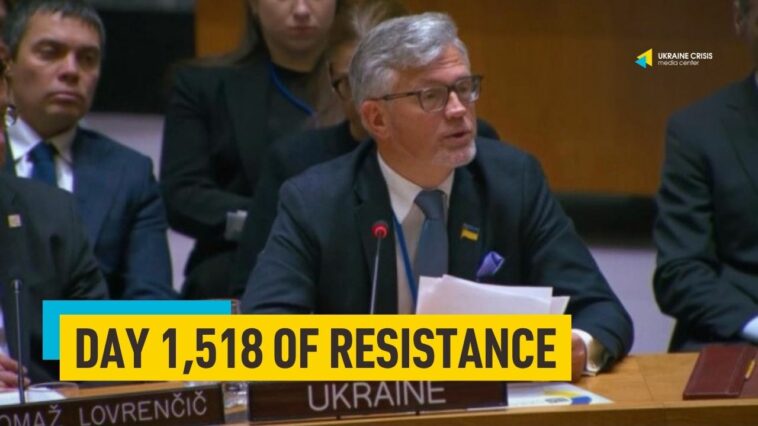
Ukraine’s Ambassador to the UN, Andriy Melnyk, exposed Russia’s false claims at a meeting of the UN Security Council on Monday. The meeting was called at Ukraine’s request following intense Russian strikes last week.
Russia’s UN Ambassador Vasily Nebenzia told the Security Council that the President of Ukraine is actively engaging with the countries in the Gulf out of fear that the international attention is shifting to the Middle East.
Melnyk responded by saying: “In reality, this assertion reveals something else, namely Russia’s complete loss of credibility and growing irrelevance in this region. The truth is that it is Ukraine that is extending a hand of practical assistance to its partners in the Gulf, helping them protect their energy infrastructure from criminal strikes by Iranian drones and missiles, supported by Russia.”
Russia is the main accomplice of the Tehran regime, he continued, it “has betrayed the Gulf countries, delivered them a knife in the back, and abused its veto to block a crucial draft resolution on freedom of navigation in the Strait of Hormuz.”
He also said Russia is having a problem with drafting and has sustained staggering losses.
“Instead of spreading disinformation about the Ukrainian army aimed at driving a wedge and sowing division in our society, perhaps Mr. Nebenzya should reflect on the alarming reality inside Russia’s armed forces,” Melnyk said.
Russia is losing no less than 30,000-35,000 soldiers a month with battlefield casualties exceeding its recruitment plans.
“The Kremlin is increasingly struggling to attract volunteers for its vicious war of aggression despite unprecedented financial incentives. Russian regional authorities are engaged in an unsustainable bidding contest, offering ever-higher signing bonuses that far exceed average incomes,” he said.
“Recruitment relies on coercion, pressure on vulnerable social groups, prisoners, migrant workers, recently naturalized citizens, and foreign mercenaries,” he added.

