

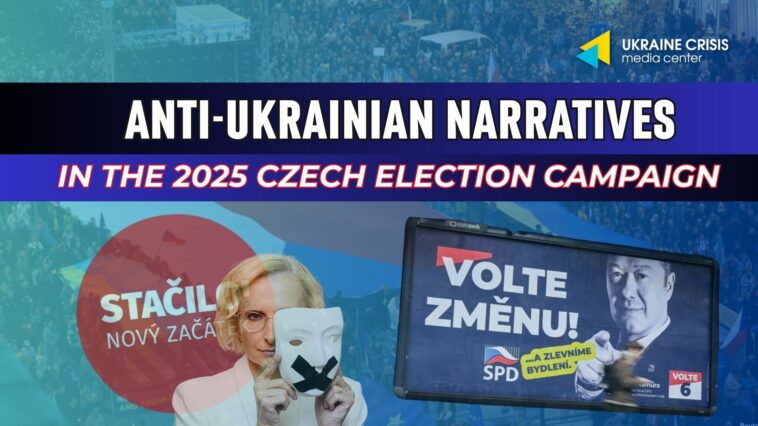
The elections to the Chamber of Deputies of the Czech Republic, held on 3–4 October 2025, significantly changed the country’s political landscape. The ANO 2011 movement (“Action of Dissatisfied Citizens 2011”), led by former Prime Minister Andrej Babiš, won the elections, outperforming the ruling coalition. The election results paved the way for the formation of a new parliamentary majority led by ANO, with the participation of Tomio Okamura’s Freedom and Direct Democracy party (SPD) and Motoristé sobě (AUTO). Observers noted the distinctly populist nature of the election campaign. Key themes promoted by opposition parties included dissatisfaction with inflation, rising energy prices, migration issues, and criticism of the EU’s environmental policy.
Coalition negotiations are currently ongoing. From Ukraine’s perspective, the most significant concern is the potential role of SPD, as the party consistently holds skeptical positions toward Ukraine and frequently echoes pro-Russian narratives. SPD is often described as a populist, radical, and authoritarian party, although it presents itself as national-conservative. The party opposes the EU’s migration policy, calls for a referendum on the Czech Republic’s withdrawal from the EU and NATO, supports cooperation with the Russian Federation, and advocates ending assistance to Ukraine, including revoking refugee status for Ukrainian citizens.
According to available information, the previous coalition agreement provides SPD gaining control over three government ministries. SPD is expected to take over the Ministries of Defence, Agriculture, and Transport, as well as nominate its candidate for the position of Speaker of the Chamber of Deputies.
Given the inclusion of right-wing populists from SPD in the governing coalition, the level of social protection for Ukrainians in the Czech Republic may decrease under pressure from ANO’s coalition partners. It is worth mentioning that Ukrainians constitute the largest group of foreign nationals in the Czech Republic-over 581,000 people, accounting for 53% of all foreigners in the country. As of mid-2025, more than 378,000 individuals have been registered under the temporary protection programme, which grants Ukrainian refugees access to public health insurance, education, and the labour market.
The new government programme is also expected to include cuts to funding related to support for Ukraine. As a result, Prague’s role in the artillery ammunition coalition has come into question. According to Prime Minister Petr Fiala, from the beginning of Russia’s full-scale invasion until the end of October 2025, the Czech Republic provided Ukraine with more than 3.7 million artillery shells through various financial mechanisms.
The parliamentary elections in the Czech Republic also highlighted a broader trend in the rhetoric of European far-right and far-left politicians: a shared criticism of national governments’ policies of supporting Ukraine. In the Czech electoral campaign, the movement “Stačilo!” (“Enough!”) became the main transmitter of pro-Russian narratives regarding Ukraine and the EU. However, the party’s anti-Ukrainian messaging did not help it pass the electoral threshold.
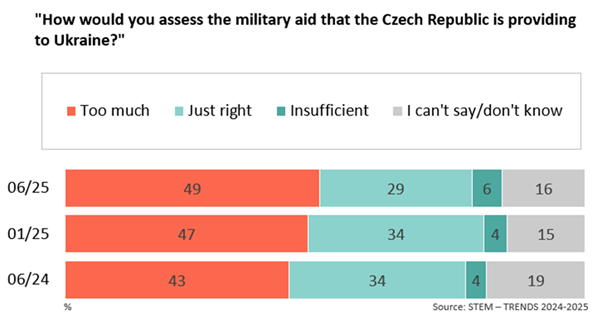
At the same time, skepticism toward Ukraine-related policies resonates with a segment of the Czech electorate. According to a STEM survey conducted in June 2025, nearly 50% of respondents believed that military assistance to Ukraine was “too extensive.”

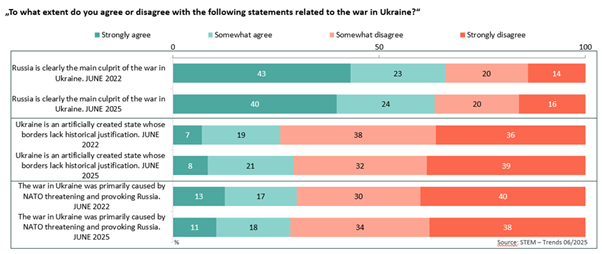
The same survey also showed that one third of Czechs place responsibility for the Russian–Ukrainian war on Kyiv and the West. A total of 29% of respondents fully or partially agreed with the claim that Ukrainian statehood is “artificial” in nature.

Elections is a particularly vulnerable period in the information domain, characterized by an accelerated news cycle and an increased volume of media content related to socially and politically significant issues. In this context, the Hybrid Warfare Analysis Group examined anti-Ukrainian narratives disseminated during the 2025 election campaign in the Czech information space. The study focuses on the campaign messaging of the SPD party and the “Stačilo!” movement.
Right-wing parties
At the end of March 2025, four right-wing political forces in the Czech Republic – SPD, PRO, Svobodní, and Trikolora – announced the formation of a pre-election coalition under the leadership of SPD. The leaders of PRO, Svobodní, and Trikolora were included on SPD’s electoral list and, as a result of the vote, entered the newly elected Czech parliament.
The coalition presented itself as a “genuine alternative” to the incumbent government. One of the key issues uniting these parties was their assessment of policy toward Ukraine – particularly with regard to support for Ukraine in its war against Russia and the presence of Ukrainian refugees in the Czech Republic.
Freedom and Direct Democracy (SPD)
The overall tone of SPD’s rhetoric toward the Ukrainian state and support for Ukraine is distinctly negative. SPD leader Tomio Okamura and other party representatives openly criticize the Ukrainian authorities, portray Ukraine as a weak and unreliable ally, and oppose any substantial assistance to Kyiv.
Okamura regularly describes the current Ukrainian government as “corrupt, undemocratic, and semi-fascist.” Since the beginning of the war, SPD publications have consistently promoted the narrative that Ukraine is an “unserious partner” plagued by nationalism and corruption. For example, in March 2025, Okamura stated that Ukraine “has nothing in common with democracy.”
The SPD leader has publicly expressed “understanding” for Russia’s demand to “denazify” Ukraine, referring to the fact that “streets in Ukraine are named after Stepan Bandera,” which he described as unacceptable.
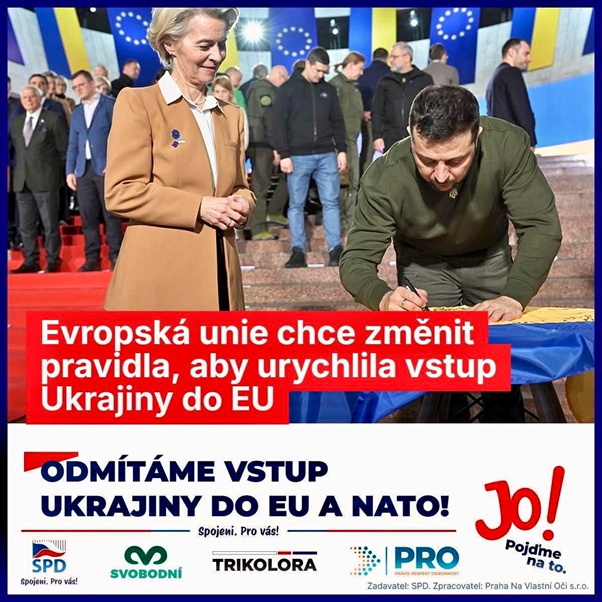
The party consistently opposes Ukraine’s Euro-Atlantic integration. Even before forming a coalition with other right-wing populist forces, SPD stated that “Ukraine’s accession to NATO is unacceptable to us.” In the past, Okamura openly argued that “Russia should join NATO first,” and only then could Ukraine’s membership be discussed. According to SPD’s narrative, Ukraine’s accession to NATO would allegedly drag the Czech Republic into a “foreign civil war.” Similarly, SPD members express skepticism toward Ukraine’s accession to the EU, emphasizing alleged economic and security risks.
SPD sharply criticizes the Czech government for its military and financial support for Kyiv. Okamura has repeatedly claimed that continued arms deliveries “only prolong the conflict,” which Ukraine allegedly “cannot win by military means.” SPD’s position is to push for immediate peace negotiations, even at the cost of territorial concessions by Ukraine.
SPD systematically appeals to public dissatisfaction with the number of Ukrainian refugees. Okamura claims that the mass arrival of Ukrainians has “worsened the housing situation and increased queues in hospitals.” He insists on a “review of all residence permits issued to Ukrainians in the Czech Republic.” According to SPD, only Ukrainians who “work in positions unattractive to Czechs” (low-paid or physically demanding jobs) should be allowed to stay.
A particularly illustrative statement was made by Okamura in September 2025:
“We are Czech politicians and we stand on the side of Czech citizens, so this is not out of hatred, but we must bring order to the presence of Ukrainians.”
SPD’s rhetoric toward Ukraine, which had been hostile even prior to the coalition, remained consistently negative and became increasingly radicalized toward the autumn of 2025. While in the spring the emphasis was placed on the argument that the Czech Republic “should not exhaust itself by helping Ukraine” and must “care primarily for Czechs,” during the summer Okamura significantly intensified his information campaign.
Against the backdrop of news about Donald Trump’s peace initiatives, the SPD leader effectively began to voice key Russian propaganda talking points, claiming that “Russia is winning this war and the West must agree to Moscow’s terms,” including territorial concessions and the “denazification” of Ukraine.


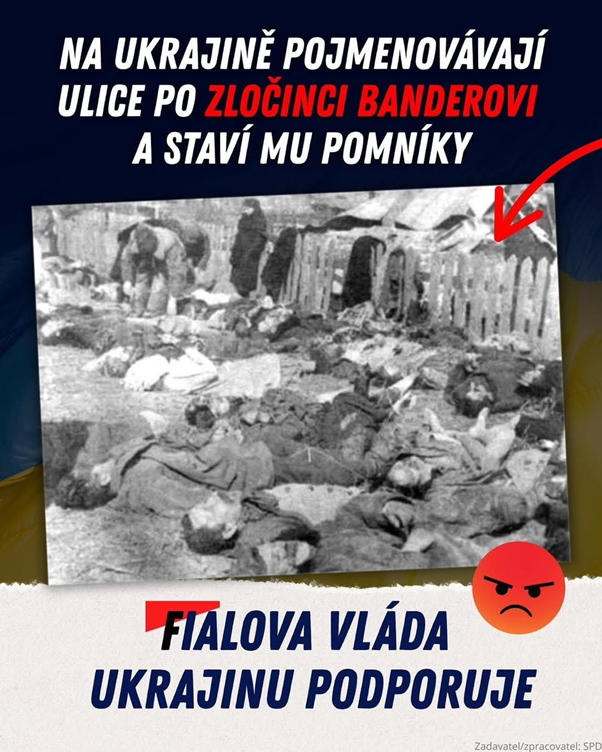

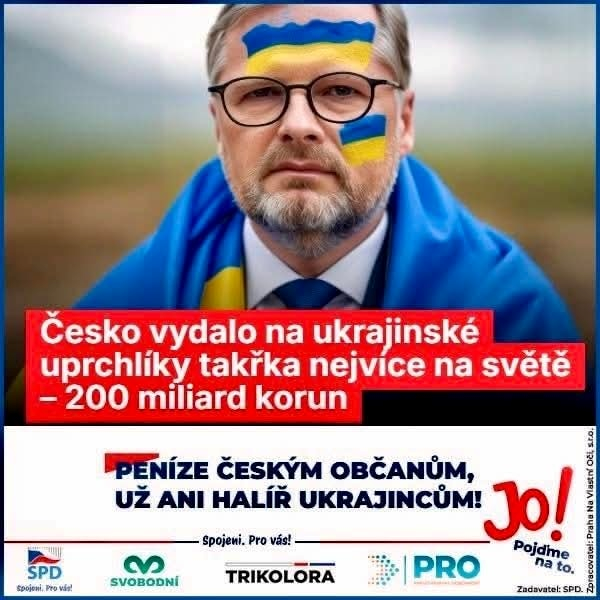

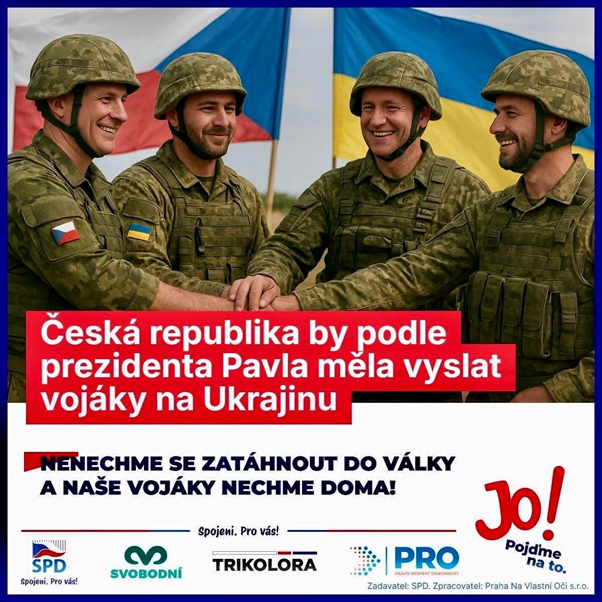
“Law, Respect, Expertise” (PRO)
The leader of the PRO party, Jindřich Reichl, has adopted an even harsher public stance toward Ukraine. Although PRO formally speaks of “peace” and the “national interests of the Czech Republic,” in practice its rhetoric often directly mirrors Kremlin messaging. Reichl’s speeches are saturated with accusations against Ukraine and the West, extending to the outright justification of Russia’s actions.
At the beginning of 2025, Reichl still attempted to disguise his pro-Russian views under slogans of “peace” and “Czech patriotism.” However, during the summer-particularly following Donald Trump’s return to the U.S. presidency and his statements about the need to quickly “reach an agreement” with Putin – the PRO leader effectively “dropped the mask”. By August–September, his rhetoric had become nearly indistinguishable from Russian propaganda: he openly repeated Kremlin narratives and even called for coercive actions against Ukraine. This indicates that between March and September, PRO’s position became markedly more hostile toward Ukraine, abandoning euphemisms altogether. The coalition with SPD appears to have further reinforced this trend.
Reichl systematically discredits President of Ukraine Volodymyr Zelenskyy. For instance, he publicly described Zelenskyy as “an emotionally unstable person addicted to cocaine, ready to do anything for his own survival,” while labeling the transfer of advanced weapons to Ukraine as “absolute madness.”
One of Reichl’s most radical statements was made in August 2025. The politician claimed that “of the two warring states, we are supporting the one that attacks European energy infrastructure,” referring to the alleged Ukrainian sabotage of the Druzhba oil pipeline, through which Russian energy resources are exported to Hungary and Slovakia. This narrative deliberately distorts cause-and-effect relationships, portraying Ukraine as an aggressor toward neighboring countries while ignoring Russia’s systematic strikes on Ukrainian energy infrastructure.
The most shocking narrative promoted by PRO is the proposal to direct NATO military force against Ukraine itself. Following the pipeline incident, Reichl stated that, were he in the position of the Hungarian or Slovak governments, he would “demand that NATO activate Article 5 and strike Ukraine, even militarily.” He described Kyiv’s actions as “brutal blackmail of Orbán and Fico” and emphasized that “blackmailers must be dealt with mercilessly.”
Like SPD, the PRO party advocates the immediate cessation of military assistance and financial support for Ukraine by the Czech Republic. Reichl accuses the Czech government of harming the country through its support for Ukraine, claiming it allegedly fuels inflation and budget deficits. PRO calls for focusing on domestic issues, arguing that as far as the war is concerned, “let the United States and Russia negotiate—Czechia should not interfere.”

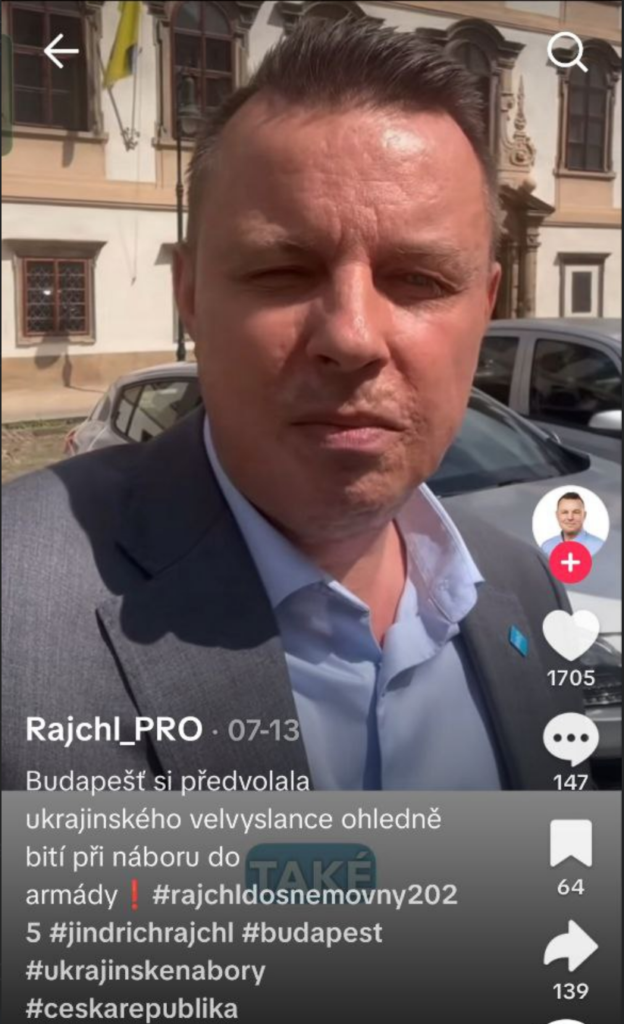

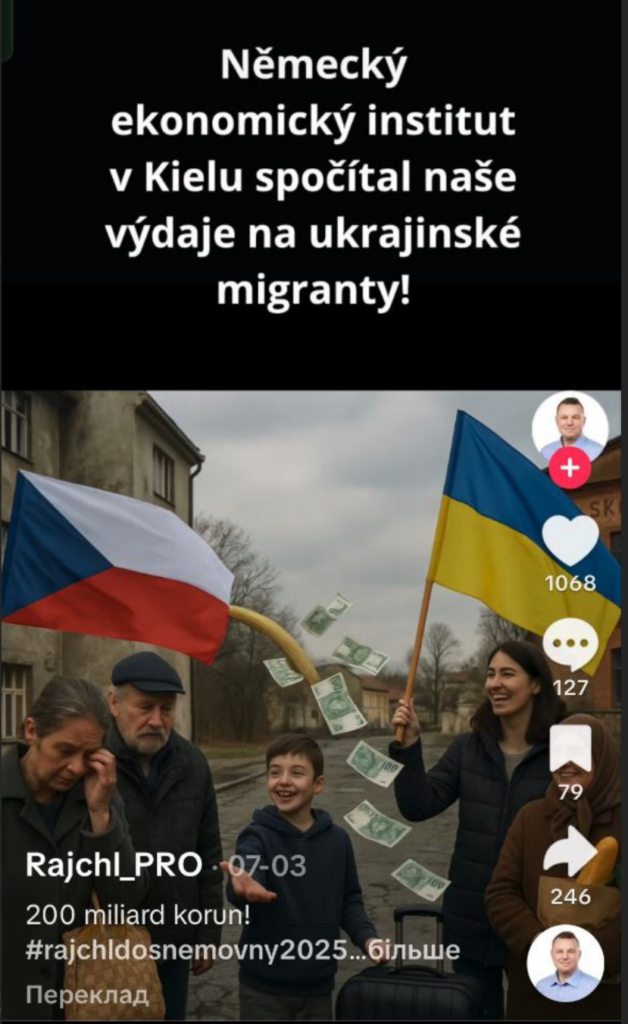
Svobodní
The leader of the Svobodní party, Libor Vondráček, emphasizes that he is “not pro-Russian,” while simultaneously arguing that Czechia should not spend money on Ukraine and should instead focus on its own domestic problems. Unlike SPD or PRO, representatives of Svobodní less frequently rely on ideological or historical arguments; instead, they stress the financial dimension of the issue and principles of public governance.
In March 2025, immediately after forming an alliance with the significantly more radical SPD and PRO, Vondráček was forced to respond to accusations that Svobodní had “gotten into bed with pro-Russian forces.” He justified the alliance by stating that it was “not pro-Russian” and that the parties were united by shared pragmatic goals, while the issue of Ukraine was allegedly secondary. However, even then he acknowledged that “on the issue of Ukraine, we are in complete agreement with our coalition partners.”
By autumn 2025, Svobodní’s rhetoric had noticeably converged with that of SPD. Although Vondráček refrains from openly offensive statements toward Ukrainians, unlike Okamura or Reichl, he increasingly repeats their talking points almost verbatim. For example, in August, speaking at a supporters’ convention, he claimed that “70% of Czechs want peace as soon as possible, even at the cost of Ukrainian territory,” citing opinion polls. This argument about the “will of the people” had been actively used by Okamura and was subsequently adopted by Svobodní.
It should be noted that several moderate members of Svobodní left the party due to the alliance with SPD, although party leaders do not publicly address these departures. In the information space, the party demonstrates unity with the coalition.
The party’s core message is the need to scale back state support for Ukraine. Vondráček stated explicitly: “We should not send money to Ukraine, because we want low taxes and a ‘lean’ (cost-efficient) state.” According to him, no state has a “moral obligation” to assist another country, even if it has been subjected to aggression: “A state has no morality – it serves its own citizens.”
Svobodní effectively propose an isolationist stance for Czechia. They argue that since Ukraine is not a NATO member, the war “does not concern our defense commitments,” and Prague should not devote significant resources to supporting Ukraine. Any foreign assistance, according to the party, should be provided solely through voluntary donations by citizens rather than from the state budget.
In the coalition’s programmatic documents, at Svobodní’s insistence, a demand was included to abolish the temporary protection regime for Ukrainian refugees. Instead, Ukrainians would be allowed to remain in the country only under standard asylum procedures. The party justifies this by claiming that there are allegedly “no longer obstacles to the safe return” of many refugees and that, therefore, a special regime is unnecessary. Although this position mirrors that of SPD and PRO, Svobodní frame it in legal and economic terms, arguing that “the European policy of temporary protection no longer corresponds to reality.”
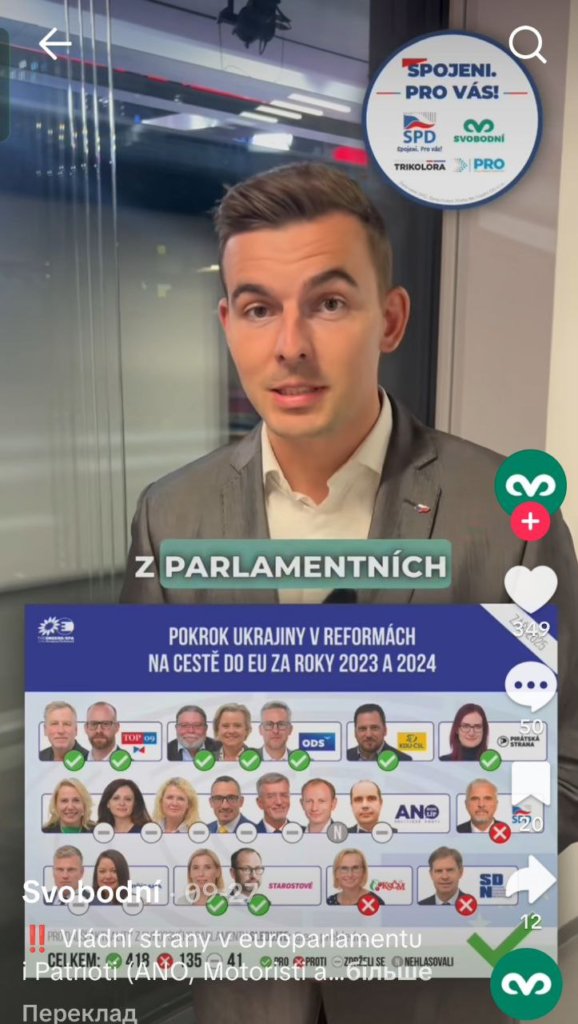
Traditionally Eurosceptic, the party also opposes EU enlargement to the East. In interviews and podcasts, Vondráček has stated bluntly: “We do not want Ukraine in the EU.” Regarding NATO, he echoes the coalition’s partners: in March 2025, the coalition announced a joint position that it would veto Ukraine’s accession to NATO if it had the opportunity while in power. Svobodní leader Libor Vondráček also positively assessed, on TikTok, a vote by an SPD representative in the European Parliament against a resolution in support of Ukraine.

Trikolora
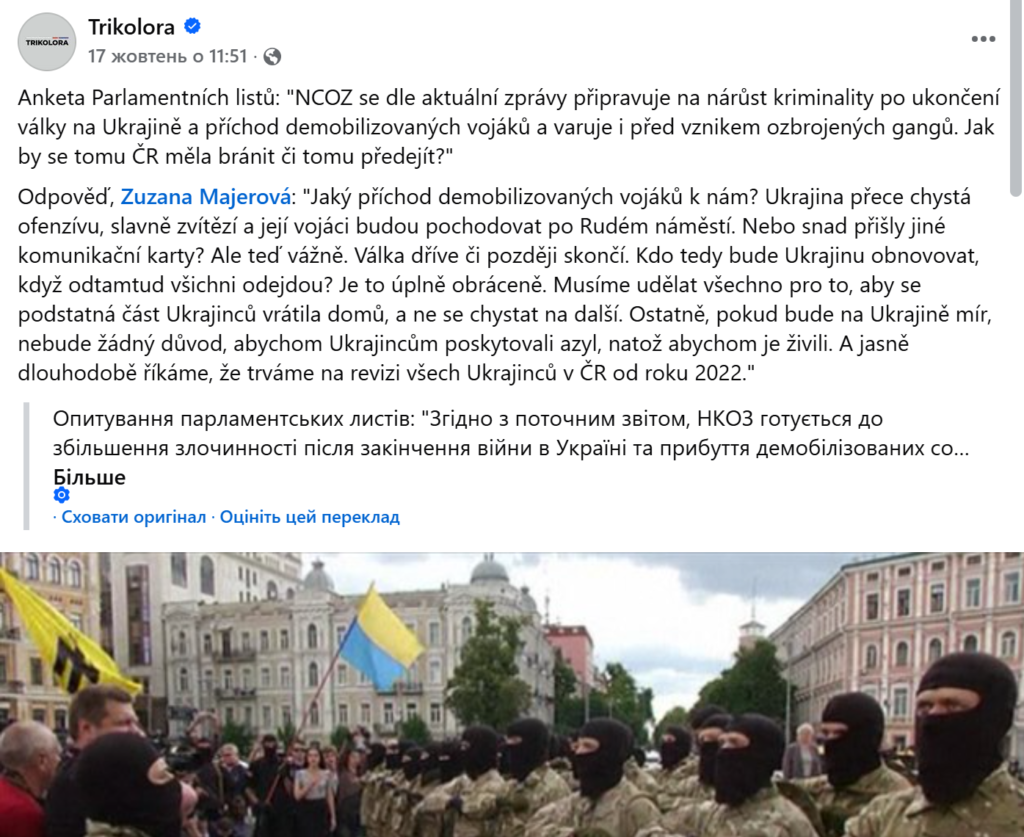
The Trikolora party, led by Zuzana Majerová, holds positions close to those of SPD and PRO but places particular emphasis on criticism of the United States and the EU in the context of the war. Trikolora actively disseminates these messages through the social media accounts of its leader and party spokespersons, including party ideologue Zdeněk Koudelka.
As early as the beginning of 2025 – prior to the formal creation of the coalition – the party unequivocally supported the notion of “Ukrainian neutrality” and blamed the West for the conflict. After uniting with SPD and PRO, these views gained a broader platform. The most notable change was an increase in public visibility: Majerová began appearing more frequently in televised debates, where she sharply criticized government policy toward refugees. For example, on the TV show “Co Čech, to politik!” she clashed with the pro-Ukrainian mayor Pavel Novotný, insisting that the admission of Ukrainian children disadvantaged Czech children. Overall, Trikolora continues to consistently promote anti-Ukrainian messaging, acting in close alignment with SPD.
Trikolora openly repeats the Kremlin’s claim that the West provoked the war. At the beginning of 2025, Koudelka published an essay that was subsequently shared by Majerová on Facebook. The text argued that:
“Ukraine could have been a buffer state between NATO and Russia, where neither side would dominate it. It could have been neutral and prosperous. Instead, the West – by supporting the Kyiv coup of 2014 and promising Ukraine NATO membership – placed Ukraine on a thorny path toward military suffering.”
Like its coalition partners, Trikolora insists that arms deliveries to Ukraine must be stopped immediately and that negotiations should begin. However, the party often frames its position in humanitarian terms, arguing that “the continuation of the war only multiplies the number of victims.” Trikolora frequently cites opinion polls – specifically the same claim that 70% of Czechs support a rapid peace even at the cost of Ukrainian territory – to argue that a majority of Czech citizens are allegedly willing to “sacrifice” part of Ukraine in exchange for peace.
Trikolora’s rhetoric toward Ukrainians who have found refuge in the Czech Republic is reduced to the message that “they create problems for Czechs and should return home.” Zuzana Majerová has repeatedly claimed that the presence of Ukrainians overburdens the education system and social services. For example, she stated: “Our children cannot get into kindergartens because of [the presence of] Ukrainians.”
In June 2025, Majerová openly supported SPD’s demand to deport most Ukrainian refugees, writing: “According to SPD’s position, Ukrainian refugees should return home…” She added that government arms deliveries only prolong the conflict.
In publications by party spokespersons, themes such as NATO’s bombing of Yugoslavia or Western colonial conquests are frequently invoked to divert attention from Russia’s contemporary aggression. In the aforementioned essay, Koudelka emphasized that the “American attack on Yugoslavia destroyed the post–Cold War peace” and argued that the United States sought to “monopolize the right to conduct military strikes,” but that Russia thwarted these plans in 2022. These narratives are intended to undermine the moral legitimacy of supporting Ukraine by suggesting that the West is “not without sin” and therefore has no right to lecture others.

STAČILO!
On the opposite ideological flank of the Czech political spectrum, the most visible political force at present is STAČILO! (“Enough!”) – a broad coalition of left-wing political parties. The left-wing alliance was led by Kateřina Konečná, leader of the Communist Party of Bohemia and Moravia (KSČM), who became the key transmitter of the movement’s campaign messaging in Czech media and social networks.
STAČILO! built its election campaign around issues of social protection for “ordinary people.” Party spokespersons regularly emphasized the “problems of ordinary Czechs,” in particular the shortage of doctors, medicines, and social services. At the same time, according to STAČILO!’s interpretation, one of the main causes of this situation lies in the expenditures of Petr Fiala’s government on strengthening the Czech defence sector and on supporting Ukraine. It is therefore unsurprising that calls to immediately halt arms supplies to Ukraine were regularly voiced at the party’s election rallies, videos of which were widely disseminated on social media in short-form formats.

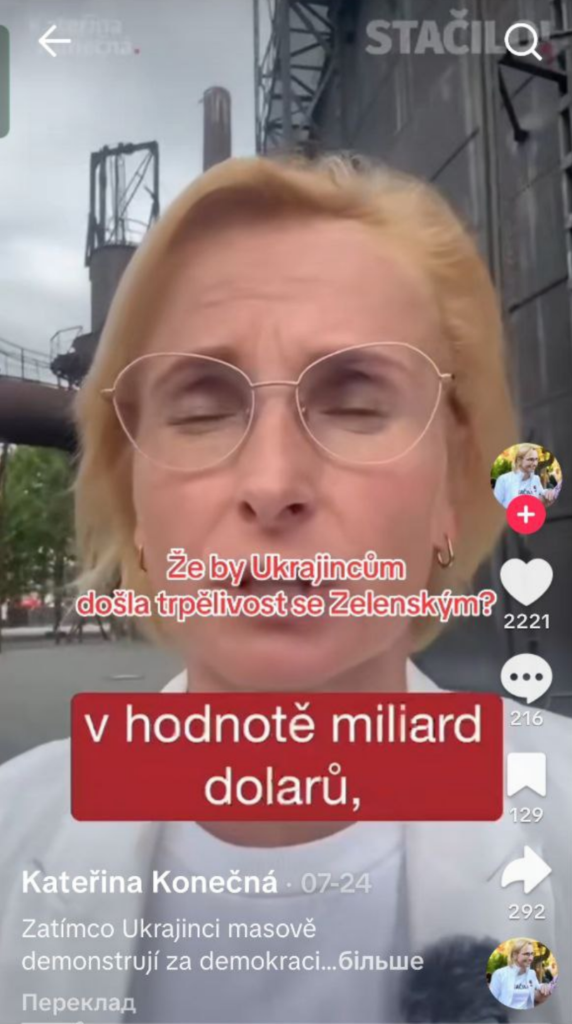
Notably, during public events held as part of the election campaign, STAČILO! representatives largely avoided focusing on Russian aggression as the cause of the war. Instead, they shifted responsibility onto the West, promoting narratives about an allegedly aggressive NATO.
Also characteristic of the rhetoric of Europe’s far-left political forces, STAČILO! spokespersons made statements “exposing” alleged cases of “neo-Nazism in Ukraine” and criticized Kyiv’s official interpretation of World War II history.
At the same time, unlike right-wing parties, Czech communists devoted significantly less attention to migration during the election campaign. The issue of Ukrainian refugees in Czechia was instead framed through the lens of prioritizing the interests and rights of Czech citizens. These messages were integrated into STAČILO!’s broader information strategy, which combined socially oriented slogans with interpretations of government policy that closely mirrored Russian propaganda narratives.
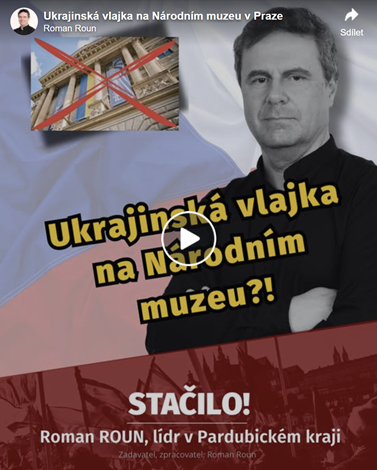
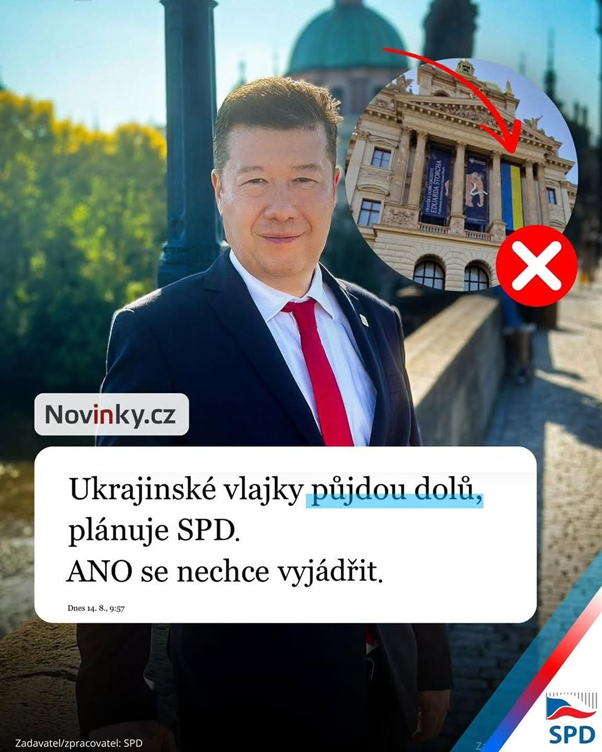
Thus, on the issue of Ukraine, the positions of left-wing and right-wing political forces in Czechia reveal numerous points of convergence. One notable example of this “misalliance” between STAČILO! and SPD is their shared stance on removing Ukrainian symbols from official Czech institutions-symbols that had been displayed since 2022 as a sign of solidarity with Ukraine.


Summarizing the findings, the authors of the study identify the following trends in Czech politics highlighted by the 2025 election campaign:
Risks to continued support for Ukraine.
A future coalition led by ANO, potentially involving SPD, implies a revision of Prague’s policy toward Ukraine. A reduction in financial and military assistance is expected, alongside a reassessment of support programs for Ukrainian refugees and a gradual decrease in Czech participation in European security initiatives related to Ukraine.
Convergence of radical right and left rhetoric on Ukraine.
A defining feature of the elections was the rapprochement between the extreme flanks of the Czech political spectrum – SPD and STAČILO! – on issues related to Russian aggression and support for Ukraine. This convergence indicates the transformation of anti-Ukrainian rhetoric into a broader anti-Western, anti-elite, and pro-Russian narrative that increasingly influences public opinion and the political agenda in Czechia.
Strengthening of Ukraine-skeptical tendencies in Czech political discourse.
The elections demonstrated a drift of Czech politics toward populism, Euroscepticism, and pragmatic isolationism. Both far-right and far-left forces used anti-Ukrainian rhetoric as a tool of electoral mobilization, combining it with criticism of the government’s policies on support for Ukraine and assistance to Ukrainian refugees.
Volodymyr Solovian, Mykyta Kuzmenko