

Before Russia’s full-scale invasion of Ukraine, Russian tech and science-popularization bloggers largely avoided topics related to politics. They were seen as “voices of progress” and catered to a younger audience that was distant from state propaganda. In 2022, video bloggers – like other well-known Russians – faced the need to make a choice: to speak out against the war, to remain silent, or to support the Kremlin’s official position. However, as censorship tightened, public figures who initially voiced anti-war views were forced to move toward the Kremlin’s official line.
The Hybrid Warfare Analysis Group examined several examples of how Russian bloggers transformed and how their audiences reacted. One of the most illustrative cases was Valentin Petukhov, better known as Wylsacom. Ranked by Forbes in 2021 as the wealthiest tech blogger in Russia, he initially positioned himself as an opponent of the war. His emotional video from February 24–25, 2022, containing anti-war messages, is still available on his channel – Petukhov himself emphasized in 2023 that he had not deleted it and was proud of that decision: “I spoke out on February 24, 2022; the video is still on the channel – this is a great point of pride for us. Unlike many others, I didn’t delete anything. I said what I felt, and there is nothing there to be ashamed of or that needs to be removed. I simply said that I do not support this [war] and do not want to be associated with it.”
However, by 2025 Petukhov’s rhetoric had become noticeably more loyal to the authorities. He did not make direct statements supporting the “special military operation,” but began integrating into the Kremlin’s agenda through technology-related topics. The culmination of this shift was his public entry into the orbit of state propaganda in late 2025. On December 19, Wylsacom took part in a live call-in show with Putin. The blogger was given the floor to ask a question about the new Russian messenger “Max,” and he posed a question that was quite convenient for the authorities: “Was there really a need to create a domestic messenger, and will it be able to compete with Western services?”

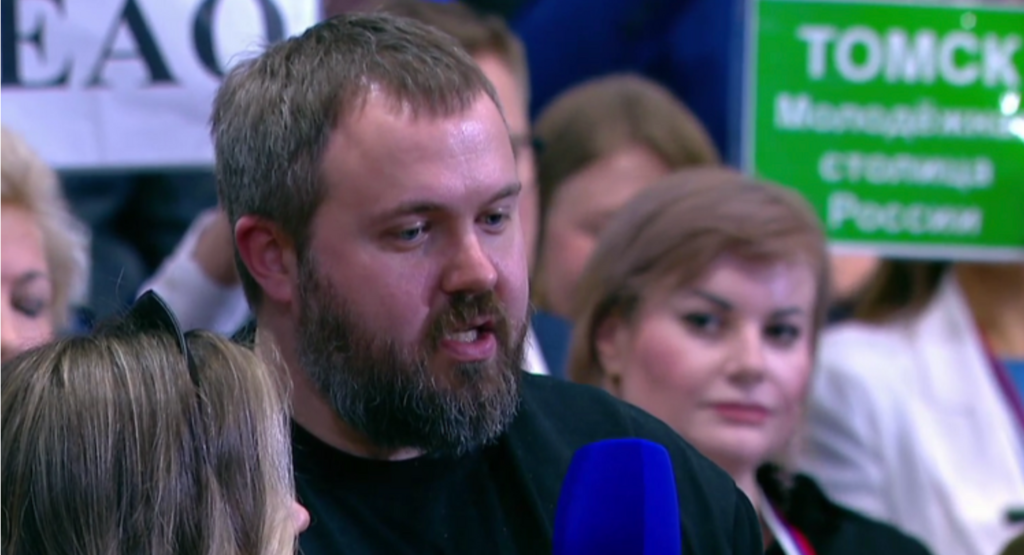
Putin, unsurprisingly, gave a predictable response, explaining that “yes, a national messenger is necessary because foreign platforms do not comply with Russian laws; that is precisely why we slowed them down.” Moreover, the president boasted that thanks to “Max,” Russia had entered the group of three countries (along with the United States and China) that possess “full digital sovereignty.” Translated from “Kremlin language” into plain terms, this means that Max is fully controlled by Russian security services and in fact represents yet another link in the construction of a digital concentration camp in the Russian Federation.
Wylsacom, for his part, publicly expressed satisfaction with the Russian leader’s answer, noting that he was pleased to hear Putin’s view on competition among messengers and that “this is very good.” For a significant portion of the blogger’s audience, his appearance in a friendly dialogue with Putin looked like a betrayal of principles. In the Russian segment of Reddit and in independent Telegram channels, Petukhov began to be labeled an “ambiguous figure” – someone who attempts to present a pro-Kremlin position in a soft, seemingly apolitical form.
At the same time, it cannot be said that Wylsacom’s entire audience turned away from him. First, a significant share of his subscribers inside Russia prefers not to notice the political subtext. Second, the blogger carefully weaves loyalty to the authorities into his content – primarily through discussions of technology, internet censorship, and related issues – without turning his channel into overt propaganda. This has helped him retain most of his subscribers.
If Wylsacom’s evolution unfolded over the course of three years, the case of Yan Toples came as a surprise to most of the blogger’s followers. Yan Lapotkov (the creator of the “Toples” channel with nearly 8 million subscribers) had long kept his distance from politics. Moreover, at the beginning of Russia’s full-scale invasion of Ukraine, he explained to his viewers how media lies work. That video material, which was not loyal to the authorities, has since been removed from his channel. Subsequently, throughout 2022–2023, “Toples” avoided the topic of the war, focusing instead on science, technology, history, and similar subjects. Around Lapotkov there emerged the image of a “smart guy in glasses” who silently disagrees with the war but, in order not to take risks, simply does not talk about it.

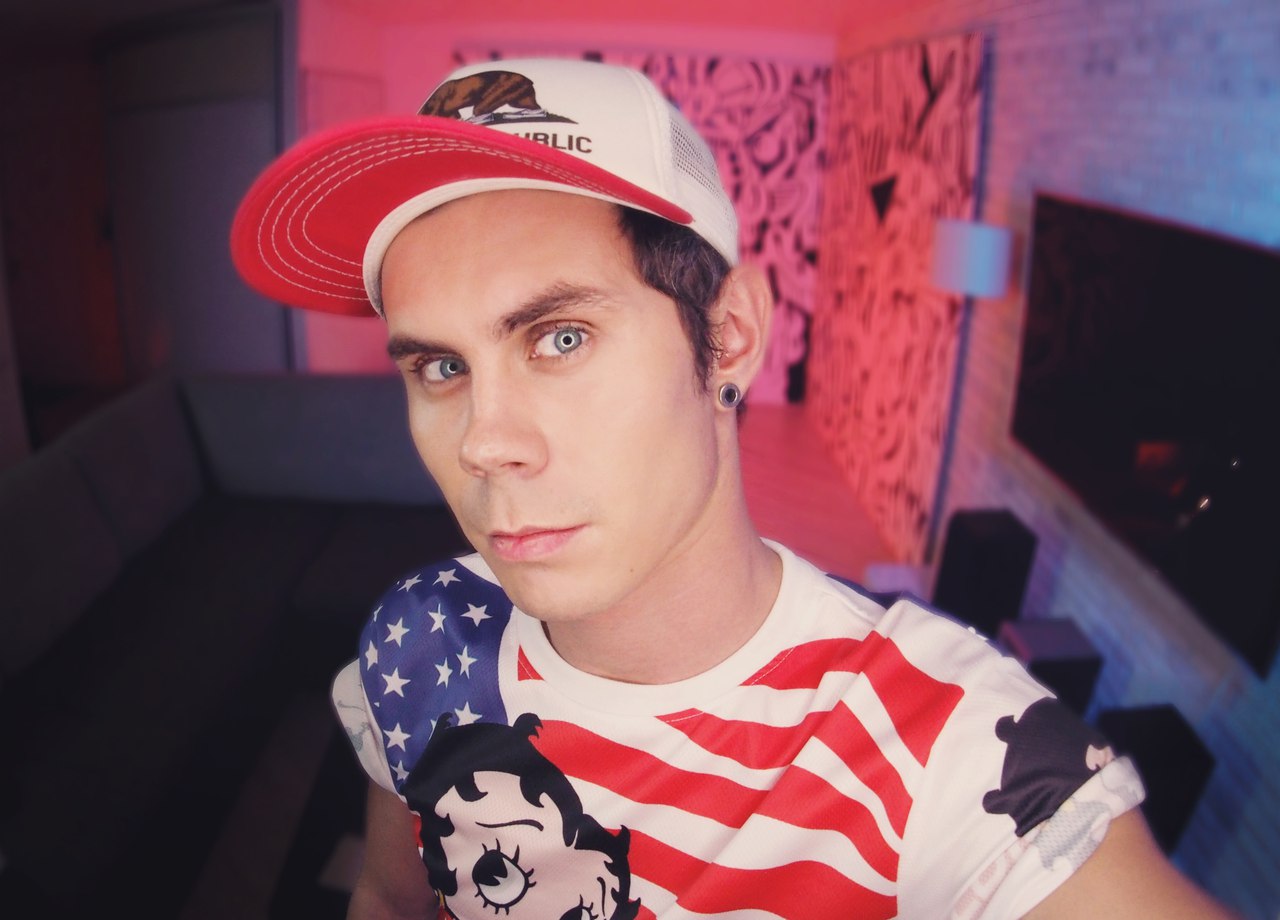
As a result, November 26, 2025 became a slap of reality for the blogger’s audience. An overtly pro-war post unexpectedly appeared on the project’s Telegram channel. Yan published a text disguised as reflections on the development of drones, but in fact it was an ode to Russian UAVs and to soldiers fighting in Ukraine. He wrote that “drones carried out a real revolution on the fields of the “SMO”. There, where today our Russian fighters are giving their lives for the country, fighting for our common victory,” adding that the era of head-on clashes between armies had passed and that drones were now changing the rules of warfare.
In effect, “Toples” expressed support for military actions and for Russian “innovations” in the war, fully contradicting his own earlier statements. The incident quickly drew attention: social media users immediately began saying that Yan had “gone Z.” According to unofficial estimates, after the November “switch,” “Toples” lost a significant number of subscribers. The exact figures vary: some social media commentators mentioned hundreds of thousands of unsubscribes in just a few days. For example, discussions on Reddit cited a figure of around 260,000 – allegedly the drop in followers after the scandal (apparently referring to the YouTube audience). Although YouTube’s official statistics do not confirm this, the downward trend persists.
To understand why these bloggers (and not only them) changed their positions, one must take into account the broader information environment in Russia. Since spring 2022, strict censorship laws have been in force: any public “discrediting of the Russian army” (that is, criticism of the war) can result in fines or criminal prosecution. Many public figures chose emigration or complete silence in order not to become targets. Under these conditions, the pressure on top bloggers was enormous. The authorities clearly understand their influence on young audiences and therefore seek either to neutralize or to co-opt such figures.
Wylsacom and “Toples” tried for some time to strike a balance: they did not support the SMO, but after the first months they also avoided directly criticizing it. However, as the war dragged on, neutrality became increasingly untenable. The Kremlin began involving loyal influencers in its propaganda activities (for example, inviting Wylsacom to the live call-in show). Wylsacom and “Toples” are not isolated cases. Over the past two years, the Russian blogging environment has seen a mass split between those who left or went silent and those who became part of propaganda.
In particular, it is worth mentioning Stas Vasilyev, known as “Stas Ai Kak Prosto!” Once a popular tech reviewer and critic of the IT industry, after 2020 he increasingly gravitated toward pro-Kremlin views. In 2022, Stas openly supported the war, launched political livestreams on YouTube in which he attacked opposition figures, justified Russia’s actions, and even quarreled with other bloggers, urging them to “make a patriotic choice.” In essence, he became one of the first major Z-bloggers to emerge from the tech segment.
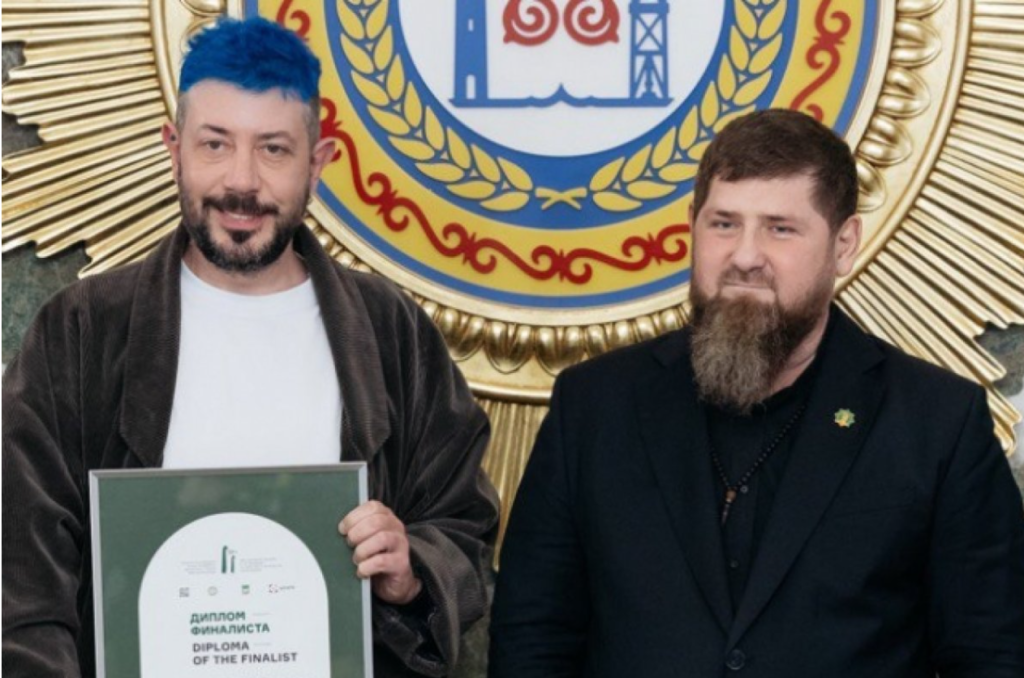
Another illustrative figure is Artemy Lebedev. Although he is a designer rather than a tech blogger, his blog and YouTube channel were for many years part of a similar information sphere (he also reviewed gadgets, travel, and so on). Lebedev adopted a pro-Kremlin stance as early as 2014, and since 2022 has become one of the most outspoken propagandists: publicly supporting the war, traveling to Mariupol, creating Z symbolism, and so forth.

At the same time, a “purge” of disloyal voices continued. In 2023 and 2024, many YouTube channels run by opposition figures – and even by celebrities who were merely apolitical – were blocked or shut down under pressure.
We are observing an interesting rupture in Russian society: even spheres that had traditionally been apolitical have been drawn into the orbit of propaganda. Attitudes toward bloggers who openly supported the “SMO” have changed significantly and become polarized. On the one hand, official Russia and the pro-Kremlin majority accept and even encourage such influencers. On the other hand, the active online community perceives these “defectors” in an openly negative light. The stories of Wylsacom and “Toples” tell us how the war has broken the independent Russian YouTube sector. Once, these channels brought people together around interesting ideas, science, and technology; now, they divide audiences through politics.