
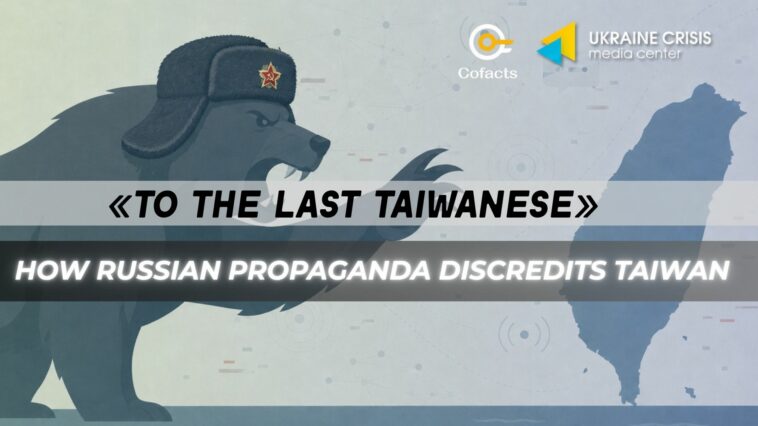
As part of its external propaganda, Russia systematically discredits the assistance provided to Ukraine by the democratic community. Even humanitarian support and civic solidarity initiatives are portrayed by pro-Kremlin media as manifestations of dependence on external forces or as attempts to gain political advantage through participation in an “anti-Russian coalition.” States from various regions of the world periodically become targets of such information attacks. One such example is Taiwan and its civil society.
At the same time, there is a widespread view that Russia does not conduct a separate information policy toward Taiwan but merely relays the messaging of official PRC media. However, an analysis of the Russian information space shows that pro-Kremlin outlets do not limit themselves to mechanically repeating Chinese talking points. They adapt the topic of Taiwan to their own propaganda system, drawing on narratives established in Russian discourse about “American puppets,” proxy war, the self-interested nature of international aid, and the artificiality of civic solidarity.
Such information activity shapes a negative image of Taiwan not only among Russia’s domestic audience but also among external consumers of Russian media content. This is why the Ukrainian Hybrid Threats Analysis Group at UCMC and the Taiwanese organization Cofacts analyzed how Russian state and pro-government information resources attempt to discredit Taiwan through its support for Ukraine and its expressions of solidarity with Ukrainian society. For the analysis, information cases were selected that indicate the spread of narratives specifically of Russian origin. This makes it possible to separate an independent Russian propaganda framework from the mechanical reproduction by Russian media of Beijing’s official talking points.
The U.S. ‘Proxy’
Russian state and pro-government media systematically portray Taiwan as a political instrument of the United States, devoid of its own interests and of independence in decision-making. Taipei supposedly merely carries out the instructions of Washington, which seeks to create a new center of confrontation in the Asia-Pacific region. In this respect, Russian propaganda reproduces the Soviet paradigm of covering Taiwan. In Soviet discourse, it was systematically depicted as an “outpost of American imperialism” in Asia. Contemporary Russian pro-government media use a similar construct, merely adapting it to the current context of the U.S.–China confrontation.
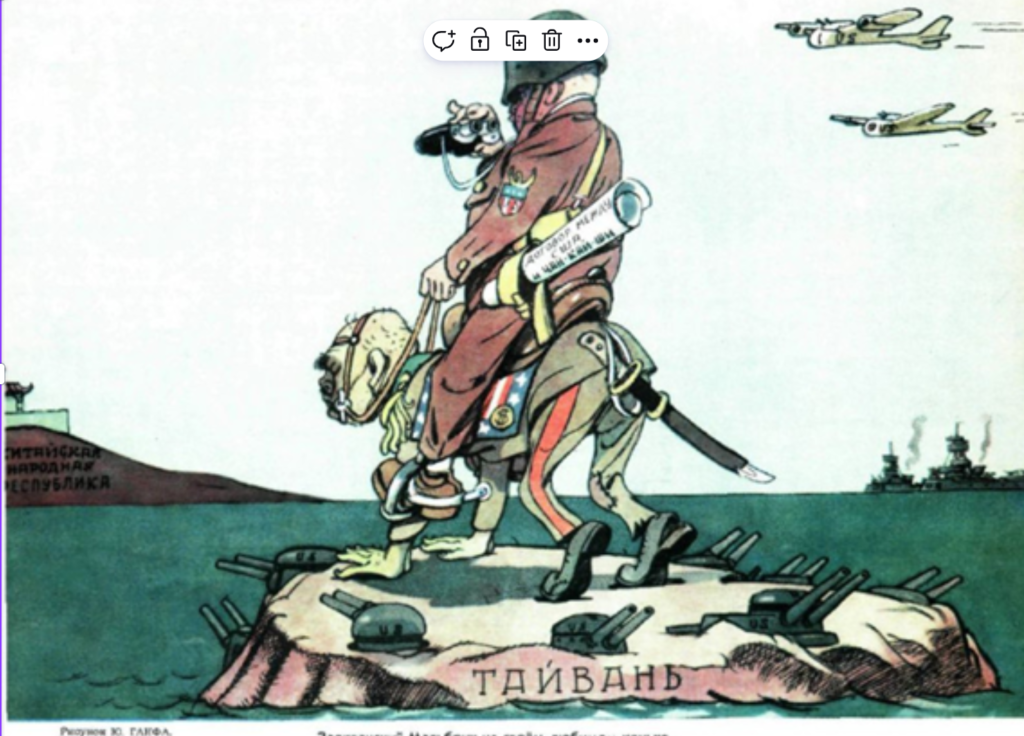
Today, an important element of this narrative has become the transfer onto Taiwan of the Russian propaganda template about a war “to the last Ukrainian.” For example, in October 2024 RIA Novosti ran the headline formula: “To the last Taiwanese: the Americans have found themselves a new Ukraine.” In the text, Taiwan’s leadership is called “American puppets,” and Taipei’s defense contacts with Washington are explained not as a reaction to pressure from the PRC but as supposed U.S. preparation for a proxy war.
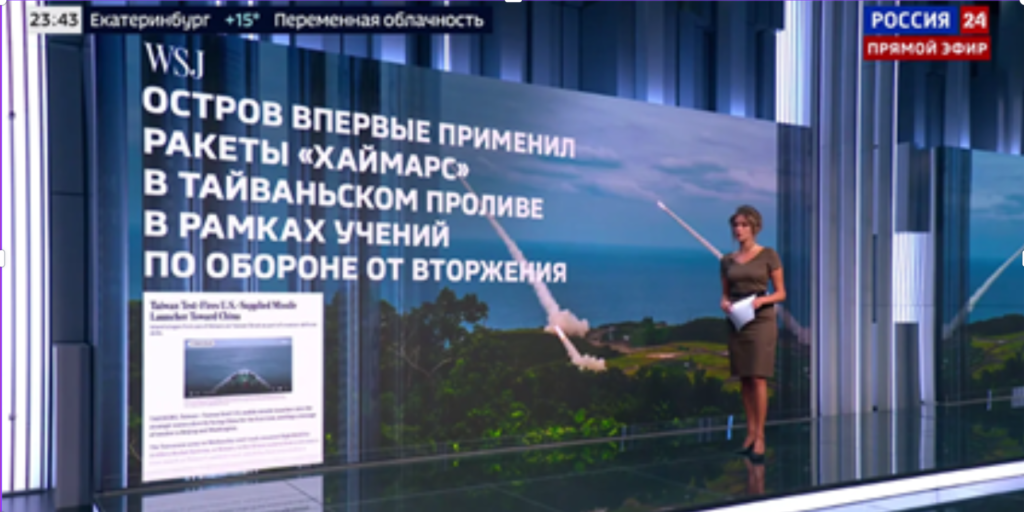
Taiwanese military exercises also regularly become a target of Russian propaganda. In particular, the annual Han Kuang exercises are described as a demonstration of the U.S. “intention” to militarize the island. Taiwan’s use of HIMARS systems or its study of the experience of modern wars is presented as transferring the “Ukrainian scenario” to Asia. At the same time, Russian media ignore the defensive nature of such measures and Taiwan’s right to prepare for a possible invasion.
The vocabulary that Russian media use with regard to Taiwan in reports about the region’s security situation is also telling. Instead of the name “Taiwan,” they often use the wording “the island” or “the Chinese island.” This manner of naming turns Taiwan from a political actor into an anonymous geographical object.
Discrediting Taiwan’s International Cooperation
The second direction of Russian information policy consists in presenting Taiwan as an unreliable and self-interested international partner. Taipei’s humanitarian, economic, and security initiatives are described exclusively as attempts to attract the attention of the United States and to obtain short-term political gain.
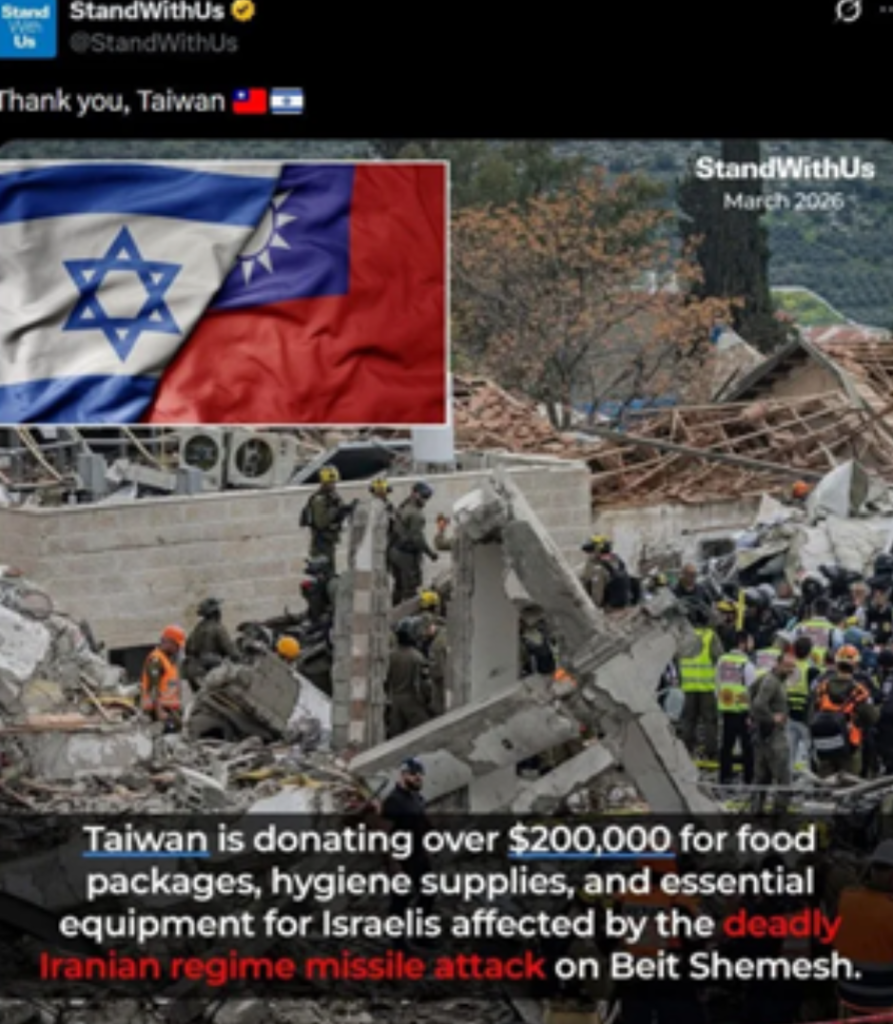
One characteristic storyline of Russian media in recent years concerns Taiwan’s assistance to states facing war or other crises. Support for the civilian population or the transfer of necessary equipment for humanitarian needs is interpreted by Russian propaganda as a manifestation of cynical political calculation.
As expected, Russian media pay particular attention to Taiwan’s cooperation with Ukraine and the Baltic states. In particular, Russian propagandists did not overlook the statement by Lithuania’s prime minister that “hopes for Taiwanese investment in semiconductor production have not materialized.” A number of Russian media used these words of the Lithuanian leadership as confirmation that Taipei supposedly fails to deliver the expected results despite its promises. The context of the diplomatic and economic discussions is pushed into the background, while a single critical remark is turned into a characterization of Taiwan’s entire foreign policy.
Information about the possible acquisition by the United States of decommissioned Taiwanese MIM-23 HAWK surface-to-air missile systems for subsequent transfer to Ukraine was covered in a similar way. Russian sources presented this situation not through the prism of the urgent needs of Ukrainian air defense but as an attempt by Taiwan to get rid of a “Cold War relic.” As a result, consumers of Russian disinformation are left with an image of Taiwan as a state that supposedly uses international conflicts to raise its own status while at the same time being unwilling to take on real commitments.
Ridiculing Support for Ukraine Among Taiwan’s Citizens
For part of Taiwanese society, Taiwan, like Ukraine, stands against an external power that denies its separate political identity, appeals to “historical unity,” and threatens the use of force. Therefore, acts of solidarity in Taiwan may be perceived not only as support for a distant country but also as a response to a threat that Taiwanese consider relevant to themselves. This is precisely why one of the directions of Russian propaganda regarding Taiwan has become the devaluation of Taiwanese society’s solidarity with Ukraine.
Russian Telegram channels that cover political events in East Asia usually portray charity fundraisers, demonstrations, and other initiatives of Taiwanese civil society as naive, artificial, or organized under external influence. Russian media and Telegram channels specializing in covering political developments in East Asia – “China-Vavilov” (145,000 subscribers) and “Kitayskiy svyaZnoy” (85,000 subscribers) – ridicule participants in pro-Ukrainian events or depict them as puppets of Western propaganda. Such media outlets reduce the civic stance of Taiwanese to “few and marginal actions.” Sometimes the messages are accompanied by hints that the events are supposedly organized by local authorities or American structures.
A common technique is also the devaluation of the assistance Taiwan provides to Ukraine. For example, ambulances handed over to Ukraine were described in the Russian Telegram segment as “vans for the man-hunters from the territorial recruitment centers” that are for now being called humanitarian aid. The authors of such messages, of course, provide no factual confirmation that the vehicles transferred by Taiwan are being used for anything other than their direct purpose.
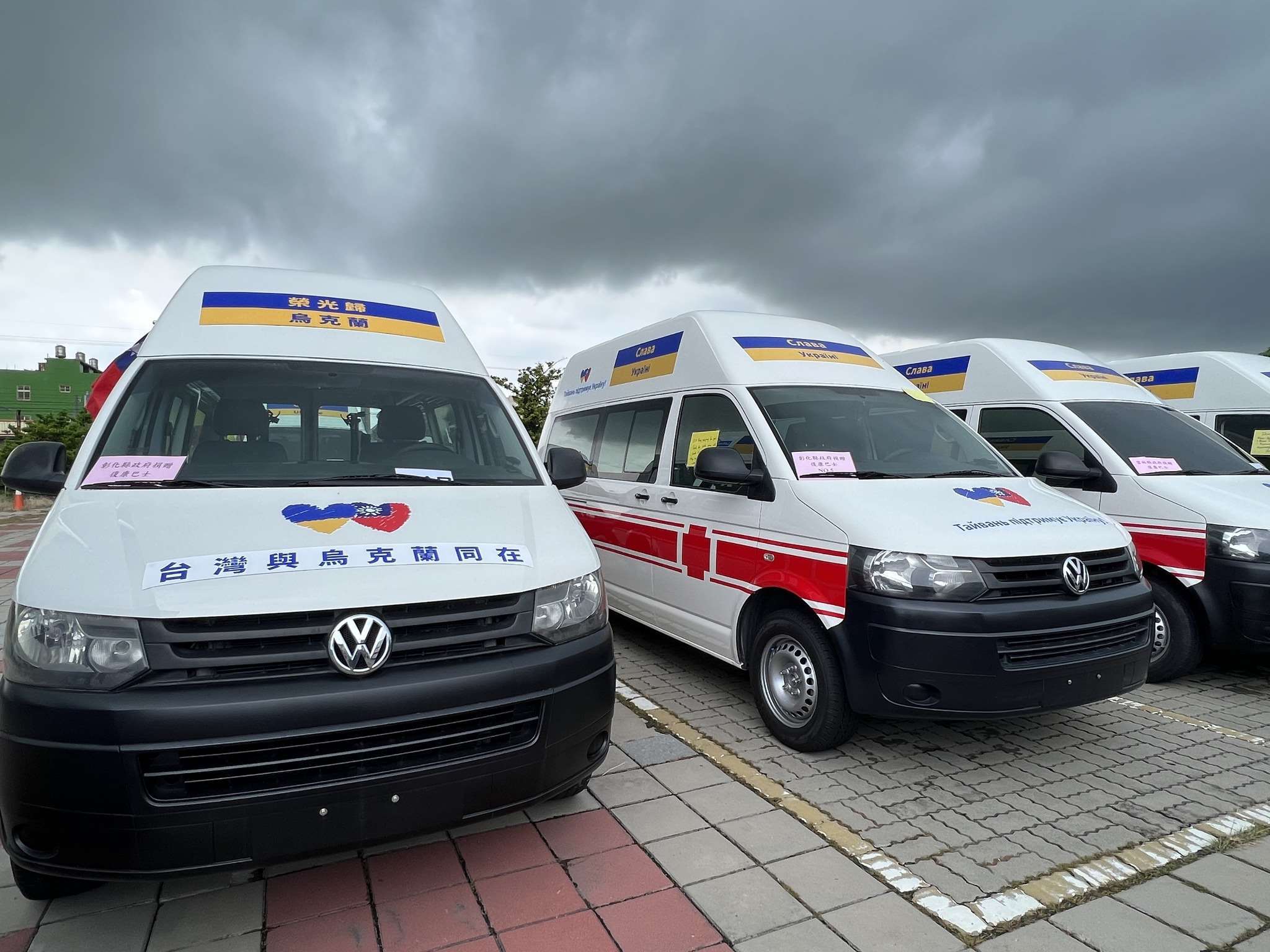
Rallies in support of Ukraine are also portrayed as a pointless attempt by Taiwan to win the West’s favor. This interpretation is similar to the explanation of the motives behind Taipei’s official support for Ukraine examined in the previous subsection. Participants in demonstrations are credited not with sincere solidarity but with a desire to demonstrate political loyalty to the United States. Ironic comments, demeaning labels, and conspiratorial assumptions make it possible to avoid a substantive conversation about the reasons for Taiwanese support for Ukraine and instead to declare this support the result of external manipulation.
The ridiculing of pro-Ukrainian rallies is part of Russia’s broader external information strategy: to isolate Ukraine, to portray international solidarity with it as artificial, and to convince foreign societies that any assistance merely prolongs the war or facilitates repressive practices. In the case of Taiwan, this is compounded by Russia’s desire to play along with China: to deny the commonality of the security experience of Taiwanese and Ukrainian societies and to prevent the formation in Taiwan of sustained public interest in Ukraine.
Thus, Russia systematically denies Taiwan’s right to its own political agency, discredits its cooperation with democratic states, and devalues any expressions of support for Ukraine. Russian resources explain humanitarian aid, defense preparation, and civic acts of solidarity not by the real needs or convictions of Taiwanese society but by external control, self-interested calculation, or a desire to earn the favor of the United States.
In this way, Russian coverage of Taiwan is not always an automatic retelling of Beijing’s official position. Moscow adapts the Taiwan topic to its own propaganda system, formed around the war against Ukraine and the broader confrontation with the West. As a result, the discrediting of Taiwan becomes part of a shared information logic: to strip democratic societies of political agency, to present international solidarity as artificial, and to portray cooperation between them as a consequence of American pressure rather than an independent choice.

