

On February 10, 2026, Russia’s Federal Service for Supervision of Communications, Information Technology and Mass Media (Roskomnadzor, RKN) announced the beginning of partial restrictions on the Telegram messenger within the territory of the Russian Federation.
Actually, this news marked only one stage in the potential ban of the social platform in Russia. Since August 2025, RKN has gradually introduced restrictions on Telegram’s operation: first, the call function was blocked, and later the loading of media files began to be slowed down. As of mid-March 2026, the application has started functioning unstably, while Russian propagandists report that a complete blocking may take place on April 1, 2026. Notably, on the evening of March 14, reports appeared regarding an order from the command of the occupying forces banning the use of Telegram by Russian military personnel.
It is worth noting that such a policy is not unique to Telegram and fits into a broader context of control over the digital space. For instance, a similar situation can be observed with YouTube, whose operation in Russia has also been systematically complicated. Officially, this is explained by technical problems or the platform’s own policies. In practice, however, these restrictions are selective and primarily target independent or critical content.
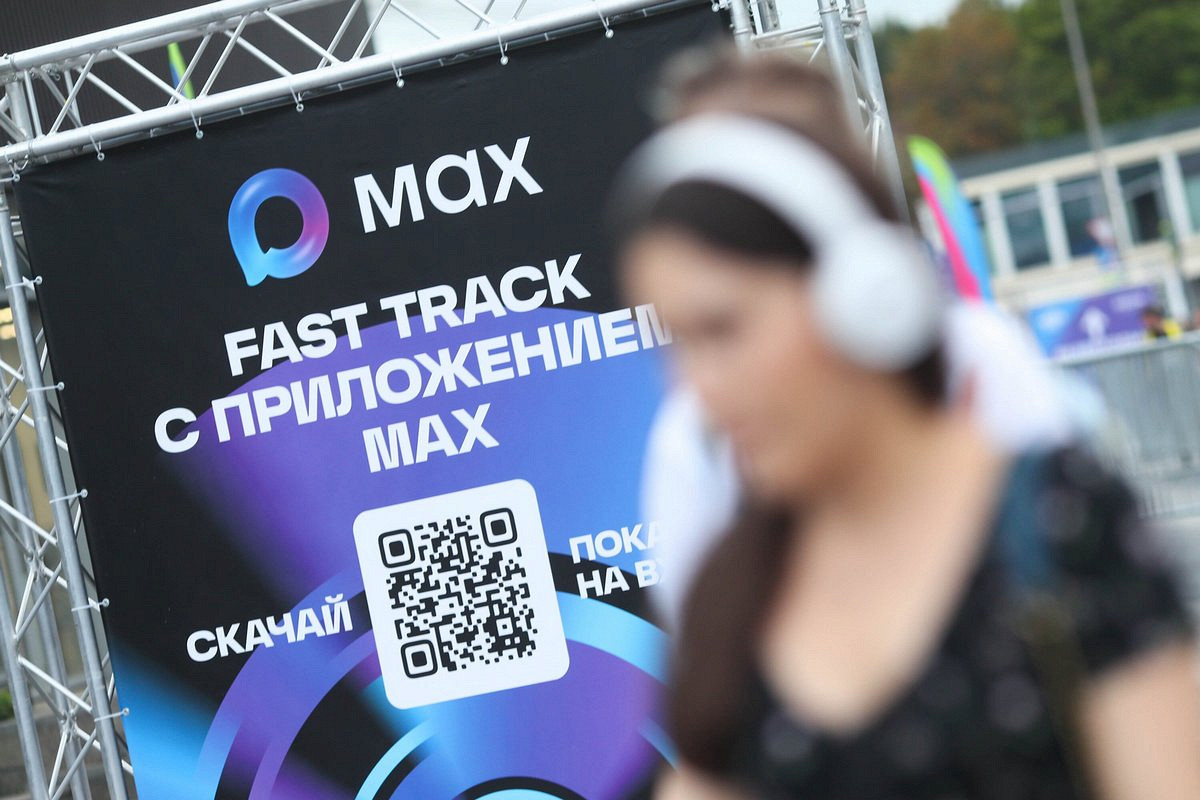
Instead, the government offers an alternative – the “Max” messenger, a platform developed by the VK corporation (VKontakte). The Hybrid Threat Analysis Group previously explored new digital “collar” for Russians in the article “MAXimum Control: The Kremlin Launches a Pocket Messenger.”

Pro-Kremlin Russian sources cite several reasons for restricting Telegram. First, Telegram is accused of failing to comply with Russian legislation, particularly regarding content moderation. In this context, Telegram bots are mentioned, which can allegedly collect users’ personal data in the form of dossiers.
Second, the thesis about the possible access of Western intelligence services to user data is being actively promoted. According to this version, information leaks became possible due to the alleged compromise of encryption mechanisms. This argument has provided fertile ground for Russian propagandists to justify restrictions on the social network.
Episodes of the war unfavorable for the Russian Armed Forces are used as supporting arguments. For instance, within the Russian information space, the narrative is being spread that the death of Deputy Commander of the Russian Navy Mikhail Gudkov in July 2025 was allegedly connected to an information leak from Telegram. According to this claim, Western intelligence supposedly obtained information about the location of officers via the messenger and passed these data to Ukrainian forces, after which a missile strike was carried out on a Russian command post.
Thus, a causal chain is constructed: the use of Telegram – information leakage – strikes against Russian forces. Such logic allows the authorities to justify the necessity of restrictions while simultaneously creating a sense of threat among the audience.

In addition, some pro-Kremlin speakers claim that Telegram could become an instrument for destabilizing the situation inside the country – even to the point of organizing internal protests. In this context, blocking or restricting its operation is presented as a matter of national security.
News about the restrictions on Telegram caused significant resonance within the Russian information space. The reaction was mixed and demonstrated a deep divide between different groups. Broadly speaking, the audience can be divided into two parts: those who support the authorities’ decision and those who oppose it.
For example, Kremlin spokesperson Dmitry Peskov stated that it is difficult to imagine that all communication on the front line relies solely on Telegram. Accordingly, its blocking would not significantly affect the effectiveness of the Russian armed forces. In response, a number of Russian military correspondents, including those directly involved in combat operations, published posts on their personal pages refuting the official Kremlin position. Following the surge of dissatisfaction among Russian military personnel, the Minister of Digital Development, Communications and Mass Media of the Russian Federation, Maksut Shadayev, stated that the slowing down of Telegram would occur throughout the entire territory of Russia, except in combat zones. However, recent reports about the ban within the Russian military contradict this statement.
Thus, the restrictions imposed on Telegram in Russia in February–March 2026 represent another step by the Kremlin toward establishing control over the digital environment. Using arguments of security, the fight against disinformation, and the protection of personal data, the Russian authorities are laying the groundwork for increased censorship and total digital control over their own population.
In this situation, it is important not to forget that Telegram remains critically important for the external perimeter of Russian propaganda. Despite the pressure on the platform within Russia, Telegram continues to play a key role in Russia’s information and military infrastructure. First, the messenger has become one of the main channels for conducting disinformation operations: through Telegram channels, Russian authorities and propagandists attempt to influence the agenda and shape public opinion. Second, the platform is actively used by military correspondents and soldiers for fundraising, coordination of actions, and the dissemination of operational information from the front line. Third, Telegram has effectively become one of the primary means of communication directly within the combat zone. Additionally, the messenger is used for recruiting Ukrainian citizens to carry out acts of sabotage and contract killings on behalf of Russian intelligence services.
Therefore, despite obstacles to Telegram’s operation in Russia, the messenger will continue to be used by the Russian propaganda machine and intelligence services as a tool for undermining the resilience of Ukrainian society and the state.