
The Russian Federation’s federal budget for 2026 clearly demonstrates the Kremlin’s priorities: even against the backdrop of economic problems and cuts in some areas of spending, expenditure on state propaganda will increase significantly. According to media reports, the Russian Federation, as an aggressor country, plans to reduce defense spending next year, while significantly increasing funding for propaganda.
This involves record amounts for maintaining state media and information campaigns designed to strengthen domestic support for the regime and justify its aggressive policies. The amount of funding allocated in the draft budget of the Russian Federation for 2026 for state media and propaganda projects is the largest in recent history. It is planned to allocate 146.3 billion rubles for these purposes, which is 9.1 billion rubles (about 7%) more than this year and 28% more than in pre-war 2021.
Such generous funding of the information sector is taking place despite the general economic hardship. Russia is entering 2026 with a record budget deficit and is forced to cut spending in many areas. In particular, there are plans to reduce defense spending (to 12.9 trillion rubles, which is less than in 2025), as well as a significant reduction in social payments to the military and support for veterans.
In the Russian budget, propaganda funding is usually euphemistically referred to as “media support,” “information policy”, or “international humanitarian cooperation”. The mechanisms for distributing state funds in Russia are centralized and controlled by the highest leadership. Formally, budget allocations for the media go through specialized state agencies, in particular the Ministry of Digital Development, Communications, and Mass Media of the Russian Federation, which oversees state television channels and news agencies. This ministry and its subordinate agencies are responsible for implementing state media policy and act as administrators of relevant budget programs. For example, funds to support VGTRK, TASS, or RIA Novosti come as subsidies through government channels and are then distributed among specific editorial offices and projects.
Expenditures on traditional media (television, radio, and print), which are consolidated into several major news agencies, including RT, VGTRK, TASS, and Rossiya Segodnya, account for the largest share of total propaganda expenditures. According to the draft federal budget of the Russian Federation for 2026, almost one and a half times more than last year is earmarked for television alone.
At the same time, the Kremlin is trying to take over the digital space by adapting its propaganda to modern communication channels. The draft budget allocates 731.8 million rubles specifically for “promoting pro-Kremlin content on the internet”. Among other things, this includes funding an entire network of propaganda Telegram channels, YouTube shows, pro-Kremlin bloggers, and news aggregators. A telling example is Solovyov Live, a media project by the odious TV anchor Vladimir Solovyov: the 2025 budget directly allocates 4.5 billion rubles to support his authorial Internet channel, and another 49 million rubles goes to the pro-Kremlin online news aggregator Readovka.
A separate area is the funding of programs that formally belong to culture, education, or youth policy, but in fact have a propaganda purpose—promoting the image of Russia and its “values” on the international arena. A striking example is the new project “Russia in the World,” which was launched personally by Putin in August 2024 as part of the national project “Youth and Children”. This program aims to promote “traditional Russian spiritual and moral values” among foreign youth and expand Russia’s cultural influence abroad.
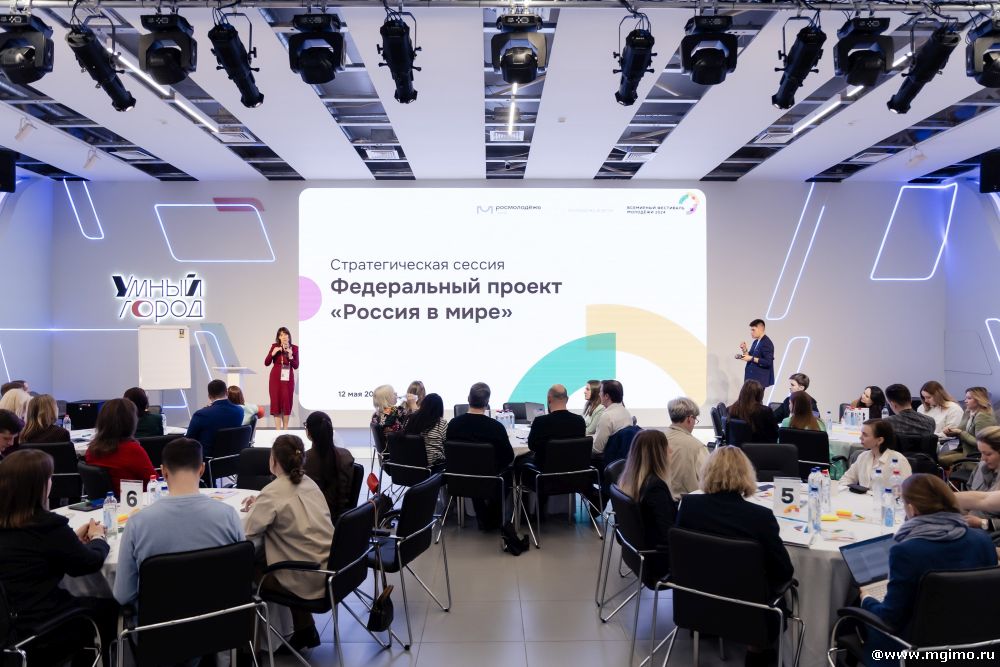
Funding for “ideological” projects (such as “Russia in the World”) is secured through relevant state programs and national projects, and control over the use of funds is exercised by structures close to the Kremlin. For example, the Russia in the World project is integrated into the Youth and Children national project, which is overseen by the Russian government with the personal involvement of the president.
The Kremlin’s increase in the propaganda budget indicates a desire to continue the war while maintaining total control over public consciousness. Moscow realizes that without massive informational support, its protracted aggression against Ukraine may not receive the necessary approval or at least acquiescence from the population. Therefore, despite the enormous costs of military action, sanctions pressure, and falling living standards, funding propaganda for the regime is an “existential” expense for Putin’s regime.
Mykyta Kuzmenko

