
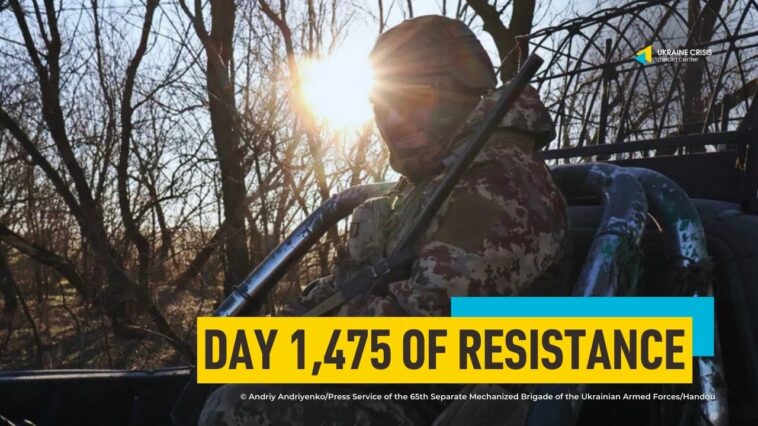
Ukraine launches a record number of drones on Russia in one day. Ukrainian troops continue a counteroffensive operation in the Oleksandrivka direction, Syrskyi says. A war in Iran turns into a respite for the Russian economy, analysts say.
Ukraine launches record number of drones on Russia in one day
Russia’s defense ministry said Monday that the country’s military had shot down 754 Ukrainian drones in the past day, Russian news site Interfax said, citing the ministry. This is a record number of drones that Ukraine had launched on Russia and occupied Crimea so far, Ukrainian news site Militarnyi said Monday.
The Russian military shot down a total of 621 drones on March 8 as it appears from what Russia’s defense ministry said in a number of Telegram posts between Sunday and Monday. Yet Interfax said on Monday, citing the ministry, that the number of intercepted drones was 754.
The most intense drone attacks were reported on the Bryansk region (235 drones), Krasnodar Krai (61 drones), Tula region (48 drones), Belgorod region (41 drones) and occupied Crimea (78 drones), Militarnyi said, citing the Russian defense ministry’s Telegram posts.
This is the highest daily number of drones that Ukraine had launched at Russia so far, Militarnyi said. It can be a sign that Ukraine has ramped up its drone production capacities, it added.
Russia launched its largest combined drone and missile strike against Ukraine of the war to date on September 7, 2025 with 823 total projectiles. The Ukrainian Air Force reported that Russian forces launched 810 drones, nine Iskander-K cruise missiles and four Iskander-M/KN-23 ballistic missiles. Several Ukrainian regions reported damage from the strike. The main target for the attack was Kyiv. The building of Ukraine’s Cabinet of Ministers and several apartment buildings in the capital were damaged.
The Ukrainian Navy said on Monday that together with the Special Operations Forces it had struck three Russian Pantsir-S1 air defense systems and took out a mobile firing team in occupied Crimea.
Ukrainian troops continue counteroffensive operation in Oleksandrivka direction, Syrskyi says
Ukraine’s defense forces are trying to seize the operational initiative on the battlefield. A Ukrainian counteroffensive operation continues in the Oleksandrivka direction, Commander-in-Chief of the Armed Forces of Ukraine, General Oleksandr Syrskyi said in a post to social media on Monday.
“We continue a counteroffensive operation in the Oleksandrivka direction. A grouping of Air Assault Forces regained control of 285.6 square kilometers there in a month. [Ukrainian troops] have regained control of more than 400 square kilometers of land since the beginning of the operation,” Syrskyi said.
The Oleksandrivka direction comprises parts of Donetsk, Zaporizhzhia and Dnipro regions. In other directions, Ukrainian troops are holding back Russian advances through active defense and are making gains in some areas, Syrskyi said.
“While the Russian aggressor outnumbers [the Ukrainian troops] almost three to one, our active measures make them postpone their planned operations, patch holes in their defenses and throw troops from one direction to another,” he said.
In February 2026, Ukraine regained control of more land than Russia captured in the same month, Syrskyi said in a post to social media on March 2. Russia lost 1,031 troops every day throughout winter, he added.
Ukraine’s Air Assault Forces said on March 2 that they had liberated nine towns and villages in the Oleksandrivka direction and had taken out hundreds of pieces of Russian equipment there.
Speaking at a joint news conference with Dutch Prime Minister Rob Jetten on Sunday, Ukrainian President Volodymyr Zelenskyi said Ukrainian troops had regained 400-435 square kilometers of land in the south in the past one and a half months.
War in Iran turns into respite for Russian economy, analysts say
In late 2025, the Russian economy encountered unpleasant news. First, the U.S. placed sanctions on Russia’s biggest oil companies — Rosneft and Lukoil. Second, India, one of the main buyers of Russian oil, was pressured by the U.S. to stop purchasing it, Ukrainian news site Economichna Pravda said Monday. The following is an abridged version of the article that we translated into English.
Brent crude slid below USD 90 a barrel, while Urals oil prices went down below USD 40-45 a barrel. This is well below USD 59 a barrel cemented in the Russian state budget.
“In 2022, they showered with petrodollars, and even despite [trading oil at] a discount, they earned a lot. That is not the case now,” says Yulia Pavytska, Manager of the Sanctions Program at the KSE Institute. “This pressure is not enough for them to take truly painful steps and come to the negotiation table, but we were coming close to that point.”
Had low oil prices persisted and the sanctions against Russian oil companies stayed in place, the Kremlin would have to tap into the pockets of the Russians even more by either adopting new tax amendments or printing more money. It would finance the expenditures with emission rubles, thus fueling the inflation. But unfortunately, the Russian economy has got a chance to take a breath and recover.
Oil prices surged after the U.S. and Israel started a war with Iran. Brent crude traded at USD 116 per barrel and Urals traded at a USD 100 per barrel after markets opened on March 9. The U.S. last week granted Indian refiners a 30-day waiver to buy Russian oil following the supply crunch from the Straits of Hormuz. India reduced its imports of Russian oil by 42 per cent.
“For a long time, Russia had large volumes of oil loaded into tankers, but the tankers sailed without a set destination. Following an escalation in Iran Russia would likely be able to distribute this surplus of oil to India and China,” Pavytska said.
A surge in oil prices has two consequences for Russia. First, Russia’s oil revenues will rise. It will be able to produce more drones, missiles and ammunition, and send more soldiers to fight in its war in Ukraine. Second, if oil prices exceed USD 59 a barrel, not only Russia’s revenues will increase, but also the country’s National Welfare Fund will get more holdings.
The escalation in the Middle East not only helps Russia to finance its war against Ukraine, but also to accumulate the funds for future war efforts.
Before the war in Iran erupted, Russia’s Finance Ministry planned to lower the bar for incoming funds to the National Welfare Fund that would originate from oil revenues from USD 59 a barrel to USD 50-55 a barrel. The Fund has been substantially depleted in the war years. Despite the current surge in oil prices Russia did not abandon the plan.
Has Trump’s decision to strike Iran saved Russia’s state budget? It depends on the war’s intensity and duration. Earlier forecasts said that if the war protracts, oil prices could exceed USD 108 a barrel. If the U.S. ends the war quickly and establishes a loyal regime in Iran, oil prices could largely drop.
“We can only keep our fingers crossed and hope that the situation in Iran will not grow into a medium-to-long-term conflict with respective consequences for the oil market,” Pavytska said.


