
At the end of last year and in early 2026, a series of significant personnel changes took place in the high echelons of Russian state power. The changes affected the Presidential Administration, the government, the security bloc (the military and security services), the diplomatic corps, and even the sphere of “soft power,” including Rossotrudnichestvo.
A minister out of favour
At the end of 2025, Russian political media were stirred by rumors about the possible resignation of long-serving Foreign Minister Sergey Lavrov. Throughout November, Lavrov was absent from a number of key events, fueling speculation that he had fallen “out of favour” with Vladimir Putin.
On 5 November, the minister did not attend a meeting of Russia’s Security Council, making him the only permanent member to be absent. Lavrov also missed Putin’s meeting with the President of Kazakhstan on 12 November and, for the first time, did not lead the Russian delegation at the G20 summit in South Africa (22-23 November), where he was replaced by economic adviser Maxim Oreshkin. Instead of Lavrov, Deputy Prime Minister Alexei Overchuk was dispatched to the ASEAN summit in Malaysia.
The culmination of the rumors surrounding the head of Russian diplomacy was the absence of Russian Foreign Ministry representatives from informal peace-related talks held in Moscow on 1-2 December with the participation of American representatives.
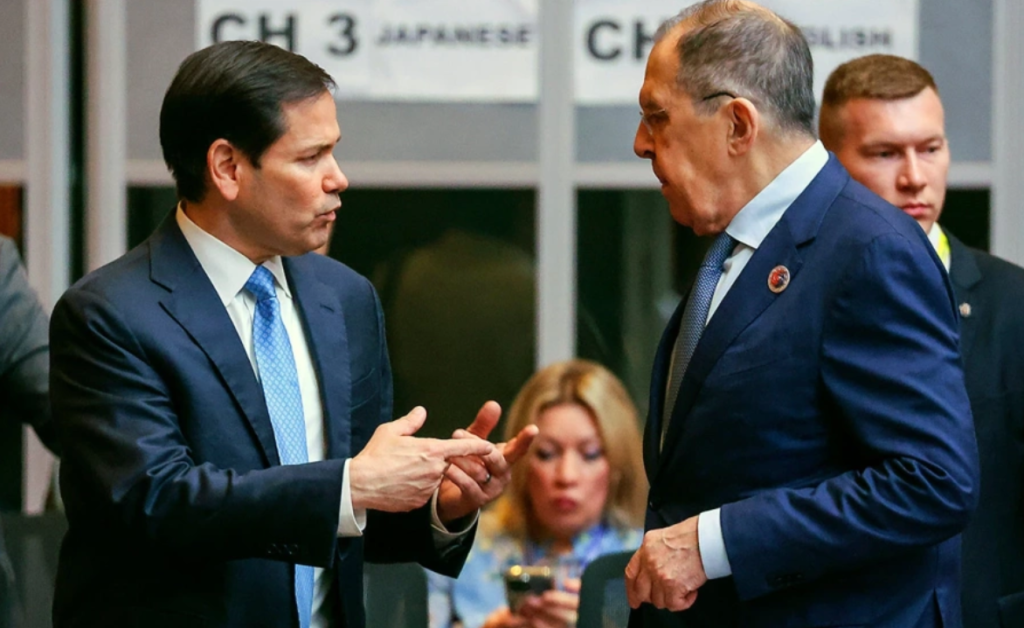
At the same time, Western media published reports suggesting the Kremlin was dissatisfied with Sergey Lavrov’s performance. The Financial Times, citing sources, reported that a planned summit in Budapest between Vladimir Putin and U.S. President Donald Trump (October 2026) was allegedly derailed due to Lavrov’s “tough and inflexible” stance during telephone talks with U.S. Secretary of State Marco Rubio. Lavrov was said to have presented a list of unacceptable conditions regarding Ukraine, which angered the Americans and prompted them to cancel the meeting. The FT quoted a person familiar with the matter as saying: “Lavrov is clearly tired and believes he has more important things to do than engage with the United States, despite Putin’s desire for the meeting.”
Rumors were further fueled by the Russian Telegram sphere. The channel Nezygar (approximately 400,000 subscribers) circulated claims that after the unsuccessful call with Marco Rubio, Vladimir Putin had a “serious conversation” with Sergey Lavrov, expressing his dissatisfaction. According to Nezygar’s sources, Lavrov conducted that conversation “in an extremely tense manner, refusing to engage in discussion with the Secretary of State,” possibly adhering too literally to the Kremlin’s hardline instructions. In the channel’s account, the publication in the Financial Times was seen by Foreign Ministry-linked sources as a kind of Western “operation” that dealt a painful blow to the minister’s pride. “The truth is that Lavrov is indeed tired, and the number of his detractors inside the Kremlin has grown,” Nezygar quoted an informant as saying. The same sources claimed: “It is obvious that he has lost Putin’s favor and now appears to be the weak link.”
Against the backdrop of these discussions, Dmitry Peskov was repeatedly forced to issue denials. On 7 November, he stated that reports about the minister falling out of favor “did not correspond to reality.” On 21 November, Putin even demonstratively gave the floor to Lavrov as the main speaker at a Security Council meeting, emphasizing his importance. And on 28 November, commenting on the rumors, the president dismissed them sharply: “This is nonsense. No one has fallen out of favor.”
Despite the official denials, the situation exposed a split within the foreign policy establishment. As the outlet Bloknot noted, Lavrov’s Foreign Ministry favors a hardline confrontation with the West, while veteran diplomat and Putin adviser Yury Ushakov is more inclined toward dialogue. During the events described, it was Ushakov (together with Dmitriev) who actively urged Putin to seek a compromise with Trump, whereas Lavrov and his deputy Sergei Ryabkov maintained a more uncompromising line. It was telling that when Ryabkov publicly spoke sharply about the “unconstructive” nature of contacts with the new U.S. administration, Ushakov publicly rebuked him, thereby signaling support for a course toward de-escalation. This confrontation between “hawks” and “pragmatists” within the Kremlin’s foreign policy inner circle reached its peak at the end of 2025.
Although Lavrov has retained his post for now (likely to avoid creating an impression of panic ahead of the March 2026 presidential election), his authority has been shaken. There is speculation that if peace agreements with the United States prove successful, the role of Lavrov and the Foreign Ministry will be further marginalized, and Lavrov himself may be moved into an honorary retirement. Possible scenarios mentioned include his appointment as Speaker of the Federation Council, while the post of foreign minister could go to Sergey Naryshkin or Yuri Ushakov.
Russia’s Soft Power: Reshaping Its “Image”
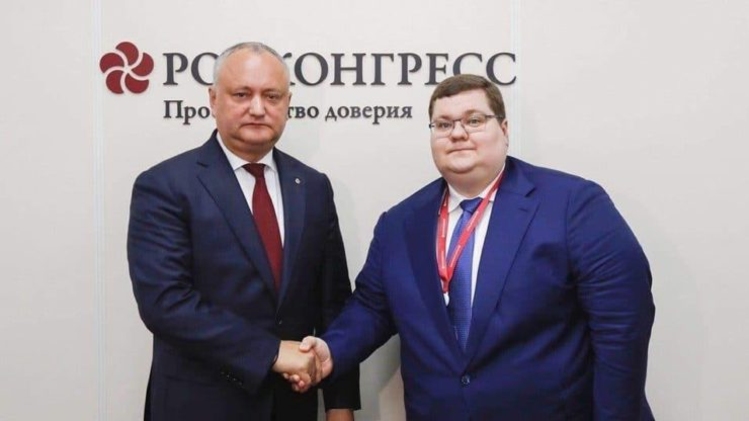
In the sphere of “soft power” and ideology, 2025 also saw personnel changes reflecting a shift in the Kremlin’s policy priorities. The most striking example was the appointment of Igor Chaika (son of former Russian Prosecutor General Yuri Chaika) as deputy head of Rossotrudnichestvo in March of last year. Rossotrudnichestvo is a federal agency responsible for work with compatriots abroad, cultural diplomacy, and humanitarian projects – essentially Russia’s equivalent of USAID. Since 2020, it has been headed by Yevgeny Primakov, the grandson of former Russian Prime Minister Yevgeny Primakov.
Until recently, the younger Primakov had sought to cultivate a relatively soft image for the agency, emphasizing educational programs and cultural initiatives. However, Chaika’s appointment signaled that the Kremlin intends to strengthen the more aggressive component of the so-called “humanitarian front.” Chaika, who has a reputation as a businessman linked to shadowy schemes, previously headed Rossotrudnichestvo’s Public Council and, according to reports, “made a name for himself in Moldova” through interference in local affairs.
Notably, Chaika’s appointment came immediately after Moldova and Azerbaijan closed Russian cultural centers on their territories, accusing them of subversive activities. By elevating to a senior post a figure linked to political scandals in Moldova, Moscow issued a demonstrative challenge: in effect, it signaled that there would be no rollback of the “Russian world” agenda – on the contrary, the emphasis would be on even harsher methods. In recent years, Rossotrudnichestvo has increasingly been involved in propaganda efforts supporting the war, including exhibitions about alleged “crimes of Ukraine” and fundraising campaigns for the Russian army, as seen, for example, at the Russian House in Ankara. The leadership reshuffle therefore forms part of a broader course toward the centralization and radicalization of the “humanitarian” bloc under the control of figures from the president’s inner circle.
Personnel Chessboard of Putin’s Administration
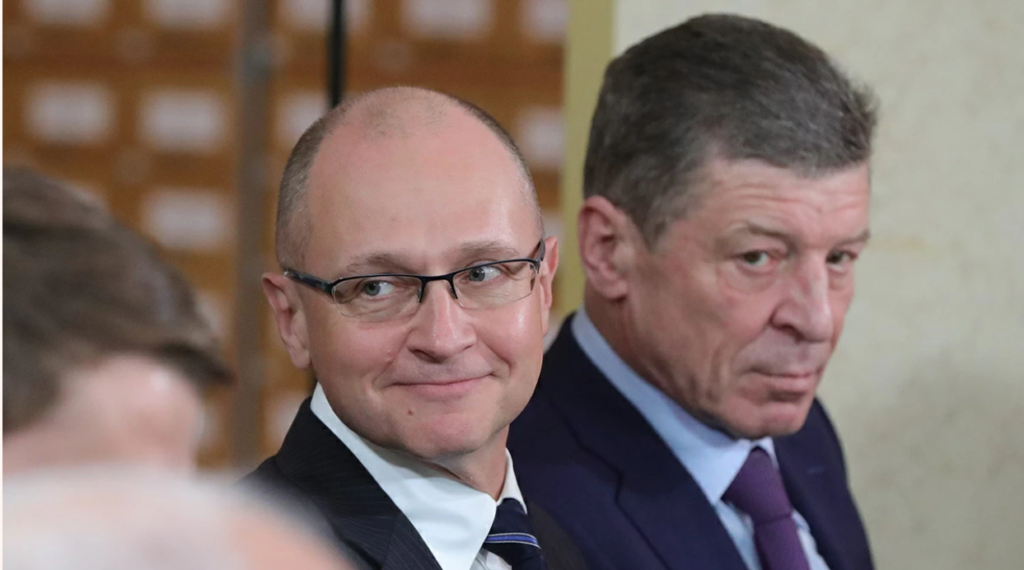
In August of last year Putin reorganized the structure of his administration by creating a Directorate for Strategic Cooperation. According to the plan, the new directorate is tasked with international activities, primarily overseeing cooperation with countries of the former USSR and with African states. In October 2025, the unit within the Russian presidential administration was placed under the direct leadership of Vadim Titov, who had previously served as CEO of the company “Rosatom – International Network.” At the same time, First Deputy Head of the Presidential Administration Sergey Kiriyenko, who is known for overseeing the Kremlin’s domestic political track, was appointed as its curator.
The establishment of the Directorate for Strategic Cooperation was preceded by the dissolution of two older departments within the Presidential Administration – those responsible for cultural and cross-border cooperation – which had previously been overseen by Dmitry Kozak. This points to a redistribution of spheres of influence in favor of Kiriyenko’s team.
Another sign of this trend was the creation, within the Presidential Administration, of a Main Administrative Center for Personnel Training. Sergey Kiriyenko launched programs aimed at the “managerialization” of the state apparatus in order to “cultivate a new elite” in the spirit of technocratic patriotism. The movement “Parental Care,” established in 2022, and the project “New People” have also continued their activities – all of these initiatives are designed to reinforce the ideology of “traditional values” and support the pro-Putin majority ahead of the elections. Notably, throughout 2025 the Russian authorities adopted a series of laws entrenching an ultra-conservative ideological course: a total ban on LGBT-related content, the expansion of the “Foundations of Russian Statehood” course in educational curricula, increased control over books and films, and similar measures.
The personnel decisions that have been made indicate that, on the one hand, they increase loyalty, as senior Russian officials are well aware of the risks of disobedience. On the other hand, this personnel “circulation” reveals the regime’s vulnerability. Ahead of the 2026 elections – when a new composition of the State Duma as well as a number of governors are to be elected in the autumn – the Kremlin is relying on the controlled mobilization of the electorate.
The personnel reshuffles have confirmed that Russia has no intention of retreating from its aggressive rhetoric. Putin is sending a clear signal to the elites: no one is indispensable – even such pillars of the regime as Shoigu or Lavrov can be sidelined if this is necessary to preserve the system. Lavrov, although he has kept his post, has been put in his place, and Putin’s aide Yuri Ushakov – long known for his hardline stance on Ukraine – has been brought in alongside him for support and oversight. Chaika’s appointment at Rossotrudnichestvo likewise indicates that Moscow is ready to move away from attempts to imitate classic “soft power” practices and toward hybrid forms of aggression in various regions of the world
Overall, the personnel reshuffles of late 2025 and early 2026 indicate that the Kremlin is consolidating its governing apparatus. Putin has placed at key nodes individuals he personally trusts – friends and relatives of close associates – betting on technocratic efficiency at the rear and ideological loyalty on all fronts, from the trenches to the negotiating table. The domestic political course has become even more conservative, and the rhetoric more belligerent (notably, 2026 was ushered in with New Year speeches about a “sacred struggle” and massive missile strikes against Ukraine). At the same time, no systemic changes have taken place: the Kremlin continues to show no signs of readiness for ideological relaxation or for a genuine search for sustainable peace.

