
Throughout 2025, the Foreign Intelligence Service of the Russian Federation (SVR) systematically took part in information operations against Ukraine and its European partners. SVR statements were framed as so-called “warnings about threats”, yet in substance they had no relation to actual intelligence information. The SVR did not name specific individuals, did not provide exact dates, and did not present any evidence. The public claims of Russian foreign intelligence were built around vague formulas such as “according to available data” or “according to available information”. This framing allowed Russian intelligence-linked propagandists to create a desired information background while avoiding responsibility for the credibility of their claims.
The Hybrid Warfare Analysis Group identified five Kremlin disinformation operations in which the Russian Foreign Intelligence Service played an active role.
Diplomacy as a Fake Victim
One of the key narratives of the year was a series of SVR statements alleging that Ukrainian security services were preparing terrorist attacks against Russian diplomatic missions in EU countries. Germany, the Baltic states, and Northern European countries were mentioned, with Hungary and Slovakia particularly often named as potential “platforms for provocations”. What matters here is not the list of countries itself, but the logic behind it. Hungary and Slovakia are perceived by Moscow as “weak links” in European unity. Therefore, the Kremlin is especially eager to amplify internal doubts about supporting Ukraine in these states. Thus, the SVR narrative served not only to discredit Ukraine, but also to shape an atmosphere of distrust towards Kyiv among European audiences, portraying Ukraine as a partner that allegedly “exports risks” to the EU.
Ultimately, no confirmations of any preparations for attacks on Russian embassies in Europe were provided by EU law enforcement agencies or security services. In reality, the SVR statements functioned as a preventive attempt to shift responsibility on Ukraine for any potential incidents involving Russian diplomatic facilities in Europe.
The Non-Existent “attack” on Transnistria
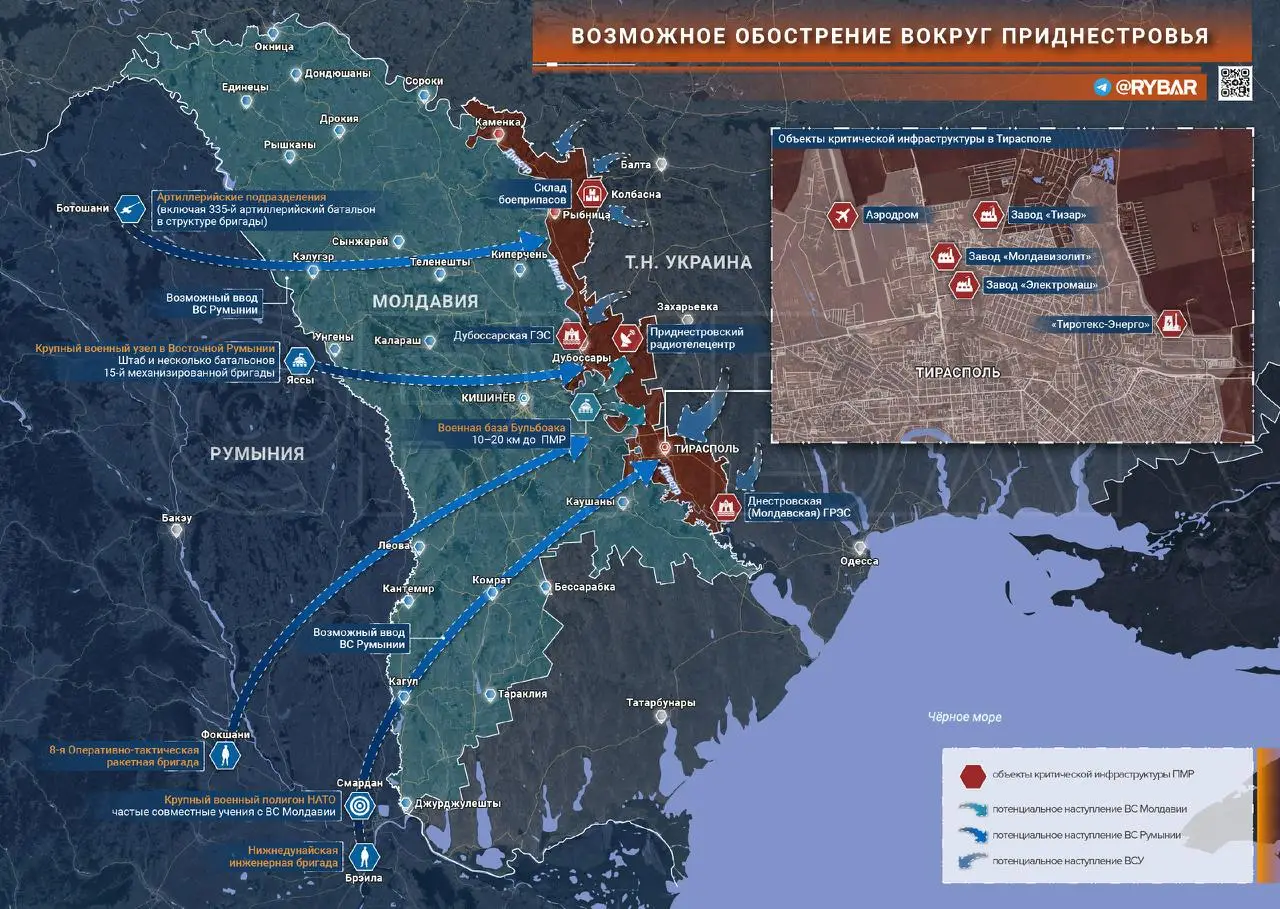
Against the backdrop of Moldova’s election campaign in October 2025, the SVR activated another narrative related to Transnistria. Russian intelligence claimed that NATO was allegedly preparing scenarios of military pressure on the separatist enclave, while Ukraine and Romania were presented as potential staging grounds. This narrative was tightly linked to Moldova’s domestic political context, as the outcome of the elections would determine whether the country would preserve its European-aligned course. Through manipulative claims about an alleged “armed aggression” against Transnistria, the SVR sought to instil fear in Moldovan society of being “dragged into war” in case of victory by the political forces associated with President Maia Sandu. At the same time, Russian propaganda, using the SVR as a mouthpiece, attempted to impose an image of Ukraine as a source of regional instability. In reality, there were no indications of any plans by NATO, Moldova, or Ukraine to use force in Transnistria. On the contrary, it is precisely the presence of Russian troops in the region that remains a violation of Moldova’s sovereignty.
Peaceful Atom Held Hostage by Russian Intelligence
A separate and prominent topic in SVR messaging concerned the Zaporizhzhia Nuclear Power Plant (ZNPP). Russian intelligence repeatedly claimed that Ukraine was allegedly preparing a large-scale provocation at the nuclear facility in order to accuse Russia of a man-made disaster and force the West to sharply increase pressure on Moscow These claims ignored a key fact: the ZNPP is under the de facto control of Russian troops, and access to its infrastructure is restricted precisely by the occupation administration. In this sense, SVR messaging looked like an attempt to create a pre-emptive informational “alibi” in case of any incident around the plant. This approach allows Moscow to shift responsibility away from itself and creates informational cover for a potential false-flag operation aimed at accusing Kyiv of “nuclear terrorism”. At the same time, SVR statements undermined trust in Ukraine’s appeals within international organisations regarding the need to demilitarise the facility.
Phantom Contingents
At the end of 2025, the SVR actively exploited the narrative of France’s alleged direct participation in the war, claiming that Paris was supposedly preparing to deploy a military contingent to Ukraine under the cover of private military structures. These claims were based on France’s internal legal decisions regarding the regulation of private military companies and contractual forms of citizens’ participation in security projects abroad. The SVR interpreted these changes as “evidence of preparations for war with Russia”, although no official decisions on sending French troops to Ukraine had been adopted. In this case, the information attack targeted both domestic Russian audiences — who were being prepared for the idea of a possible direct confrontation with NATO countries — and French society, which Russian propaganda attempted to intimidate with the prospect of being dragged into war due to support for Ukraine.
Fake Sabotage Operations
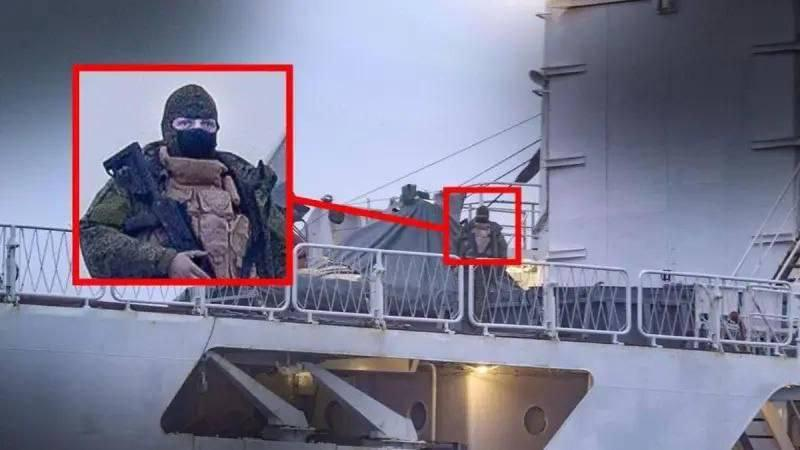
The SVR also spread a story about an alleged Ukrainian–British plan to carry out a sabotage operation against a foreign vessel in a European port, followed by the “exposure of Russian agents” and the attribution of responsibility to Moscow. The statement claimed that Russians fighting on Ukraine’s side were allegedly trained in the United Kingdom to carry out this provocation. No evidence or confirmation was provided by British law enforcement agencies or international maritime security organisations. The goal of this fake narrative was to discredit London as the “main instigator of the war” and to construct an image of Ukraine as a state allegedly ready to use terrorist methods for information manipulation. At the same time, this storyline allowed Russia to pre-emptively shift responsibility for any potential incidents involving civilian shipping in European waters.
The analysed cases of disinformation operations follow a common logic. The SVR did not attempt to persuade audiences through facts; instead, it consistently constructed the image of Ukraine as a dangerous, unpredictable, and radical actor. Accordingly, the narrative was imposed that supporting Kyiv supposedly automatically increases risks to European security.
Each message was tied to a specific political context: elections in Moldova, debates within EU countries about military assistance to Ukraine, international attention to the security of the Zaporizhzhia Nuclear Power Plant, or domestic discussions in France. By manipulating public fears, the SVR has systematically sought to undermine the willingness to support Ukraine while simultaneously legitimising Russia’s own aggressive policy as an allegedly “forced response to threats”.

