
Dozens of Ukrainian public figures have signed an open letter calling on participants in the negotiation process to remove from the agenda the issue of approving a peace agreement by referendum and to prevent Ukrainian representatives from consenting to and signing international agreements that contradict the Constitution and laws of Ukraine, including commitments to hold any referendums.
Given the need for a more detailed explanation of the provisions contained in the appeal, the Ukraine Crisis Media Center initiated a briefing entitled “Legitimization of the ‘peace agreement’ through a referendum: is it in line with the Constitution and laws of Ukraine?”, to which leading experts in the field of constitutional law were invited to participate.
Opening the event, Mr. Valeriy Chaly, the Chairman of the Board of the UCMC and a member of the Ukrainian Association of International Law, Ambassador Extraordinary and Plenipotentiary, noted that he was alarmed by the fact that Ukraine’s partners had accepted the referendum mechanism as a possibility.
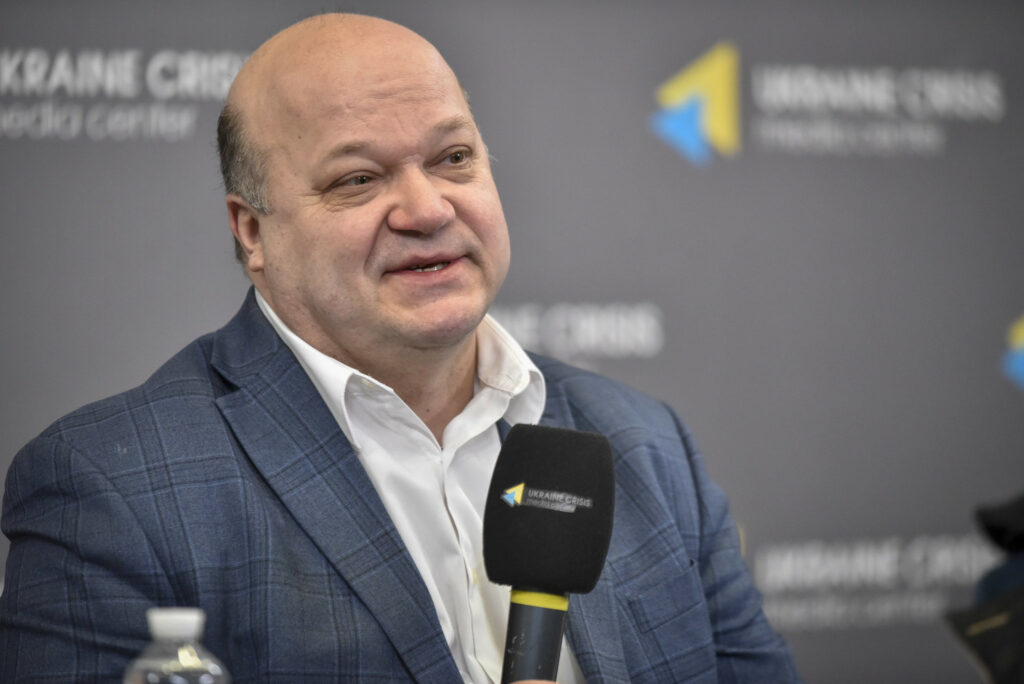
“From our point of view, in its current form, it does not comply with the Constitution of Ukraine. By explaining the legal position and the broader stance of civil society, we are, in my opinion, helping the negotiating team not waste time trying to convince US mediators. I will even take the liberty of giving a good hint to the lawyers around the president, because it seems that the Ukrainian side sometimes uses the phrase “approval by referendum” as well. This is very dangerous right now, because it allows Russia to think that so-called complex territorial issues can be put to a referendum. And we are talking about giving up Ukraine’s unoccupied territories. This includes the Zaporizhzhia nuclear power plant, among other things. I see this as part of Ukraine’s sovereignty, and this concept cannot be traded,” the diplomat emphasized.
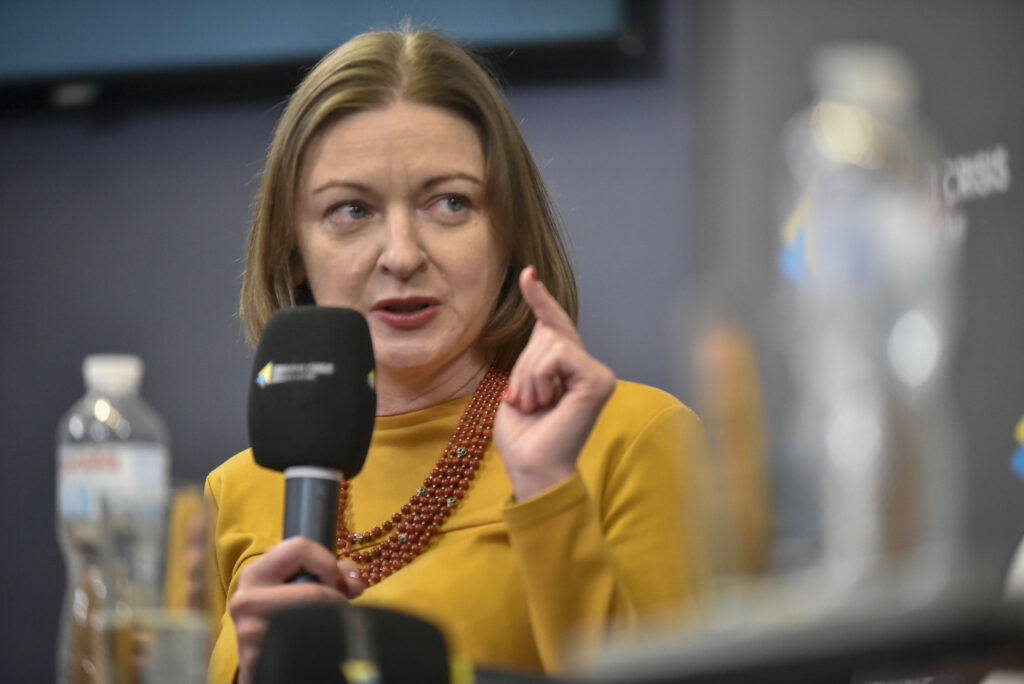
The enormous danger of this was also pointed out by Ms. Hanna Hopko, the Chair of the Foreign Affairs Committee of the VIII convocation of the Verkhovna Rada, head of the NGO “Network for the Protection of National Interests ANTS”.
“We demand an end to imposing on partners and society the possibility of approving a bad agreement via a pseudo-referendum. This is a Russian technique, a trap that will lead to even greater destabilization within society, which plays into the hands of the aggressor. Instead of discussing a strategy for de-imperialization, the disintegration of the Russian Federation, the issue of finishing off the Russian economy, tougher sanctions, the issue of confiscating Russian assets, a special tribunal for war crimes, crimes of aggression, and acts of genocide, we have been drawn into this discussion. I really hope that the situation in the Middle East will show how much Ukraine is in demand with our latest technologies for modern warfare, and that those negotiators who are trying to put this noose around the necks of Ukrainians will be discredited, with the issues that threaten our statehood removed from the agenda altogether,” said Ms. Hanna Hopko.
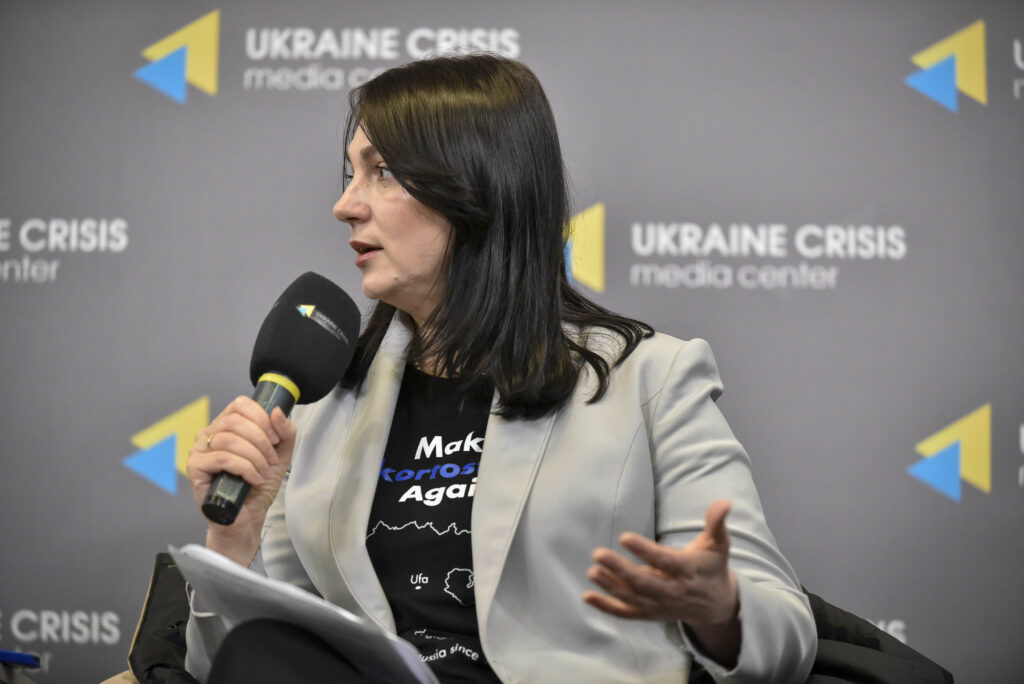
Ms. Yulia Kyrychenko, member of the Board of the Center for Policy and Legal Reforms (CPLR), head of the CPLR’s constitutional department, co-chair of the Reanimation Package of Reforms, PhD in Law, said that during Viktor Yanukovych’s regime, the Constitution of Ukraine was amended unconstitutionally in 2010 due to the Constitutional Court of Ukraine exceeding its powers, and that this was a means of influence by Russia to move towards dictatorship and kill Ukrainian independence. However, after the Revolution of Dignity, the version that had been unconstitutionally amended was restored. Thus, the 2004 version was reinstated, which contains provisions on territorial integrity, the regions that make up Ukraine, and the Autonomous Republic of Crimea.
“Any attempt to change them would be unsuccessful because the Constitutional Court has unique powers—preliminary constitutional control. This means that before the parliament votes on amendments to the Constitution, the Constitutional Court assesses whether they violate territorial integrity. If it finds a violation, it issues a conclusion that is binding on the Verkhovna Rada of Ukraine. In such cases, the amendment to the Constitution is stopped. That is why our Constitution is better than the Russian one. At the level of a founding agreement, it protects territorial integrity, clearly lists the regions, and has a separate section on the Autonomous Republic of Crimea. There are no options here,” the expert explained.
Such questions in a referendum are clearly contrary to the generally accepted principle of international law and obviously have no future. Moreover, those who raise such questions are well aware that the relevant article of the Criminal Code of Ukraine, with its corresponding statute of limitations for criminal prosecution, is a factor that will remain in place for a considerable period. This opinion was expressed by Mr. Andriy Mahera, Deputy Chairman of the Central Election Commission (2007-2018), constitutional law expert, and distinguished lawyer of Ukraine.
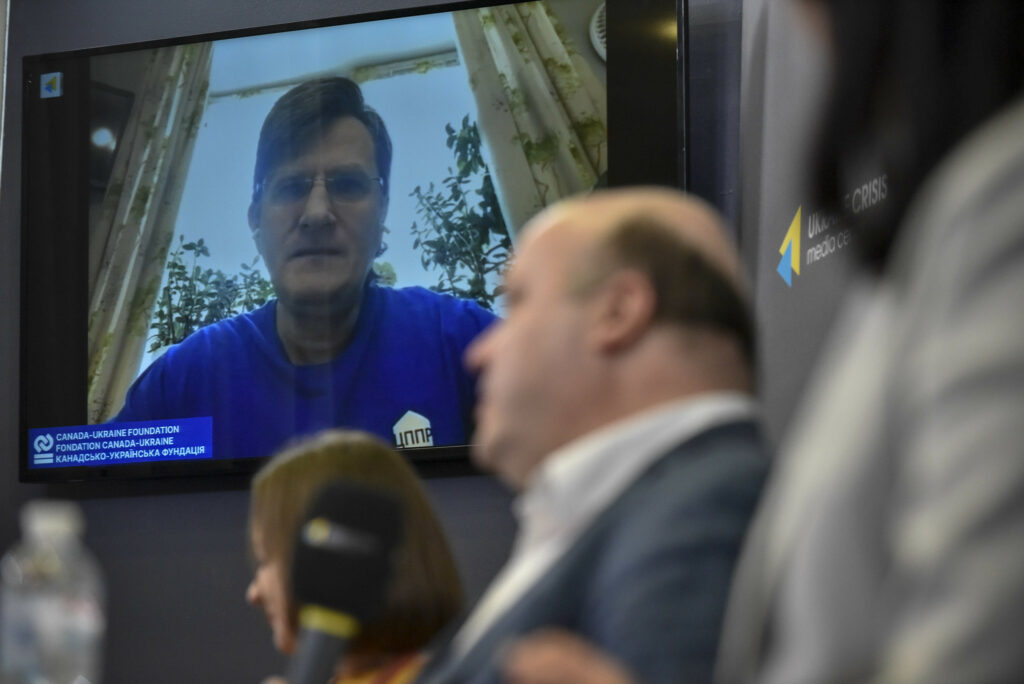
“In Ukrainian society, people who are not very familiar with the Constitution of Ukraine sometimes pick out one or another article of the Constitution and try to explain it in a rather peculiar way. Article 2 of the Constitution states that the sovereignty of Ukraine extends to its entire territory, and the territory of Ukraine within its existing borders is integral and inviolable. This means, in fact, that we can hardly understand Article 73 of the Constitution in the literal sense of the word. The territory of Ukraine cannot be reduced under any circumstances. The issues of the indivisibility and inviolability of Ukrainian territory have been settled since 1991. Any attempt to put the question of changing Ukraine’s territory, in particular, reducing it, to a referendum will inevitably raise the following question: Are we not undermining the results of the 1991 referendum? Are we not undermining the restoration of Ukraine’s independence in 1991? Are we not giving Russian propaganda arguments to say that Ukraine gained its independence illegitimately? In my opinion, there are very serious issues here,” the lawyer emphasized.
The event was held as part of the “United by Truth” project with the support of the Canada-Ukraine Foundation.

