
Russia strikes an energy facility in Kharkiv, a U.S.-owned factory in Dnipro and a hospital in Kyiv. Why Zelenskyi launches a major overhaul of his team. Trump says he doesn’t believe Ukraine struck Putin residence.
Russia strikes energy facility in Kharkiv, U.S.-owned factory in Dnipro, hospital in Kyiv
Russia launched nine Iskander-M/S-300 surface-to-air missiles and 165 drones of the Shahed, Gerbera and other types at Ukraine overnight on Monday, the Ukrainian Air Force said. Ukraine’s military said it had shot down or otherwise neutralized 137 drones in northern, central and eastern parts of the country. The missiles and 26 drones hit target in 10 locations and the falling debris fell in nine other places, it added.
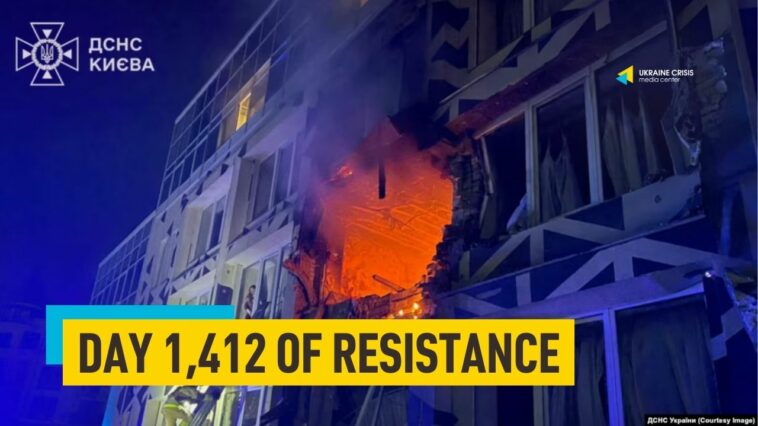
A drone strike on a private hospital in Kyiv killed one patient and injured four others, officials said. Head of the Center for Countering Disinformation at Ukraine’s National Security and Defense Council, Lieutenant Andriy Kovalenko said on Telegram that the strike was deliberate. A man was killed in an overnight Russian attack near Fastiv, in Kyiv region.
The cities of Dnipro and Kharkiv were targeted in separate incidents on Monday.
A daytime drone attack on Dnipro damaged an enterprise owned by U.S. agricultural producer Bunge, causing a leak of 300 tons of sunflower oil, said city mayor Borys Filatov.
Russia launched five ballistic missiles at an energy facility in Kharkiv’s Slobidskyi district on Monday, the city’s mayor Ihor Terekhov said.
“There can be months-long, step-by-step efforts to build [energy facilities] from scratch: establish energy networks, connect electrical circuits and search for equipment abroad. Works can continue day and night, with no holidays or vacations, to the sounds of explosions and air raid alerts, threatened by double tap strikes. It’s when municipal workers sleep a few hours a day and decisions are not made in offices, but right away on the sites [of the attacks], among the ruins. Protection can be increased by concrete and metal covers… But no concrete structure can withstand five ballistic missile strikes,” Terekhov said in a post to Telegram.
He added that the damage caused to the facility was “more than considerable”. “This is not just an attack on facilities. It’s an attack on heating, water and people’s normal lives. They are trying to break us with fear and darkness, destroy a result of months-long difficult and dedicated work and wipe off what we already rebuilt several times after previous strikes,” Terekhov continued.
“It means just one thing for Kharkiv: we will do it again. We will grow, rebuild and kick start [the facilities], again and again, despite everything. We will stand firm, rebuild and live,” he said.
Why Zelenskyi launches major overhaul of his team
In the first days of 2026, Ukrainian president Volodymyr Zelenskyi launched a major overhaul of executive posts in his team. He tapped the military intelligence chief, Lieutenant General Kyrylo Budanov, as head of his office and offered the position of defense minister to Mykhailo Fedorov, the First Vice Prime Minister, Minister of Digital Transformation of Ukraine. News web site Ukrainska Pravda breaks down the reshuffle and its implications for the country’s politics and peace prospects. The following is an abridged version of the article that we translated into English.
Fedorov and Budanov were the most likely candidates for the chief of staff role. Zelenskyi chose Budanov after he returned from the talks with U.S. President Donald Trump at Mar-a-Lago, in Florida, in the closing days of 2025. His meeting with Trump could have impacted the decision.
Andriy Yermak [the previous chief of staff, who resigned after an anti-corruption raid] did not let anyone else talk to the U.S. negotiation team. That’s how Ukraine lost a chance to set contacts with [Jared] Kushner and the rest of the team from six months — to a year ago. It should be changed now, an unnamed source in the Ukrainian presidential team said.
“I am reinforcing the negotiation team. That’s what it is about,” Zelenskyi told reporters on Saturday when asked why he tapped Budanov.
Budanov was one of a few who dared to maintain unofficial contacts with various camps in Trump’s administration: from Lieutenant General Keith Kellogg to Vice President JD Vance’s team. Yermak constantly tried to block these channels, both directly and through the president.
Budanov has two major advantages as seen by the Americans: he has a realistic view of the state of the war and has not been involved in recent high-profile corruption scandals. Negotiating with him does not entail reputational risks.
Also, he is nearly the only person in the country with direct working contacts with the Russians. He communicated with them on prisoner exchanges and, for example, held separate face-to-face talks in the United Arab Emirates during the latest wave of diplomatic efforts by the new U.S. team.
Budanov’s appointment is expected to strengthen Ukraine’s negotiation team and diversify the channels of communication with the U.S.
The foreign policy binary was a key motive for Budanov to accept the offer.
As the head of the president’s office he will chair Ukraine’s negotiation team and will take part in the talks that will define security guarantees.
In the past year, Budanov repeatedly tried to let Zelenskyi know how Yermak is viewed by the U.S.
Mykhailo Fedorov who is likely to replace Denys Shmyhal as Ukraine’s defense minister has been driving technological innovation in the sector throughout the invasion. An unnamed source in Zelenskyi’s team said he was hopeful Fedorov could scale it up as the defense chief. His appointment could also signal further overhaul of the military command.
First Deputy Foreign Minister Serhiy Kyslytsya will be appointed as first deputy head of the head of the president’s office, emphasizing the significance of the peace talks.
Zelenskyi is also launching a reshuffle of the security apparatus. Ukraine’s Foreign Intelligence, Security and Border Guard Services will get new heads.
Trump says he doesn’t believe Ukraine struck Putin residence
U.S. President Donald Trump said he did not believe that an alleged Ukrainian strike on President Vladimir Putin’s residence took place as claimed by Russia.
“I don’t believe that strike happened,” Trump told reporters on Sunday aboard Air Force One en route back to Washington, D.C., from Florida, according to Reuters. “There is something that happened fairly nearby, but had nothing to do with this.”
Moscow accused Kyiv last week of trying to strike a residence of Putin in Russia’s northern Novgorod region with 91 long-range attack drones.
Russian opposition outlet Sota published an investigation into the alleged strike on December 29, reporting that Valdai residents did not hear air defenses operating overnight, even though Russian air defenses would have had to operate to down up to 91 Ukrainian drones, the Institute for the Study of War said.
But Trump, at least initially, had appeared to take the Russian allegations at face value. By Wednesday, Trump appeared to be downplaying the Russian claim. He posted a link to a New York Post editorial on his social media platform that raised doubt about the Russian allegation.
U.S. national-security officials said on December 31 that Ukraine didn’t target Russian President Vladimir Putin or one of his residences in an alleged drone operation, challenging Moscow’s assertion that Kyiv sought to kill the Russian leader, according to The Wall Street Journal. That conclusion is supported by a Central Intelligence Agency assessment that found no attempted attack against Putin had occurred.


