
In the early days of 2026, the United States carried out a surprise military operation in Venezuela, resulting in the capture of President Nicolás Maduro. US President Donald Trump said the action was part of a policy to “restore American power” in the Western Hemisphere.
Maduro’s removal was a painful blow to Moscow’s positions in Latin America. The Kremlin lost one of its key allies in the Western Hemisphere — an ally with whom Putin had signed a “strategic partnership agreement” just a few months earlier. Analysts note that this is the second major geopolitical loss for Russia in the last year – just over a year ago, Bashar al-Assad’s regime in Syria, which provided Russia with a foothold in the Middle East, fell.
The Hybrid Warfare Analytical Group has examined the potential consequences of the turmoil in Latin America for Russia’s global positioning.
Russia demonstrates fear of escalation with the United States
The capture of the Kremlin’s ally demonstrated Russia’s inability to project military and political power on a global scale. The Russian leadership realises that it cannot afford new escapades while the army is suffering huge losses and difficulties on the Ukrainian front. Therefore, Moscow’s reaction was relatively restrained: apart from sharp statements and a phone call from Sergey Lavrov to acting President Delcy Rodriguez expressing “full solidarity”, Russia took no real action to support Maduro.
Perhaps the most telling episode was the one involving the tanker Bella 1, which was transporting Venezuelan oil and had changed its flag to Russian the day before. A group of Russian military ships, including a submarine, set out to escort the tanker. However, on 8 January, the Bella 1 was detained by the US Coast Guard. Despite the sobbing of turbo-patriots on the subject of yet another “humiliation of Russia” the very next day, the main spokesman for the Kremlin hawks, former Russian President Dmitry Medvedev, made an unusually “self-critical” assessment of Russia’s actions: “Providing a temporary flag of our country to a ship that, albeit illegally, is being pursued by our main geopolitical opponent, which is in an unstable situation, is a step with predictable consequences”.

The Kremlin’s caution is primarily explained by its desire not to spoil relations with Washington at a critical moment in the negotiations on Ukraine. The situation for the Kremlin has been complicated by the fact that Trump’s ‘pendulum of anger’ has swung towards Moscow. It is significant that at a press conference after the raid in Caracas, Trump expressed his disappointment with Putin over the “killing of too many people” in Ukraine.
The Kremlin’s zugzwang
There are two opposing predictions about how events in Venezuela may affect the further course of the war. On the one hand, Russian hawks are calling for accelerated offensive actions in Ukraine, believing that the US has effectively given Moscow free rein in its “near abroad”. Indeed, Trump has made it clear that the goal of the operation was to eliminate the influence of Moscow (as well as Beijing and Tehran) in the US’s “backyard”. In fact, the Monroe Doctrine has been revived in the form of the “Trump corollary”, according to which the Western Hemisphere has once again been declared a zone of exclusive interest to Washington. Against this backdrop, there are rumblings in the Russian information space that Russia should act more boldly in Ukraine while the international community is still reeling from the precedent set by the American intervention.
In the propaganda arena, Moscow has used the US actions as proof of its long-standing thesis about the West’s double standards. It has tried to create the impression that Washington is returning to a policy of “might makes right”, blatantly violating the sovereignty of other countries. The Kremlin claims that the US now “cannot accuse” Russia of anything with regard to Ukraine, since it has resorted to forceful intervention itself.
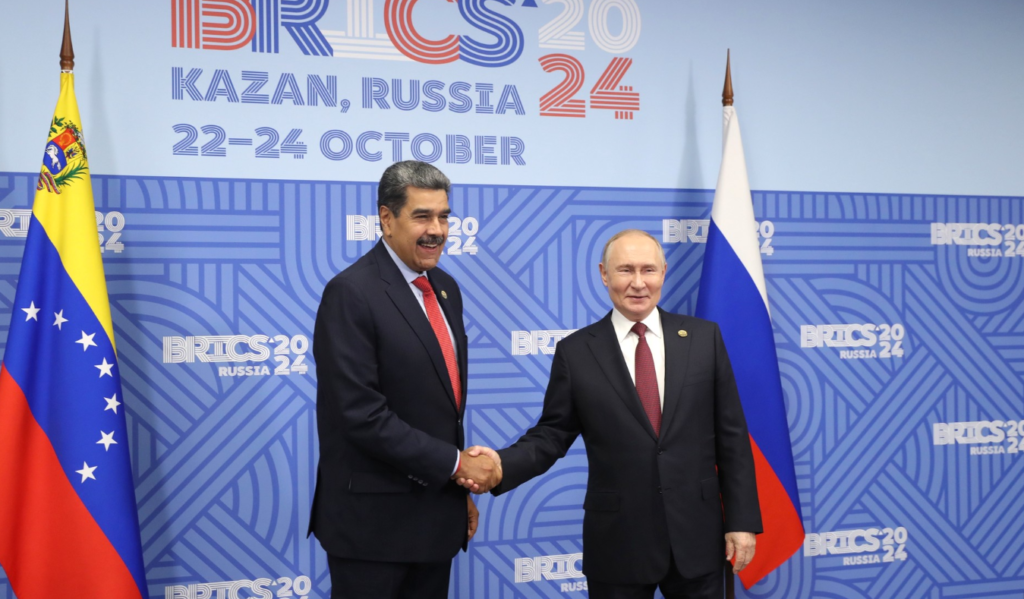
On the other hand, experts suggest that Moscow will continue to exercise caution and seek to take advantage of opportunities for favourable peace agreements. According to some Western analysts, Putin is now hoping for a kind of “exchange” with Washington. Historically, even before the full-scale war, the Russians hinted to the Americans about a division of spheres of influence: Venezuela in exchange for Ukraine. So far, there is no direct evidence of such a “grand bargain”, but some experts explain the Russian Federation’s restrained reaction to Maduro’s capture precisely by its reliance on an unspoken understanding with the United States.
However, beyond the context of discussions about the geopolitical consequences of the US raid in Caracas, the Kremlin is already facing the threat of additional economic losses. It should be recalled that during the Chávez-Maduro era, Venezuela was a kind of “gateway” for Russian presence: since 1999, Moscow has sold more than $20 billion worth of weapons to Caracas, deployed a network of military advisers and intelligence officers there, and negotiated the use of bases in the Caribbean Sea. Russian corporations received lucrative oil contracts – for example, the PDVSA-Roszarubizhnafta joint venture with Rosneft had concessions worth billions of dollars (the contract was extended by Maduro a few weeks before his fall). Now all these economic and military projects are under threat. It is likely that the new Venezuelan government will review its agreements with Russia.
The collapse of Moscow’s “Bolivarian” ambitions
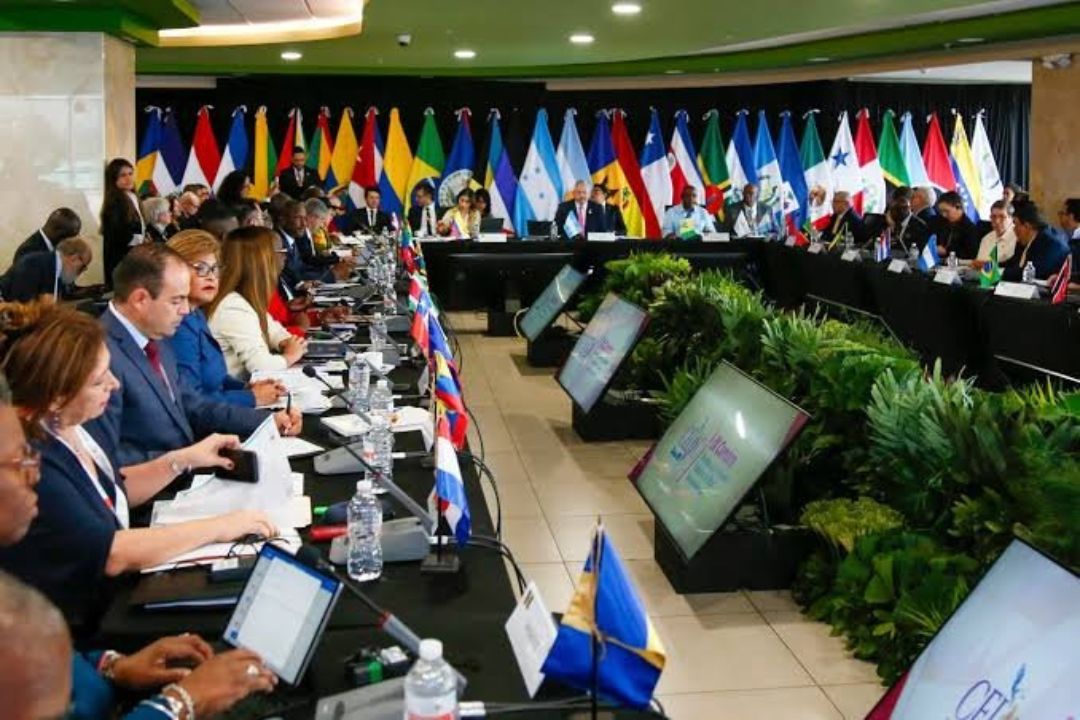
Russia’s hopes for the consolidation of the “Bolivarian bloc” of Latin American countries also failed to materialise. At the CELAC (Community of Latin American and Caribbean States) summit, a number of left-wing governments tried to lobby for condemnation of the US actions, but a group of countries (Argentina, Peru, Ecuador, Paraguay, Panama, El Salvador and others) blocked a joint statement in defence of Maduro. A similar split emerged at the UN Security Council during an emergency meeting: some Latin American representatives openly supported the US, while others condemned the violation of Venezuela’s sovereignty. This situation reflects a broader trend: the left-wing anti-American “axis” in the region has weakened, and some states (even former supporters of Maduro) are not ready to quarrel with Washington.
In these circumstances, Cuba and Nicaragua remain the last staunch allies, strongly condemning the actions of the US. In addition, there is a risk of a “domino effect” – regime change in Venezuela could destabilise Cuba and Nicaragua, which are largely dependent on Venezuelan aid. Since the days of Chávez, Venezuela has been a donor to these countries, and if the new government in Caracas stops its support, the economies of Havana and Managua will be in danger of collapse. Thus, with a single blow, Washington could potentially weaken three pro-Russian players in the Western Hemisphere at once.
The Kremlin’s ambitions to project power globally have suffered a serious blow: while a decade ago Russia was able to support the survival of “friendly regimes” in Syria and Venezuela, Putin’s military adventures (primarily the war in Ukraine) have now deprived him of the ability to act effectively on distant frontiers.
In Venezuela, Russia has abandoned its protégé – Moscow had nothing to protect Maduro with except statements, so it was forced to accept the fait accompli. This did not go unnoticed by other countries in the region: Russia’s reputation as an ally capable of providing an “umbrella” from the US has been seriously undermined. If earlier the left-wing governments of Latin America saw Moscow as a potential counterweight to Washington, it is now clear that at a critical moment the Kremlin was unable to help even its closest partner.
Therefore, the short-term consequences for Russia are predominantly negative: diplomatic condemnation of the US does not compensate for the loss of real influence, and the possible propaganda benefits are offset by Russia’s continued isolation for its war against Ukraine.

