
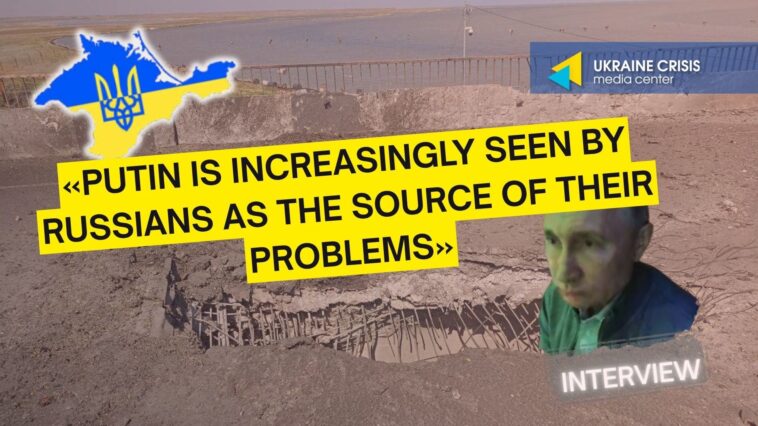
In an interview with the FREEDOM TV channel, Volodymyr Solovian, Head of the Hybrid Warfare Analytical Group, explains why Ukraine is isolating Crimea, how fuel and electricity shortages are affecting Russian troops and the peninsula’s civilian population, and how the fuel crisis is undermining the Kremlin’s image within Russia itself.
Text version
Can we say that Ukraine is effectively isolating Crimea as a theatre of war? How is this affecting Russian troops and the peninsula’s civilian population?
To use the vocabulary of military history, Ukraine is effectively laying siege to Crimea. The history of the peninsula shows that it is virtually impossible to hold Crimea for any prolonged period without reliable logistics.
The key factor currently shaping the situation on the peninsula is therefore the creation of fuel and electricity shortages. The occupation authorities have already introduced several measures aimed at limiting the number of holidaymakers travelling to Crimea. The tourist season has effectively been disrupted, and this will undoubtedly damage the region’s economy. It will also place additional pressure on the Russian budget to compensate local businesses for their losses.
However, the Kremlin is primarily concerned with supplying Russian troops stationed in Crimea. As the crisis deepens, I believe Russia will increasingly prioritise the interests of the military by seeking to provide maximum support to the army units and security forces deployed on the peninsula. At the same time, the Kremlin will sacrifice the well-being of Crimean residents, who have effectively found themselves under blockade.
There are precedents for this in Russian history — the so-called military settlements of the nineteenth century. These settlements began to be established on Ukrainian lands in 1816 and were finally abolished after Russia’s defeat in the Crimean War.
Russia’s current policy in Crimea resembles precisely this approach: transforming the peninsula into a kind of military settlement. Under these conditions, civilian services and ordinary residents, even those who previously did not work directly for the Russian military machine, will become increasingly involved in supporting it.
At the same time, the Kremlin will create conditions that force part of the civilian population to leave the peninsula. This would reduce the burden on the system supplying Russian forces with fuel, electricity and other resources.
How is this situation affecting public confidence in the authorities within the Russian Federation? Is this understanding still developing mainly among those who moved to occupied Crimea from Russia?
The fuel shortage is clearly damaging the Kremlin’s image within Russia itself. Historically, Russians have often distrusted their local “boyars” while continuing to believe that “the tsar simply has not been informed” and that the Kremlin supposedly does not know the full truth. According to this logic, appealing directly to the tsar will prompt him to resolve every problem single-handedly.
However, the full-scale war has now entered its fifth year. During this period, Putin has not visited Crimea. He is clearly concerned about his own physical security, avoids approaching the front line and does not appear on the peninsula. This is also perceived as a sign of weakness at the centre of power in Russia.
In the Russian public consciousness, Putin is gradually being transformed from someone who solves problems into someone who causes them.
The fuel crisis is deepening with every passing month and is already becoming a nationwide Russian problem. It is felt particularly acutely in Crimea because of the peninsula’s logistical characteristics.
Many military analysts consider Crimea to be one of the key pressure points in the Russo-Ukrainian war. Isolating this theatre of war would enable Ukraine to halt any Russian attempts to advance in the south, reduce the threat to Zaporizhzhia and create conditions for expanding the engagement zone — an area that Russian forces would be unable to cross or saturate with assault units.
Fuel shortages are of fundamental importance in this regard. Russia requires considerably more fuel to conduct offensive operations than it does to hold its positions. Strikes against logistics are gradually depriving Russia of its ability to advance.
Should this situation continue over the coming months, I believe Russia will be left with no alternative but to move towards substantive negotiations. The main obstacle, however, remains Putin’s personal perception of the situation — his unwillingness to acknowledge weakness and the loss of control.

