
China officially declares neutrality in Russia’s war against Ukraine,. In practice it maintains close economic and military-technical ties with Moscow. How deep Russia’s dependence on China really is, why Beijing is not interested in ending the war, and whether Europe has real leverage over Chinese policy were discussed on the FREEDOM TV channel by Volodymyr Solovian, Head of the Hybrid Warfare Analysis Group.
Text version of the interview:
China officially states that it holds a neutral position regarding Russia’s war against Ukraine. In reality, however, Beijing continues to maintain close economic and military-technical relations with Moscow. In your opinion, is it possible to influence Beijing in order to change China’s policy toward Ukraine?
PRC acts based on its own interests. In the first months of the full-scale war, Beijing realized that Russia was becoming strategically dependent on China – primarily through energy exports and drone technologies. After losing the premium European energy market, Moscow found itself in a situation where China became its key economic rear base. India is important, but maritime routes are easier to control by countering shadow fleet operations, and Russian oil supplies can be diversified more quickly. Meanwhile, the land border with China allows Russia to receive critical components for its defense industry with relatively few obstacles.
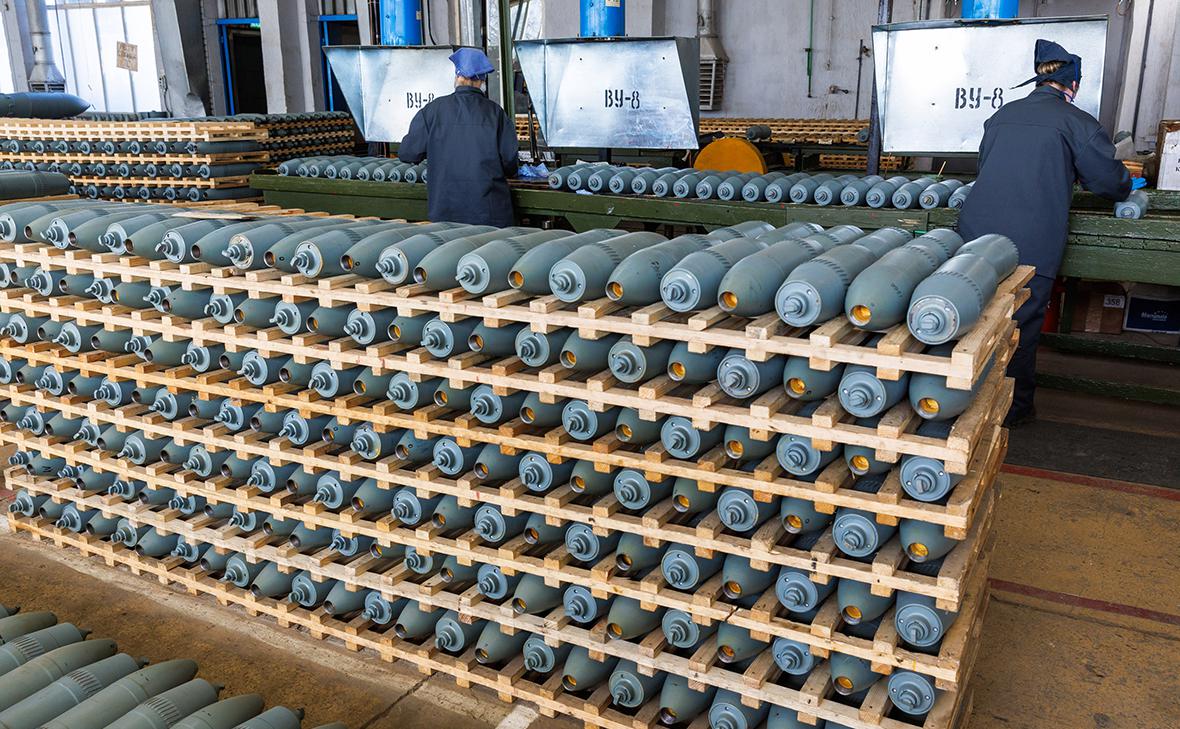
This is not only about drone production. An equally important element of China’s support for Russia is the supply of machine tools and other equipment for weapons manufacturing. This enables Russia to reduce the cost of its military production. For example, the production cost of a Russian 152mm artillery shell is around $1,250–1,500, roughly half the cost of similar 155mm shells produced by Ukraine’s defense industry. Such technological supplies directly affect Moscow’s ability to wage a war of attrition.
At the same time, China seeks to keep the war within the framework of a regional conflict. A large-scale European war or nuclear escalation would be disadvantageous for Beijing. After Putin’s blitzkrieg failed, China made it clear to Moscow that the use of nuclear weapons was unacceptable. The Kremlin consistently adheres to two key Chinese “red lines”: not expanding the theater of war beyond Ukraine and not using nuclear weapons.
Strategically, the current paradigm of confrontation suits China. On the one hand, disagreements are accumulating within the Euro-Atlantic community over how to support Ukraine; on the other, Russia is being drained to the point of total economic dependence on China. For this reason, Beijing is unlikely to abandon its economic and technological support for Russia in the near future.
Yet it is precisely Chinese machine tools that are used to produce missiles with which Russia threatens Europe, for example the Oreshnik ICBM. Why does the EU not exert stronger pressure on Beijing?
The problem is that Europe itself is expanding economic ties with China. Following changes in U.S. policy toward Europe, several European countries are trying to restore trade with Beijing to the levels of the mid-2010s. Beijing, in turn, works purposefully with individual capitals rather than Brussels, thereby fragmenting the EU.
We see examples of large industrial projects and visits by Western European leaders framed in rhetoric about separating economics from politics. Under such conditions, the European Union cannot maintain a single coordinated line toward China. At the same time, individual European states lack sufficient economic and political weight to force Beijing to reconsider its support for Russia.
In theory, Europe has leverage, as China’s economy depends on access to the European market. But these levers are not being used systematically or collectively.
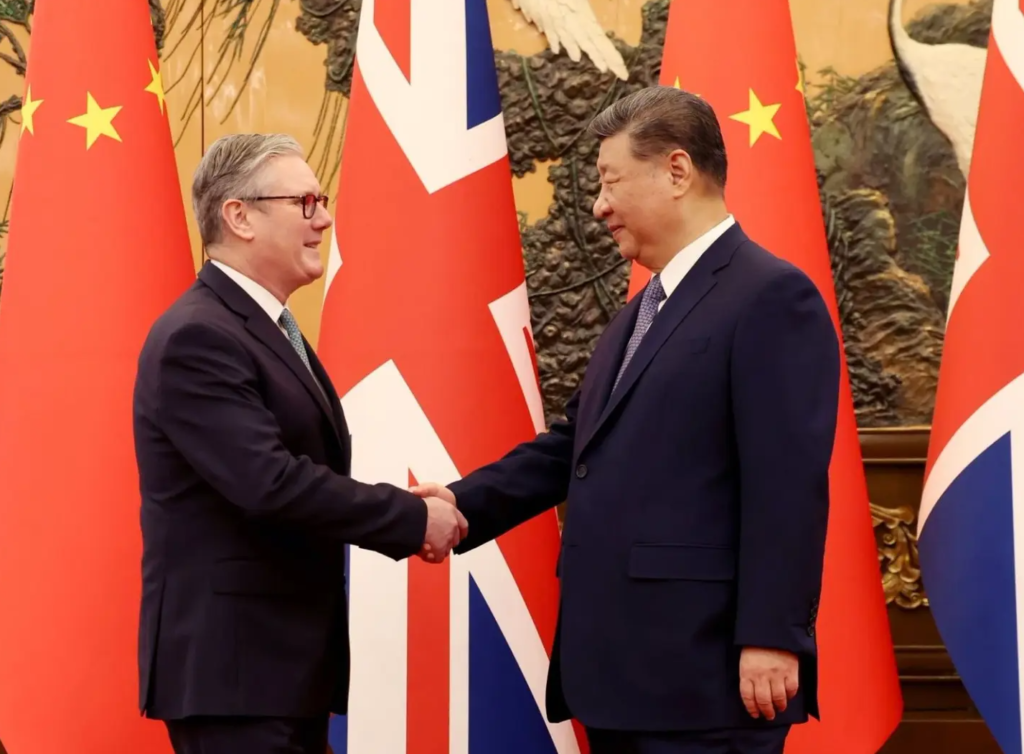
Summing up the recent visit of the British Prime Minister to China – can an economically strong European country influence Beijing’s position on its own?
In practice, only to a very limited extent. British media regularly remind voters that Chinese equipment has been used to produce Russian missiles capable of striking across Europe, including the United Kingdom. However, when London concludes large-scale economic agreements with Beijing, China’s support for Russian aggression does not become a central issue. Even countries directly exposed to potential threats are not prepared to link their economic relations with China to demands that Beijing stop supporting Moscow. That is why, without a coordinated and collective European position, it is practically impossible to significantly change China’s behavior.

