
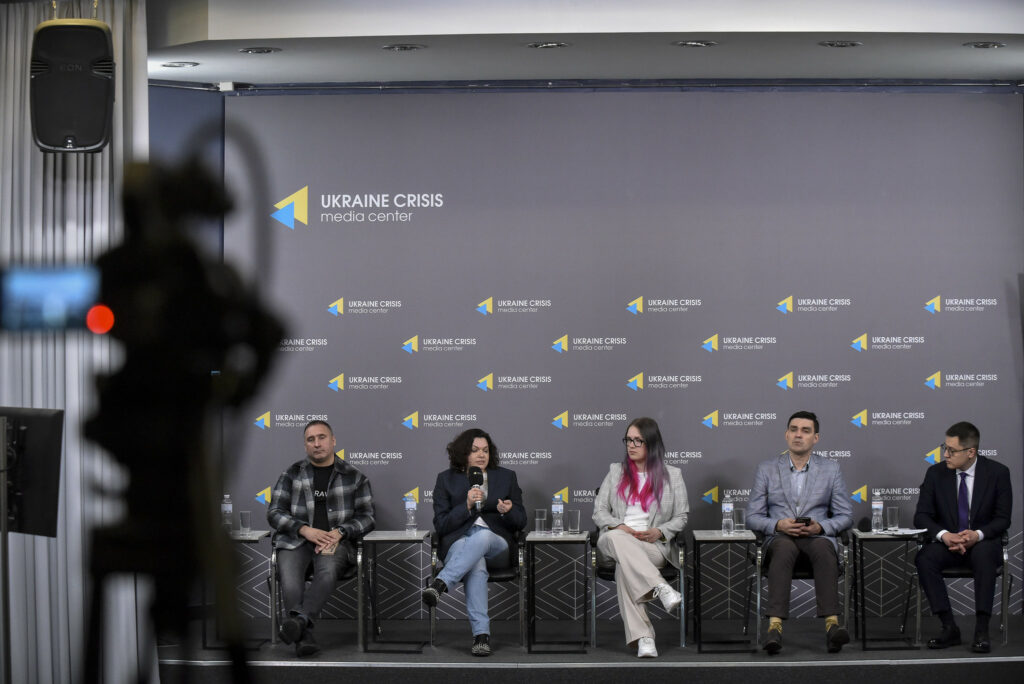
The Verkhovna Rada Committee on Humanitarian and Information Policy reviewed a draft law amending certain Ukrainian laws regarding the regulation of information-sharing platforms that serve as mass media outlets. Since the bill addresses popular platforms such as Telegram, a debate has emerged in the country over whether this constitutes an attempt to restrict freedom of speech and how effective this measure might be in countering Russian influence. The Ukraine Crisis Media Center decided to bring part of this discussion to its platform by inviting members of parliament and representatives of civil society to participate in an expert discussion entitled “Telegram in Ukraine: It Cannot Be Banned, It Must Be Regulated.”
Mr. Mykola Knyazhytskyi, Chair of the Subcommittee on Cultural Policy of the Verkhovna Rada Committee on Humanitarian and Information Policy, immediately emphasized that the draft law was not intended to have outright prohibitive functions.
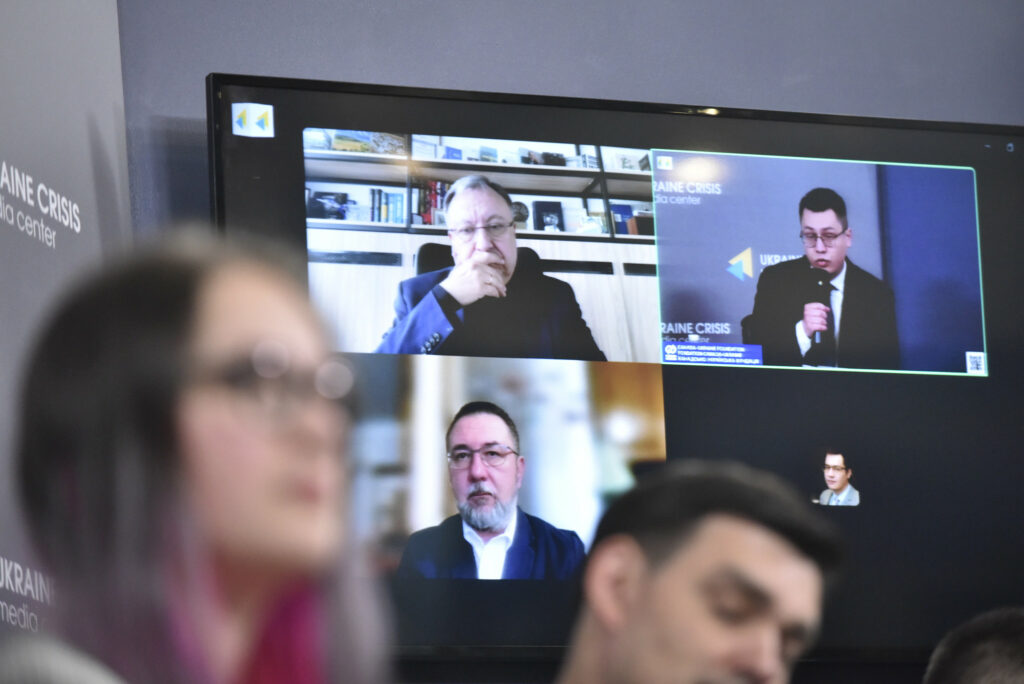
“We have positive experience with the National Security and Defense Council’s ban on the Russian services VKontakte and Odnoklassniki. Technically, people can continue to use them via VPN, but we see a very sharp decline in the audience for these networks because the state has stated its position. Therefore, in this case as well, we propose that the government state its position,” said the member of Parliament.
In his view, the state’s position should be that certain information-sharing networks must coordinate with the Ukrainian government. If the Ukrainian government, through an authorized body, notifies that certain information poses a threat to national security, promotes the spread of pornography or violence, or violates Ukrainian law, then such networks must respond and remove it, and for this purpose, there must be authorized representatives of these networks. In addition, these networks must disclose their funding sources and ownership structure.
Speaking about the need to adopt Bill No. 11115, Mr. Mykola Knyazhytskyi explained this by citing national security requirements.
“If we weren’t at war, then implementing European regulatory acts and bringing Ukrainian legislation into line with European standards would, in my view, be entirely sufficient. But we are under a full-scale attack by the Russian Federation, and in this situation, it would be strange not to protect ourselves in the information sphere. Through such networks, Russia exerts influence on Ukrainian society and can also collect information about users of a particular web service. And the very fact that Telegram is on Ukrainians’ phones poses a certain threat. It is a major gateway for Russian propaganda,” he explained.
In the event of a violation of the law, the document provides for sanctions. Mr. Mykyta Poturaiev, Chair of the Committee on Humanitarian and Information Policy, believes these measures should be stricter and advocates introducing a system similar to that in the law “On Media.” That is, first a warning, then a fine in an ascending order. And only at the end, if the requirements of Ukrainian law are not met, can blocking occur.
“Obviously, we will not force our internet service providers to spend large sums of money, as was done in Russia, to purchase so-called deep-packet inspection equipment. In China, there were state investments, which Ukraine cannot afford either. And I don’t really see the need for this in the future either. Let the blocking be partial. Even in that case, it will lead to a decrease in the number of users of a particular platform,” the People’s Deputy noted.
He also expressed hope that the passage of the bill in the first reading will already prompt social platforms from various jurisdictions to engage in a normal and systematic dialogue with Ukraine.
And what does this initiative look like from a media law perspective? Mr. Ihor Rozkladai, who is the chief media law expert at the Center for Democracy and Rule of Law, is convinced that Ukraine needs a law regulating platforms such as Telegram. “The problem is that, conceptually, media regulation and platform regulation are two different things. By its nature, a platform is not defined as media, and it is not entirely correct to impose powers on a regulator to regulate non-media entities. In other words, the ideal solution would be to create a separate body that would handle direct communication with platforms,” the expert suggested.
Assessing the legislative initiative as a whole, he expressed support for the idea behind it but voiced doubt that it could be implemented.
“Do I believe that even this legal Telegram will start cooperating? I highly doubt it, because it’s not in their interest to change the position they’ve held for many years. They’ve said they’re against censorship, and for them, this is such an absolutist issue — meaning they react very weakly to a lot of rules. So, let’s be honest about what we can realistically achieve. Realistically, we can achieve having legally defined grounds for prohibiting the use of Telegram in the public sector. And if we set that as our goal, then, in principle, we can move forward along that path,” Mr. Ihor Rozkladai explained his position.
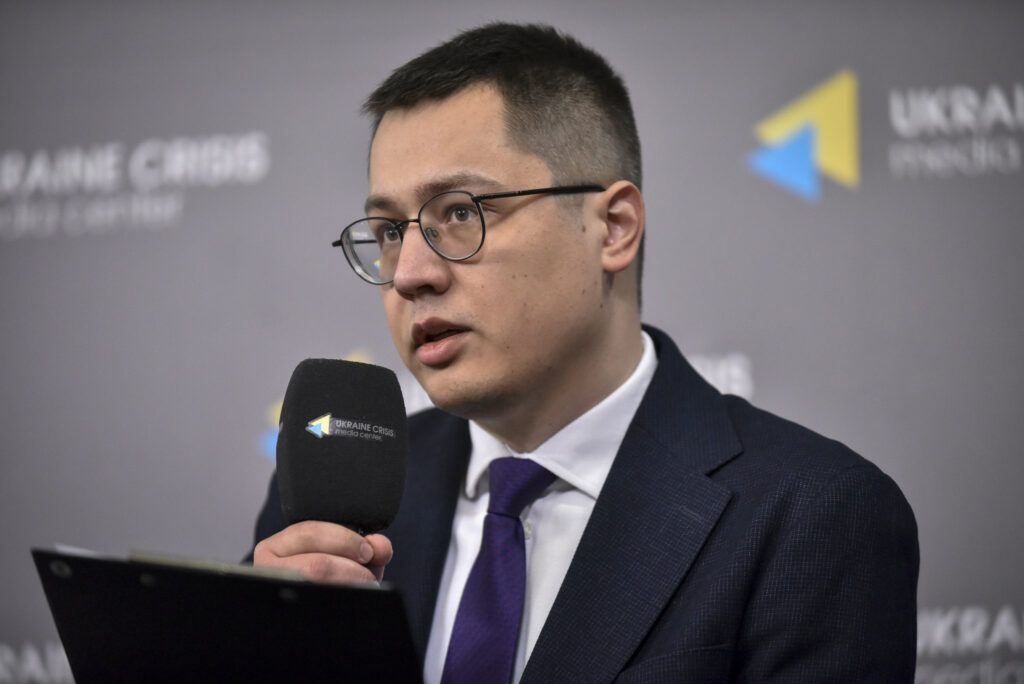
Summarizing the discussion, Mr. Volodymyr Solovian, head of the Hybrid Warfare Analytical Group at the Ukrainian Crisis Media Center, noted that there is still much room for improvement, but, through cooperation with civil society, it will be possible to create an effective legislative framework to regulate relations with social media platforms.
“As the technological aspect of the war with Russia evolves, I believe this focus will also develop, and in the future, technical tools for more effective countering Russian disinformation — which is scaling up with the use of artificial intelligence — must evolve, becoming a promising area of development for Ukraine’s information security system,” stated Mr. Volodymyr Solovian.
The event took place under the “United for Truth” project, supported by the Canada Ukraine Foundation.

