
The Kremlin’s response to the mass exodus of international tech companies from Russia in 2022 was the accelerated development of so-called “digital sovereignty.” The vacuum created by the departure of Google, Meta, Apple, and dozens of other players is being filled by domestic corporations – de facto quasi-state monopolies integrated into the system of information control and propaganda. However, behind the facade of propaganda narratives about technological independence lies a very different reality.
The most telling example is the VK holding company – formerly Mail.ru Group, now Russia’s leading “national technology leader.” An analysis of the company’s financial statements for 2024–2026 reveals a deep contradiction between its declared ambitions and the actual situation.
VK – Six Consecutive Years of Losses
In 2024, VK reported a net loss of 94.9 billion rubles (approximately $1.13 billion) – nearly three times more than the previous year. The management’s official explanation is strategic investments: purchasing equipment under sanctions, developing new services, and retaining IT specialists with inflated salaries to prevent their emigration. In 2025, the loss was narrowed to 24.98 billion rubles, but this marks the sixth consecutive year the holding company has closed its financial statements in the red.
Revenue is growing, but the pace is steadily slowing. In 2025, growth was only 8% compared to 23% a year earlier. The flagship segment – the social networks VKontakte and Odnoklassniki – slowed from 23% to 5%. Advertising revenue, the main source of income, grew barely – by 2%. The company has physically hit a ceiling: in an isolated market, it has nowhere to grow.
Facing the threat of insolvency, in June 2025 VK conducted a large-scale rights offering, raising 112 billion rubles. Officially, this was a market procedure at the weighted average exchange price. It was a mechanism for hidden state subsidization.
Given the company’s complete isolation from Western capital, private investors were unable to purchase such a large-scale offering from a chronically unprofitable company. The buyers were state-owned banks (Gazprombank, VTB), quasi-state institutional investors, and state-controlled pension funds. This is a classic scheme: the state covers the losses of a strategically important enterprise by diluting capital, thereby avoiding a direct line item in the federal budget.
As a result, VK formally has no single controlling shareholder. But this “diversification” is an illusion: the shares are distributed among entities loyal to the Kremlin, ensuring total political control over the platform.
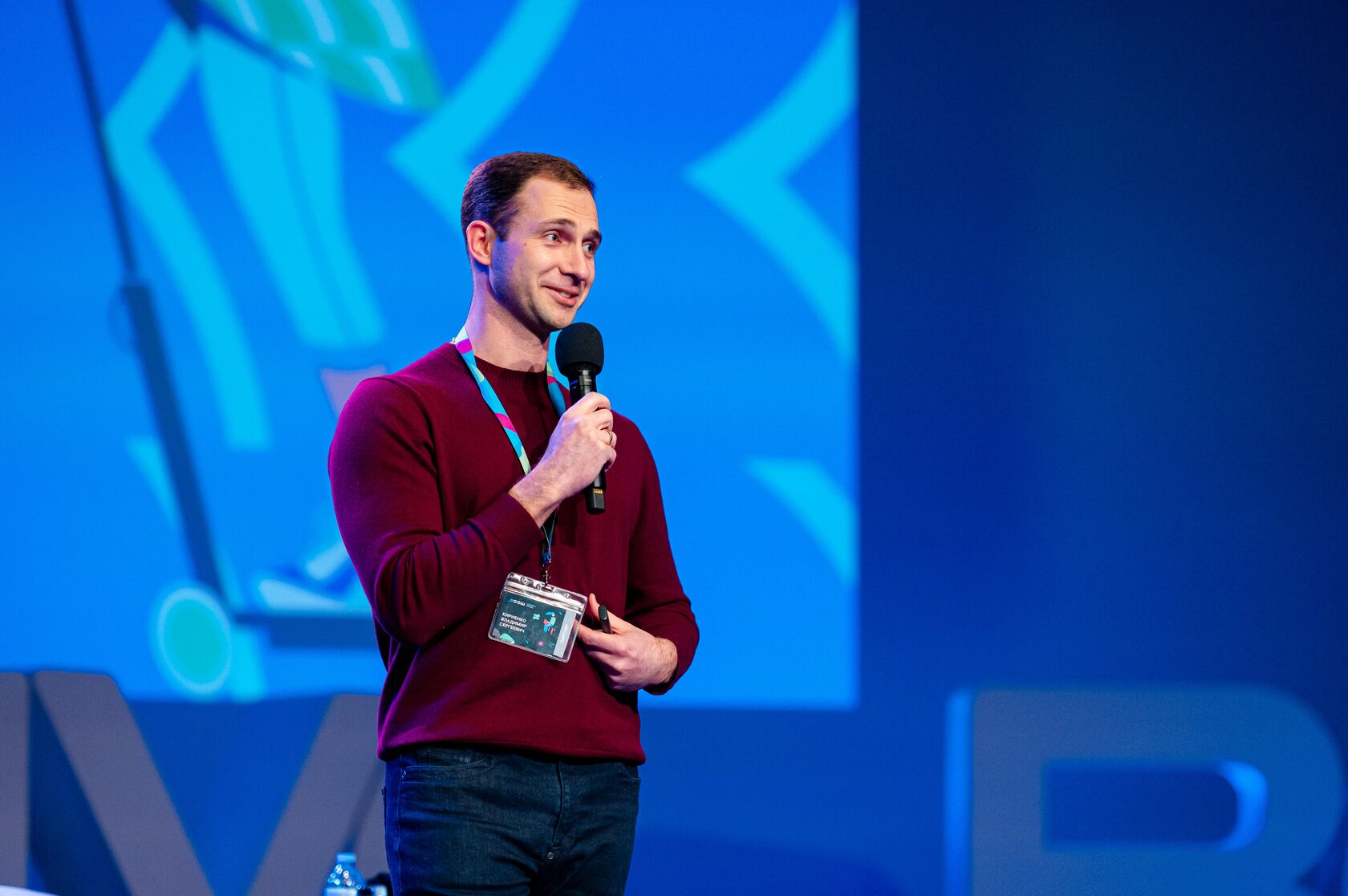
The popularity of VK’s products is growing. This is not the result of market competition, but a consequence of direct state coercion. The Max messenger, launched on March 26, 2025, under the supervision of the Ministry of Digital Development, has amassed over 107 million registered users and 77 million daily active users in just one year. This was achieved not because of the product’s quality, but due to Federal Law No. 156-FZ, which, starting September 1, 2025, mandated that Max be pre-installed on all smartphones sold in Russia.
The fate of RuStore – the Russian app store that replaced Google Play and the App Store – is similar. Its revenue in 2025 grew 3.4-fold – but solely due to the legislative requirement for mandatory installation on Android devices and the migration of critical government services and banking apps from sanctioned institutions exclusively to this platform.
VK Video is attempting to replace YouTube, whose traffic Roskomnadzor is artificially slowing down. In the first half of 2025, revenue from video advertising grew by 71%. At the same time, independent analysts note that a significant portion of viewers come for pirated content—Western films and TV series whose rights holders are unable to enforce copyright in Russian jurisdiction.
The Kremlin’s Digital Infrastructure
Against the backdrop of chronic losses suffered by the platforms that form the digital backbone of the regime, VK and Yandex stand out as a phenomenon. In 2024, the company surpassed the 1 trillion-ruble mark in annual revenue. For the first time since 2010, the company resumed dividend payments.
The secret to its success is simple: after Google Ads was shut down in 2022, the Yandex.Direct system remained the only fully-fledged performance marketing tool for Russian businesses. All the country’s advertising revenue flowed into a single channel. Additionally, Yandex generates revenue from taxi services, food delivery, and e-commerce.
However, this success came at the cost of complete subordination to the state. In 2024, the Dutch holding company Yandex N.V. sold its assets in Russia to a consortium of investors close to the Kremlin for $5.4 billion.
Even more telling is the fate of the digital assets of Gazprom-Media—a holding company that manages the NTV and TNT television channels, production studios, and is attempting to build digital platforms. RuTube is positioned as the main alternative to YouTube, but independent analysts unanimously note that audience growth is driven by pirated content, not original offerings. The “Media Business” segment generated a net loss of 247 million rubles for the holding company in 2024.
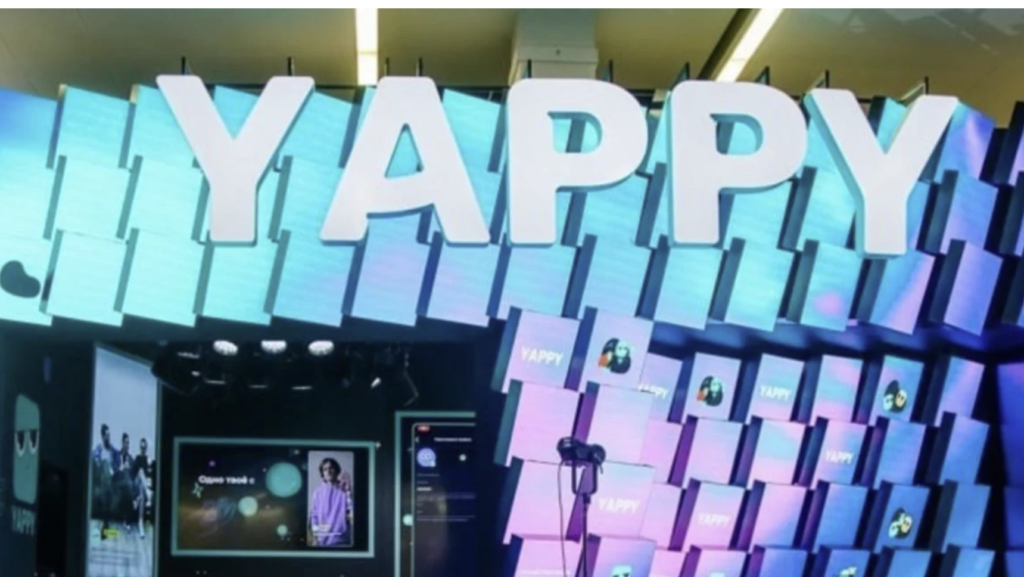
The biggest flop was Yappy – a TikTok clone with its own music label and massive marketing budgets. By mid-2025, only about 30 of the initial 300 employees remained on staff. Yappy, RuTube, and Premier are preparing for a forced merger under a single brand—a classic consolidation aimed at simulating efficiency.
As a result, Russian social media platforms have become tools for surveillance, the dissemination of propaganda, and the suppression of dissent. The technological infrastructure remains vulnerable to cyberattacks and massive data breaches. The competitive environment has been administratively destroyed. Innovation has been replaced by imitation.
The state’s resources to sustain this project are rapidly drying up: a budget crisis, tax pressure, and the sanctions ceiling are all hitting at once. The Russian IT market has turned into a deeply isolated, tightly controlled, and technologically deteriorating preserve—far from being able to compete with the West, even in theory.
Russian “digital sovereignty” is an expensive political facade, the maintenance of which falls entirely on the state’s shoulders. The Kremlin is pouring tens and hundreds of billions of rubles into systematically unprofitable IT corporations. The key question, however, is not how long Moscow can keep up the pretense of a competitive IT sector, but how long the resources for this pretense will last: a growing budget deficit, sanctions pressure, and falling oil and gas revenues are steadily narrowing the scope for further subsidies. When state funding begins to dry up – and this is only a matter of time – “digital sovereignty” in its current form risks collapsing just as quickly as it was artificially constructed.

