
The defeat of Hungarian Prime Minister Viktor Orbán’s ruling party seemed set to boost the confidence of supporters of a united Europe on its eastern borders. However, following early elections in Bulgaria, former President Rumen Radev emerged victorious, prompting experts to worry whether he might become a second Orbán. This was also discussed by participants in the expert panel entitled “Bulgaria 2026: Information Challenges in the Context of the Election Campaign.” Gathering at the Ukraine Crisis Media Center, they attempted to predict how the victory of the “Progressive Bulgaria” coalition would affect the country’s foreign policy.
Mr. Svetoslav Malinov, an analyst at the Center for the Study of Democracy, is confident that Radev will not follow in the footsteps of Orbán, who built up institutional levers of political influence over many years.
The expert noted that during Radev’s presidency, Bulgaria never halted exports to Ukraine, and close economic ties have developed between the two countries. As for what to expect from the new head of government, it is pragmatic relations with the European Union.
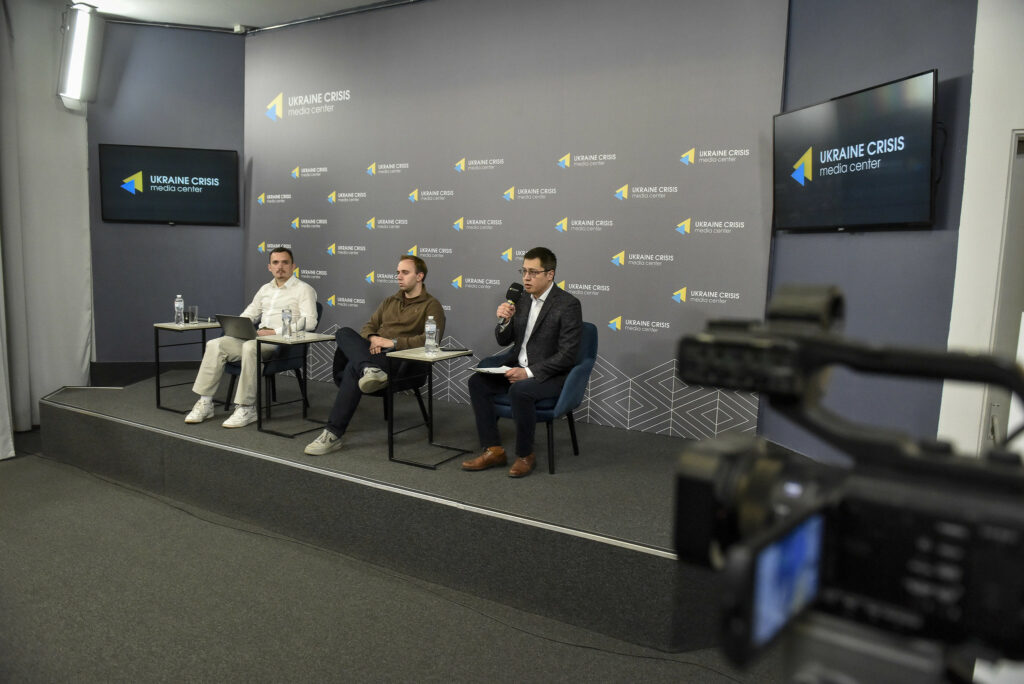
Bulgaria has two anchors in the realm of international politics — NATO membership and EU membership—and the new Bulgarian leader is unlikely to want to give them up. This view was expressed by political scientist and editor-in-chief of the newspaper “Bulgarian Army,” Mr. Plamen Dimitrov.
“At the same time, we must take into account that a large part of Radev’s electorate consists of pro-Russian-oriented people, and something needs to be done about this. I think he will be able to neutralize some of the most radical pro-Russian voices, attract a portion of the voters from the radical “Revival” party, as well as votes from the Bulgarian Socialist Party, and bring them closer to the political center. In that case, Radev’s policy will not be pro-Russian,” the journalist said.
Participants in the discussion also considered the extent to which pro-Russian narratives influenced the election campaign and the role of both traditional media and social media platforms in this process.

Touching on the topic of information threats and countering disinformation, Mr. Oleksandr Koptyev, an expert at the Analytical Center for Balkan Studies, called on his Bulgarian colleagues to cooperate, since Ukraine has already developed an institutional framework for dealing with hybrid threats from the Kremlin. The Center for Countering Disinformation under the National Security and Defense Council is operational, as is a network of civil society organizations engaged in fact-checking.
“The solution may lie, in fact, in deepening such cooperation, in official collaboration with government agencies, specifically with the recently established—if I’m not mistaken—Department for Countering Hybrid Threats at the Bulgarian Ministry of Foreign Affairs. And, of course, with relevant agencies in Ukraine. In addition, we need to engage our experts from the civil society sector to share their experience through various workshops or ongoing cooperation, for example, on joint projects. This is important because we see how widespread the network of Russian disinformation influence is in Bulgaria,” emphasized Oleksandr Koptyev.
The expert discussion “Bulgaria 2026: Information Challenges in the Context of the Election Campaign” took place as part of the United for Truth project with the support of the Canada Ukraine Foundation

