
Russia has used sport as a propaganda tool for decades. Therefore, even after its rupture with Europe in 2022 following the full-scale war against Ukraine, the Kremlin is attempting to return to international arenas under a neutral flag. Why the Kremlin invested in sports federations and sponsorships, how it uses sport to “probe” the restoration of contacts with the West, and what risks a potential return of Russia to global sport would entail – these issues were discussed on the air of FREEDOM by Volodymyr Solovian, Head of the Hybrid Warfare Analysis Group at the Ukrainian Crisis Media Center (UCMC).
Text version of the interview:
What role does sport play in Russian propaganda?
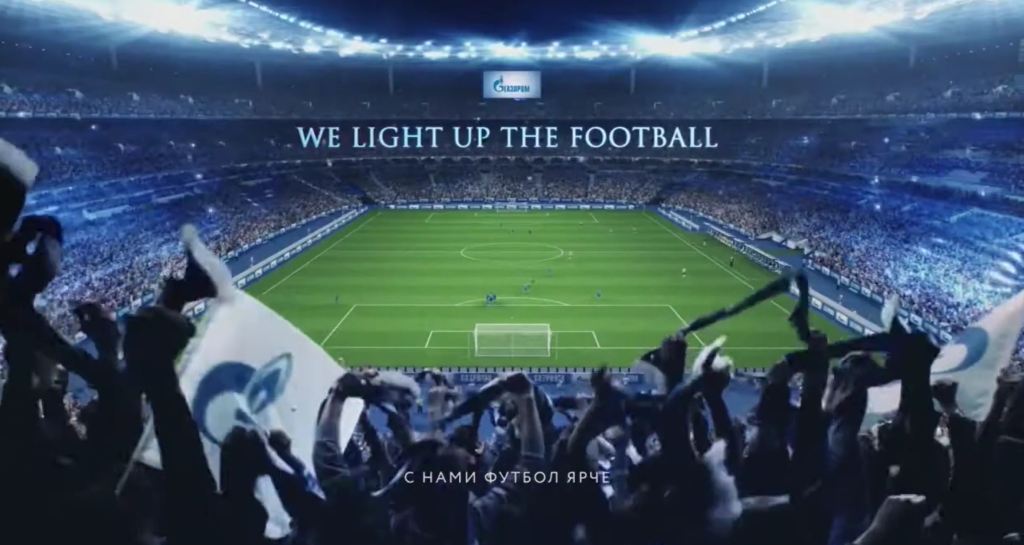
Russia has long and systematically invested large sums in propaganda through sport, because this provides access to huge audiences that do not normally follow politics in their daily lives. In Europe, football – a truly mass sport – was one of the Kremlin’s priorities. During 2012- 2022, Gazprom had a sponsorship contract with UEFA, bringing the European football confederation tens of millions of euros per season.
We all remember that UEFA Champions League matches, with their multimillion audiences, opened with Gazprom advertising accompanied by the music of Pyotr Tchaikovsky. In this way, Russia sought to promote its cultural markers through major sporting events, particularly via the Champions League.
At the same time, individual European clubs were financed as well – for example, Gazprom was for many years the title sponsor of the German club “Schalke 04”, while Belgrade’s “Red Star Belgrade” still competes in European tournaments wearing kits bearing the logo of the Russian gas giant.
Thus, the key objective of Moscow’s strategy is to create an attractive and respectable image of Russia for segments of Europeans who are either uninterested in politics or deliberately turn a blind eye to the anti-European resentment of the Putin regime.
What arguments do international organizations use when they allow Russian athletes and teams to participate under a neutral flag?
Sports officials often repeat that “sport should be outside politics” and that sports sanctions “are ineffective.” However, the main leitmotif of this rhetoric – one they prefer not to articulate openly – is financial. For decades, the Kremlin has been involved in financing various sports federations, primarily in Olympic disciplines, promoting a positive image of Russia on international platforms.
When discussing Russia’s attempts to project the image of a “successful” country with outstanding achievements, it is worth recalling the large-scale doping system. For example, after the 2014 Sochi Olympics, the results of a significant number of Russian athletes were annulled and their medals stripped. Today, Russia is trying to return to sport through corrupt practices. In a number of federations, the level of corruption remains high.
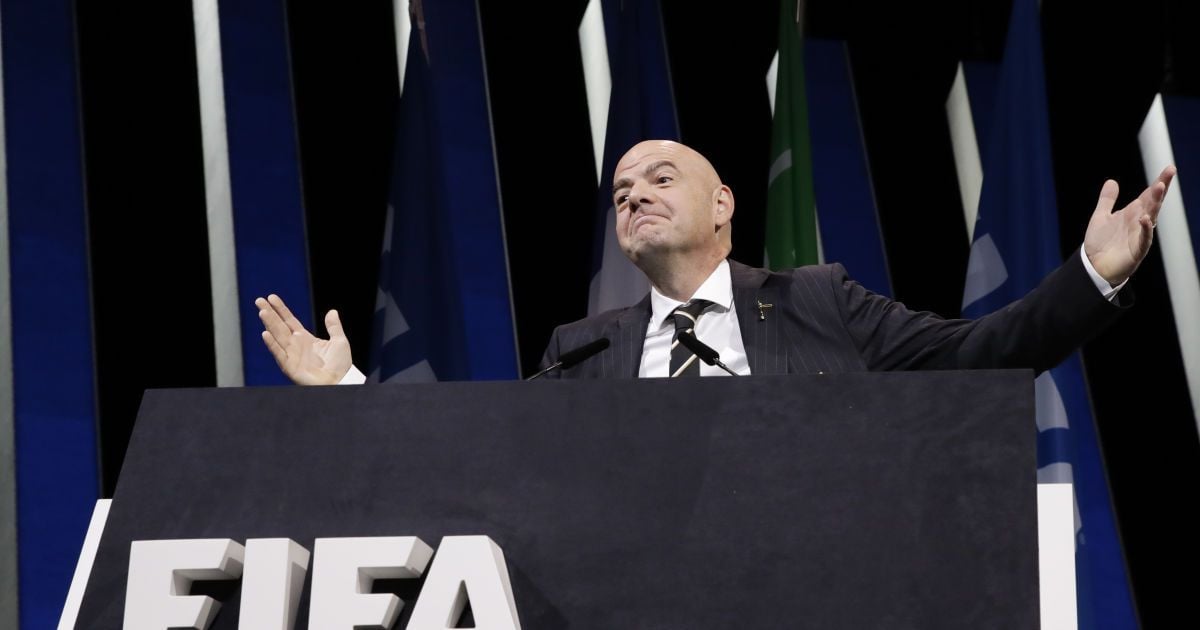
Through sport, Russia is also “probing” the possibility of restoring contacts with the West in other areas, including prospects for a return to Europe’s energy market. The first “trial balloons” may well be contacts with European sports federations. If one looks at public statements by football officials – for example, FIFA President Gianni Infantino – it becomes clear that interest in Russia’s return to the sporting arena persists. As soon as there is a pretext to speak of a cessation of active hostilities, a powerful information campaign advocating Russia’s return to global sport will immediately begin. This is something we must be prepared for.
It is important to explain to European audiences that encouraging Russia in sport will only reinforce its aggressive intentions. At the same time, it is necessary to address the corruption dimension through targeted investigations into the links between individual sports officials and Russian shadow money. Equally important is engagement with key influential Western European federations so that they adopt a principled and coordinated position together with the Ukrainian side.
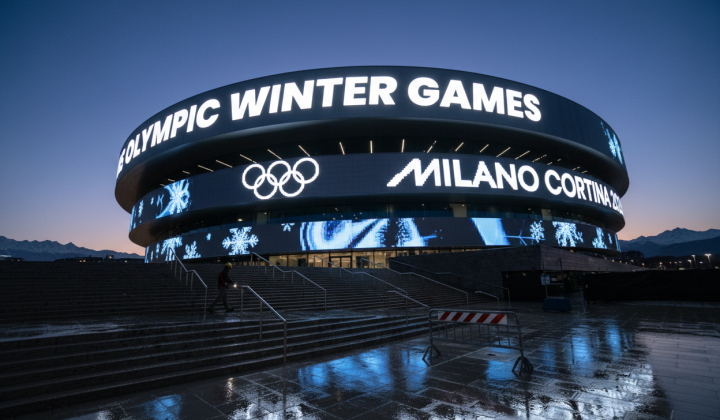
Previously, Russia has used the period of the Olympic Games to launch military aggression. The Winter Olympics have begun in Milan. Given the cyberattacks Russia has already carried out against Italy, what can be expected?
The Kremlin seeks to demonstrate its capabilities in cyberspace by exploiting high-profile information occasions, including the Olympic Games. The main objective is to draw attention to the threats Russia can pose to Europe. In this way, Moscow attempts to impose a narrative on European societies that support for Ukraine “undermines security” in their own countries.
In this context, it is worth recalling the Kremlin’s attempts to provoke blackouts in Western European states in the spring of last year. In December 2025, Poland also reported large-scale cyberattacks on its energy infrastructure – precisely at a time of severe cold, when the potential consequences could have been particularly acute.
Special attention should be paid to Russia’s cooperation with North Korea in the cyber domain. A number of Western intelligence services have signaled signs of interaction between Russian hacker groups and the North Korean Lazarus group. Evidence cited includes shared server infrastructure and similar malware architecture. North Korea uses cyberattacks not only for blackmail, but primarily as a source of illicit revenue for the Kim regime, notably through cryptocurrency theft. Russia may adopt this practice as well, using cyber piracy to generate additional funds to finance the war.
How do you assess the effectiveness of Europe’s response to Russian cyberattacks?
It is difficult to assess, as a significant share of information about countermeasures in cyberspace remains classified. However, if we look at the known “outcomes” of Russian cyberattacks, we can conclude that Russia has so far failed to achieve major success in disrupting civilian infrastructure across Europe. At the same time, the question arises as to how interested Russia actually is in escalation. It is possible that what we are seeing for now is merely a demonstration of capabilities and a “probing” of weak spots.
In my view, the China factor must be taken into account, as China remains Russia’s key military and economic backer. Beijing has no interest in the war expanding into a pan-European theater, because for China’s export-oriented economy the European Union is a premium market. Disrupted logistics, public panic, and a decline in Europeans’ purchasing power as a result of Russia’s aggressive actions are all outcomes that run counter to Beijing’s interests.
Moreover, ahead of a new round of U.S.-China trade talks (I should note that Donald Trump is expected to visit China in April), it is important for Beijing to maintain constructive relations with the EU. On the eve of a summit with the United States, China is keen to demonstrate that it has its own relationship track with Europe, independent of White House policy.

